
By Connie Kruger
When my parents brought me home from the hospital as an infant, it was to the first home they owned, which was a duplex. We lived downstairs and a single older woman lived upstairs. This allowed my parents to afford their house and also provide someone else with housing. When our family grew, they sold the duplex and moved to a single-family house with more bedrooms. This is a pretty common beginning, or at least it was, for many homeowners. With so many communities across the country dealing with housing shortages, and a lack of affordable housing in particular, the possibilities for allowing more than one dwelling on a house lot has been getting increased attention.
The Growing Price Gap
Currently, home prices in Amherst have been rising steeply, making owning one’s house, and the long-term financial benefits that accrue with it, a goal that is much further out of reach for many. The average single-family home value in Amherst is now just over $500,000, according to Principal Assessor, Kimberly Mew. Using a set of common assumptions as well as bankrate.com, a household would need a gross annual income of approximately $130,000 to afford a mortgage, interest, taxes and insurance for this price range, nearly double the median household income in Amherst of $68,427. And we know from this past year’s property transactions, as shown on Thursdays in the Daily Hampshire Gazette, prices of $750,000 to $900,000 have not been uncommon for Amherst the past two years. Finding ways to bridge the financial gap for achieving home ownership is not easy.
Spotlight on Housing
A recent Spotlight Team series in the Boston Globe on the housing crisis in the greater Boston area states “The fallout from these outrageous prices is a sort of economic climate change, steadily making much of the region uninhabitable for those of modest incomes. Expensive housing acts as a golden gate, and there is a price to be paid for living in a gated community.” The series also states that “swelling property values don’t feel like a crisis for those who bought into the market years or decades ago, they feel like a windfall.”
These might be apt comments for Amherst as well.
The Missing Middle
Efforts to increase housing supply and the types of housing options available often involves duplexes and accessory dwelling units. Duplexes, either as rental or ownership housing, hold promise for increasing supply and mitigating prices. Duplexes are two dwelling units on one lot connected together, most often as side-by-side homes or one unit above the other. Similarly, accessory dwelling units (ADUs)1 are additional units on the same property within or attached to the principal residence or as a separate free-standing building. These dwelling units are commonly smaller than the primary residence. In Amherst, a third category, converted dwellings, allows for dividing existing homes into more than one dwelling unit. These have similar requirements as ADUs.
The appeal of allowing the creation of these additional housing units is that they increase available housing supply without using more land for larger-lot single-family homes, while still maintaining the look and feel of single-family homes. Two households can share one building lot with minimal differences in appearance or environmental impacts.
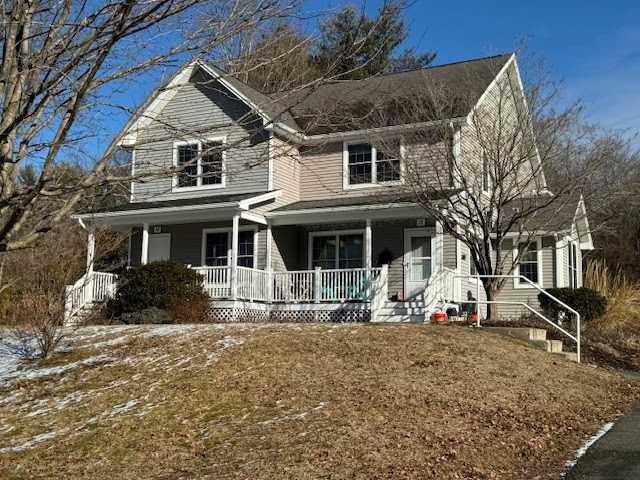

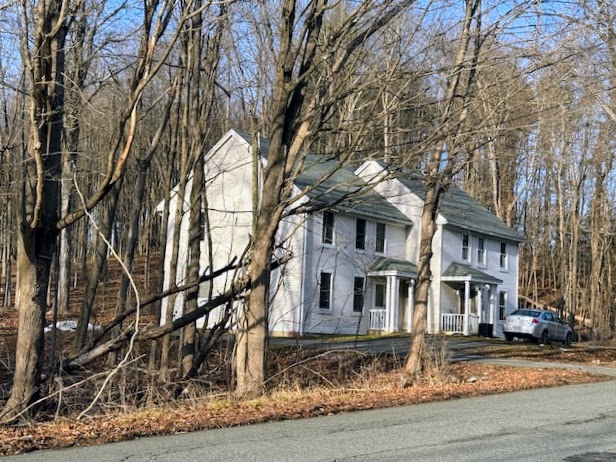
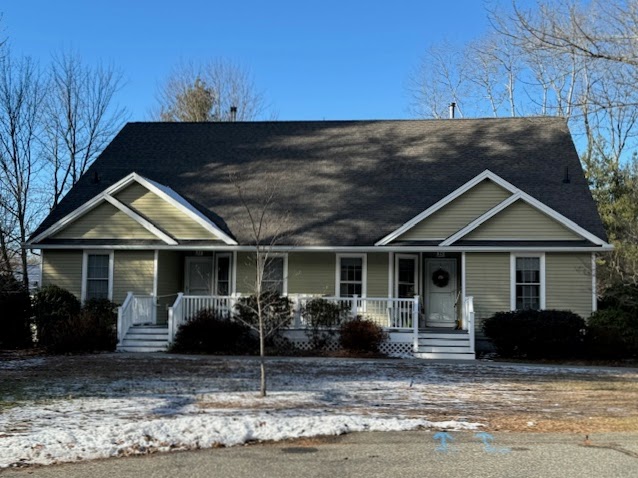
The American Association of Retired People and the American Planning Association are among the many national organizations advocating for encouraging duplexes and ADUs to increase housing options. Often, this is referred to as housing for the “missing middle,” referring to housing densities greater than single-family development but lesser than multi-family apartment-style development. This is also sometimes referred to as “gentle density” or “neighborhood scale” housing.
The lack of housing supply, and affordable housing in particular, is now recognized as a national issue, not just a local or regional one. In the past few years, the states of Vermont, Oregon, Washington and California, as well as a number of local jurisdictions across the country, have passed state legislation allowing duplexes and ADUs by right in zoning districts previously limited to single-family homes. “By right” development means that the use, in this case a specific type of residential use, is allowed. There may be certain conditions for that approval, including site and layout requirements, management plans, planting and lighting plans, for example. But it gives the applicant assurance that the proposed use will be allowed and eliminates discretionary permitting, usually by special permit, where the use may be denied, often using criteria as subjective as “community character.”
Local zoning regulations determine what types of housing can be built in which zoned districts. The question of owner occupancy as a condition of permit approval is a consideration in the permitting of duplexes and ADUs. Currently, Amherst has three categories for allowing duplexes: owner-occupied, non-owner-occupied and affordable duplexes, each with different standards and conditions. There is a common assumption underlying owner occupancy: requirements that an owner will manage and enforce proper tenant behavior if the owner lives on the site. While some locales have eliminated owner-occupancy as a condition of approval, in a college town like Amherst, many find it hard to resist passing the enforcement of appropriate tenant behavior on to on-site owners.
A Local Proposal to Increase Housing Options
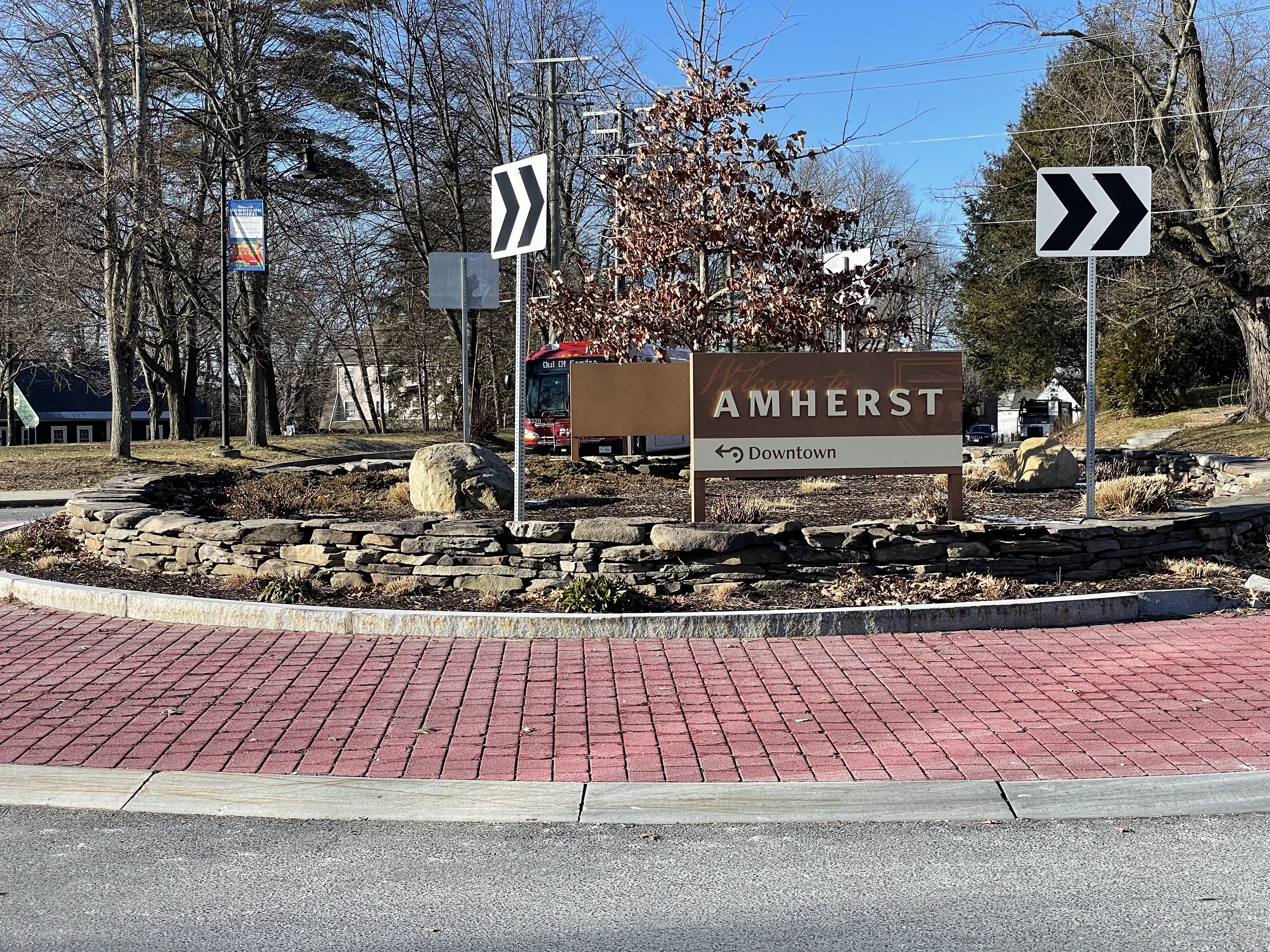
In 2023 Town Councilors Mandi Jo Hanneke and Pat DeAngelis wrote and sponsored a set of zoning bylaw changes that were intended to make the requirements for owner-occupied as well as affordable duplexes, accessory dwelling units, and converted dwellings less cumbersome, to encourage an increase in the local housing supply, and also adding a category for triplexes. After review by the Community Resources Committee of the Town Council, as well as a number of public meetings and review by the Planning Board, the sponsors revised the proposed zoning changes to address some of the concerns that were voiced.
Ultimately, they withdrew the revised proposal from consideration by the full Council. Along the way, the zoning proposal had garnered confusion and a number of criticisms from committee members and the public. It became clear that there was not enough support at the time for this comprehensive look at simplifying alternatives to single-family development. Some of the arguments against going forward with the proposed changes hinged on the particulars of Amherst’s situation as a college town. There was concern that the largest beneficiaries of increased housing supply would be college students and out-of-town investors and that it would not make a real dent in the tightness of Amherst’s housing market. The particulars of Amherst’s housing market are a complex and controversial topic beyond the scope of this article. Zoning changes aimed at the missing middle may come back for future consideration.
A State Proposal for Consideration
In October, Governor Maura Healey filed the Affordable Homes Act, requesting $4 billion in funding for a number of housing initiatives and including a number of policy proposals. One would allow ADUs in single-family zones, with some limited local restrictions. The press release from the Executive Office of Housing and Livable Communities states: “The Affordable Homes Act would also allow accessory dwelling units less than 900 square feet as of right throughout the state with the ability for communities to set some reasonable restrictions. It is estimated this change could create more than 8,000 accessory dwelling units over five years”. More information about the Housing Bond Bill can be found here.
It’s not clear which elements of the Housing Bond Bill will survive the legislative process, but it does attempt to address one of the issues two Amherst Town Councilors tried to modify locally.
Connie Kruger is a former Amherst Senior Planner, Select Board member, a Massachusetts Housing Partnership Project Manager and served on the Massachusetts Housing Appeals Committee.
1 Accessory Dwelling Units have also been called “granny flats” or “mother-in-law” units, but this author prefers not to use these terms and they have been omitted from the body of this article in favor of the more accurate and gender- and age-neutral, technical term.
Discover more from THE AMHERST CURRENT
Subscribe to get the latest posts sent to your email.
 THE AMHERST CURRENT