
By Tom Crossman
There is no quick way to describe a “calling” in life, but as I explain, it might make sense.
I was brought up in a neighborhood that I later learned was referred to as “The Dirty Hands District” also known as North Amherst, or more precisely, the Cushman Village neighborhood. After seven years there, my brother and I lived in foster homes in Turners Falls and Amherst, in subsidized housing with our father in Amherst, and then with our newly merged family in a two-family home on Taylor Street. By the time I was 12 years old, life had trained me to be familiar with people from a variety of walks of life in a variety of housing situations long before I chose a career in Property Management.
My Journey
Upon high school graduation, I told my father that I would buy my first home at age 23. I had a five-year goal with absolutely no clarity of how to get there, but without realizing it, I was creating a plan based on the synthesis of my skill sets, my experiences, my strengths, and my passion.
My first full time job after high school was building homes in the Miami, Florida area with “Habitat for Humanity” through AmeriCorps. It was the best job I ever had. I took home $300 bi-weekly, not exactly enough to buy that first house by age 23.
I returned home to the Valley and took a job in a warehouse that paid me $0.10 per case I shipped. This added up to about $300 per day, which put me on a path toward my 5-year home-ownership plan. I learned the strategy of “paying myself first” and put 10% of every paycheck away, and eventually I’d saved enough to achieve my goal. Just before my 23rd birthday, having moved over 100,000 cases weighing 4 million pounds, I brought a check for $10,000 to a closing to buy a 2-bedroom, 1-bathroom condominium for $91,500 in Greenfield.
After earning a degree in business management from Greenfield Community College, I launched a business to manage and maintain homes in the Amherst area. Starting with managing three units in 2011 and building the company to manage 184 units, we were recruited to work for a larger management company, allowing us the opportunity to provide shelter from the elements for more residents living in rental properties.
Where the Rent Goes
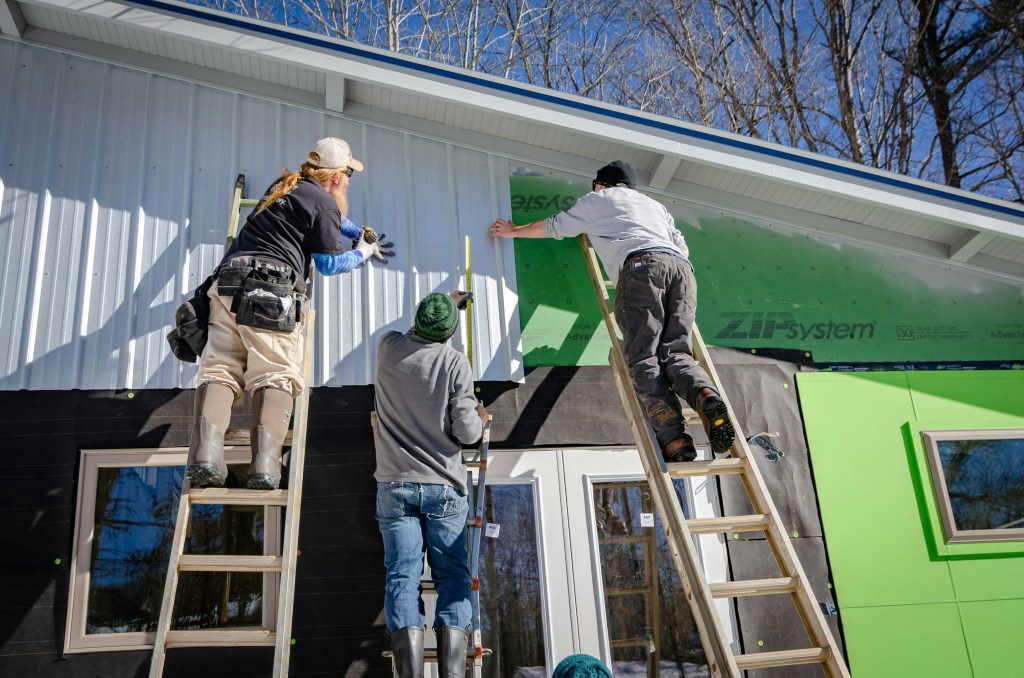
What does their rent afford? It pays for the person that put pen to paper to come up with the schematic of what the property would look like. It pays for the excavator that dug the trench to stack the stones or pour the concrete to create the foundation. It pays for the various building materials that will protect the building’s occupants from the cold and snow, and other elements. That rent pays for the electrician who runs the wiring from the road to the home that provides the light that the student uses to read and build their knowledge to pursue their own dreams. It pays the plumber who installs the water lines and the gray water management systems to discharge to the septic system or the sewer lines so the home is safe and residents don’t worry about getting sick or not having access to water to cook with or clean themselves. The rent pays the HVAC technician who installs a heating system to keep the occupants warm and comfortable when the outside temperatures drop below freezing.
What does the rent afford? It affords the maintenance and updates of all those systems. It affords the landscaper who maintains the grounds. It affords the staff to remove the snow and ice so residents and others can safely enter and exit the building. The rent covers the cost of insurance to protect the building in the event of a fire or broken pipe or other adverse event. The rent affords the taxes paid to the town to provide the services such as education, recreation and sometimes even paving the roads that we all drive upon. The rent pays the staff who address issues that might arise through communication and delegation to the appropriate personnel.
Finally, and I may be in the minority on this, I believe the rent is also needed for building new inventory. It is my philosophy that a property manager or investor is responsible not only for maintaining the existing housing stock, but also for creating new housing stock. With the recent pressures on real estate, the cost to create new housing stock has grown significantly.
Why Housing Costs Are So High

The real estate landscape today is experiencing housing cost pressure for several reasons. The cost for competent staff is elevated because there is a tremendous demand for the services and limited supply of people who can provide such services. The cost of bringing all the building supplies and materials together to construct new homes has reached all time highs. Estimates for new construction prior to 2020 were around $250-280 per square foot. Today, new construction costs closer to $350-400 per square foot. So, if a builder is looking to build a 3-bedroom 1-bathroom ranch that is 1,200 sq. ft., the building will cost $420,000 – 480,000 just to build. With prices for land on the market today starting at about $150,000, you are looking at $570,000-$630,000 for what someone might consider to be an entry level or starter home. That price point is not exactly within reach or affordable for many first-time home buyers.
Prices for existing housing are not any more affordable. According to Multiple Listing Services data, existing inventory in Hampshire County sold for an average of $173.76 per sq. ft. in 2020. In 2024, that average cost per square foot as of February 5 is $260.20. That is an increase of 49.7% over the four years, or about 12.4% annually for existing inventory. In 2023, with high and volatile mortgage interest rates, a person who had locked in a lower interest rate on their current home can’t sell their home without taking a significant hit on their cost of living. Many home owners thus are opting not to sell, resulting in a shortage of inventory for potential home buyers. This reduction in supply coincided with an increase in demand as Millennials hit their prime home-buying years, leading to more competition for homes and elevating prices. In 2023, as a nation, there were 4.09 million homes sold, the lowest number since 1995.
The housing shortage is a local and regional problem, not just a national problem. Property managers do the best they can to ask for the rents that will keep up with the rising costs of everything while striving to maintain affordability as much as possible. We must consider the cost of staff to provide all the services, from patching holes in the walls to cutting the grass and to maintaining the mechanics that make a home work. Property managers also want to find ways to create new housing, and to fund that partly from the revenue generated from rents. Those margins that would lead to new construction continue to be compressed because of all the variables discussed. We try to stay on top of all the issues associated with housing and try our best to be proactive, but many times we fall into situations that make us reactive, naturally.
In Amherst, we are trying to balance all our costs and provide a price point that our residents can afford. We want the space to be clean, safe, healthy, durable, and comfortable.
The Work Ahead
Our town has so many brilliant minds and intelligent ideas, but unfortunately these efforts are not integrated for the betterment of our community. We face problems that are unique to our area as we navigate limitations to where we can develop while preserving the natural beauty in our area of the Valley and while facing the housing challenges that our region and nation face. The state of Massachusetts determined that between 2021-2022 at least 110,000 people left the state. The number one reason for leaving was the high cost of living and housing; it has become too unbearable for our neighbors that they seek employment and housing opportunities elsewhere. The state has established ambitious goals of creating 200,000 new units over the course of the next 10 years. To put that in perspective, a total of 1,518 units were sold in MA in the 12 months ending January 25, 2024 and the most sold in a 12-month period in the last five years was 2,504 in the period ending January 25, 2021. To reach 200,000 new units over the next 10 years, MA will need 20,000 new units on average each year.
We have a lot of work to do.
Tom Crossman is an Amherst native who has been involved in maintenance, management, and development of real estate since 1999 when he worked with Habitat for Humanity. He supports community youth sports as “The Voice” of Amherst Youth and Varsity Football.
Discover more from THE AMHERST CURRENT
Subscribe to get the latest posts sent to your email.
 THE AMHERST CURRENT
Just a fabulous story. I note his citing the 3BR, 1 bath as 1200 sq ft is even smaller than the 1500 sq ft house that was average 20 years ago. And 3 BRs but only 1 bath….
LikeLike
Thank you Paul.
LikeLike
Thanks for sharing your story Tom. Such a complex issue but I love your approach and hope we can all ‘row together’ to work on it.
LikeLike
Thank you Clare
LikeLike
Thank you Clare.
LikeLike
Amherst is in the peculiar position of hosting a temporary population more numerous than the full time residents, many of whom live in $1000+ per bedroom rentals around town. I would be interested in Mr. Crossman’s thoughts on the impact of student rentals on the cost and availability of rental housing for non students in Amherst and surrounding towns.
LikeLike
Hi Jessica,
I invite the thought provoking question and would be happy to share my thoughts. Thank you for asking.
Housing is a strained resource in the Amherst area and because of the employment nucleus that Academia is, there is a great desire to live, work, study, play and dine in the area. There is no denying that student housing impacts the cost of housing for everyone in the Amherst area. When a group of students pursue a home together, they are often affording it with funds set aside by their parent, guardian or other family members. I can think of four major variables that impact and drive up the price. 1.) These students have a housing price bias that is based off the cost of housing when they pursue UMass looking at what it costs to stay on campus. The University sets a high bar for on-campus housing. 2.) One student may be supported by two sets of parents, that is two sets of income per bedroom. When you put 4 students in a four bedroom house you essentially have 8 sources of income (usually from city suburbs employment hubs) to support the cost of housing vs. a family that may have 1 or 2 sources of income based on the jobs available in the rural Amherst Area. 3.) The stock market bottomed in March of 2009 and has been climbing quite a bit ever since. 15 years later parents have a 529 plan that is very healthy and they can afford to spend larger amounts of money on housing, this also drives up the price. 4.) The high frequency of turnover from the residents that are living in housing for 1, 2 or 3 years means the property is constantly being exhausted by many elements including, but not limited to, moving large furniture, hanging artwork, televisions etc. and general foot traffic throughout the day. Leading to excessive maintenance on an annual, bi or tri-annual basis. This puts an additional strain on annual budget for the expense line, which also leads to elevated costs to provide housing.
The surrounding towns tend to be more affordable because there is less competition for housing, and the residents that live there tend to be longer term residents whether they are home owners or general long term renters who enjoy what the area offers.
Thomas Crossman
LikeLike
Mr. Crossman’s personal story is one of admirable, bootstrapping success. He sounds diligent, hardworking, and his assertion that there is much work to do to solve our housing crisis is spot-on.
Yet after reading it, it seems that part of a property manager’s job is to “throw some shade” on investors making money off their rental properties by charging high rents. Construction costs are conflated with property up-keep, and numerous expenses associated with rental property ownership are ticked off as though these are not also faced by home owners. Property up-keep is cited as an almost solemn duty, yet unresponsive landlords allowing properties to fall into disrepair are not mentioned, as though they do not exist. Kinks in supply chains of construction materials and appliances caused by covid didn’t figure in the discussion of why building costs have skyrocketed. The strains on the housing market generated when a fast-growing university of 30,000 is located in a town with 17,000 permanent residents weren’t even alluded to, or the fact that the percentage of houses that are owner-occupied in Amherst (46%), is 20 points below the national average (see: https://www.census.gov/quickfacts/fact/table/amhersttowncitymassachusetts/BZA115221). He bemoans the fact that home sales in 2023 were at the same level as in 1995, but failed to note that nearly a quarter of all homes sold nationally in the first half of last year were sold to investors (see: https://www.corelogic.com/intelligence/us-home-investor-share-remained-high-early-summer-2023/) or that this decrease in yearly sales was due to high interest rates and supply chain disruptions left over from covid, which made “flipping” houses less profitable.
I would ask a few simple questions:
Setting aside temporary distortions of the market due to covid, why, if rental property ownership is such a hardship, with such slim margins of return, would individuals, LLC’s and hedge funds across the country be driving up prices in bidding wars and with sight-unseen purchases, not just of houses, but condos and entire trailer parks?
Why are there websites devoted to how to make money by converting single family homes to student rentals?
If homes rent to college students at more than $1000/bedroom, how do workforce families compete? Will adding more duplexes and triplexes that rent at these rates solve the problems faced by families who need to live and work here?
There are structural problems in an economy that overvalues investment in real estate. It consolidates wealth into ever-fewer hands, especially when coupled with the repeal of the estate tax. It siphons capital away from the stock market, where investment fuels research, innovation and productivity. It makes class divisions more acute. It makes life harder for many families that are now paying in excess of 30% of their incomes on housing, and paying that percentage of income in rent makes accumulating wealth for a down payment for a house purchase – or building equity of any sort – impossible.
Mr. Crossman is correct. We do need solutions to the housing crisis, and in Amherst, we have dual crises, in both workforce and student housing. Workforce families and students both need roofs over their heads, but their needs differ. Solutions must go beyond converting single family houses to student rentals, or even simply building more rental units for managers to manage and investors to enrich themselves. (Here’s looking at you, UMass). Those solutions will not be easy locally or nationally, and they go to the core of our economy, our tax system, and the values we hold in esteem and reward.
LikeLike
Thank you for your response John, I appreciate your perspective. I do want to note that you have responded to rentals in quite a few forums and continuously allude to a $1,000/bedroom rental income level but I haven’t heard you dig into what it costs to operate a rental, have you managed property yourself? It is easy to share one angle, but it doesn’t tell the whole story, just like my original post was a dreadfully compressed response to “the cost of housing”. I think we can continue to share dialogue on this subject and we as a community have work to do to try to get the cost of housing down for everyone. 28% of someone’s income is the ideal level for cost of housing. There are very few people who are at that level or lower, and that is for many reasons. Limited inventory, expensive material cost, increased cost of labor are only a few variables that are contributing figures to higher costs. Cheers John, I look forward to continued dialogue on the matter.
Tom Crossman
LikeLike