
By Robert Williams
Accessory Dwelling Units (ADUs) – small, independent dwellings that are accessory to a primary residence – are having a moment. As others have noted on this blog, many towns and cities in Western Massachusetts have recently revised their zoning ordinances to allow ADUs. Proponents argue that the benefits of ADUs are myriad: they can help address the housing shortage and reduce housing costs by increasing supply; they provide alternative sources of income for homeowners; they are environmentally friendly because they don’t require the development of new land and are often built in neighborhoods with access to public transportation; and they diversify the available housing stock to better accommodate changing domestic living patterns. Moreover, they accomplish this without dramatically changing existing urban fabric and neighborhood character.
Despite changes to local ordinances meant to encourage development, construction of ADUs has been slow to take off. There are many reasons for this (for example, see this report from the Joint Center for Housing Studies at Harvard) including simply the lack of public knowledge about the typology as well as an understandable trepidation on the part of homeowners, community members, and public officials about the impact of ADU development on existing neighborhoods.
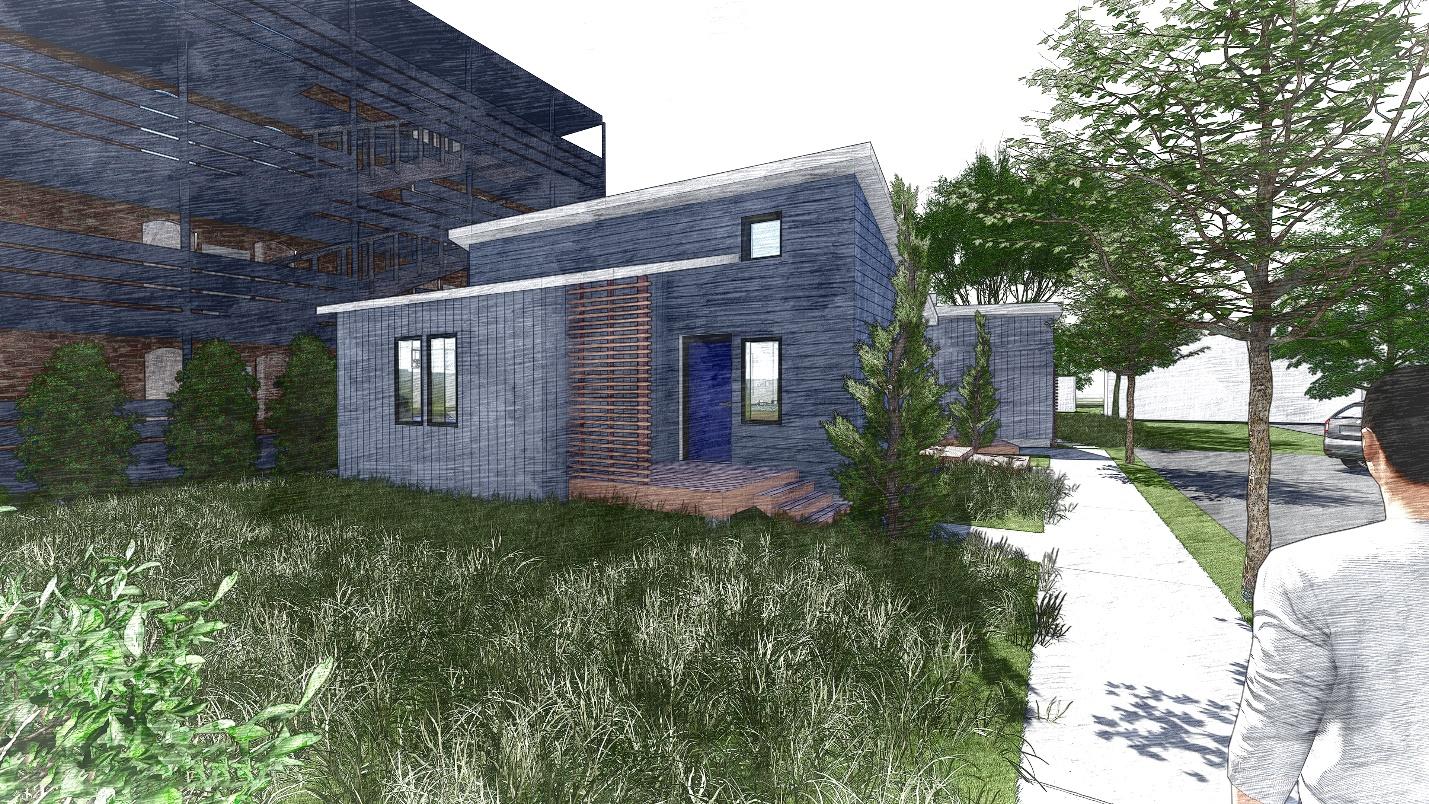
To address some of these concerns, faculty and students in the UMass DesignBuild (UMDB) program have been designing and building full-scale ADU prototypes for community partners in the Pioneer Valley. UMDB is a new, collaborative initiative between the UMass Department of Architecture, the UMass Building and Construction Technology Program, and the Five College Architectural Studies Program. The program’s goal is to provide hands-on, collaborative educational experiences for aspiring building professionals while addressing the related issues of housing equity and climate change.
To date, UMDB has partnered with OneHolyoke Community Development Corporation – an affordable housing provider in Holyoke – to build two ADUs to be located in Holyoke. These ADUs directly address the housing crisis by adding to Holyoke’s affordable housing stock while also demonstrating the viability and potential of ADUs in Western Mass.

The so-called “Hygge House” and “Paper House” are 510 and 590 square feet, respectively. They both explore the potential for small houses to be efficient, flexible, and adaptable. The Paper House includes two small bedrooms so that it could comfortably accommodate a single parent with a child, a young professional with home office space, or many other combinations of living arrangements. Both houses incorporate contemporary best practices for sustainable design and are net-zero ready. This means their yearly operational energy use could easily be offset with a small rooftop photovoltaic array. While this is often overlooked in discussion of affordable housing, reduced energy bills through energy efficiency further reduce the long-term costs of homeownership. Finally, both houses incorporate natural and recycled materials to reduce the total carbon footprint of the houses.
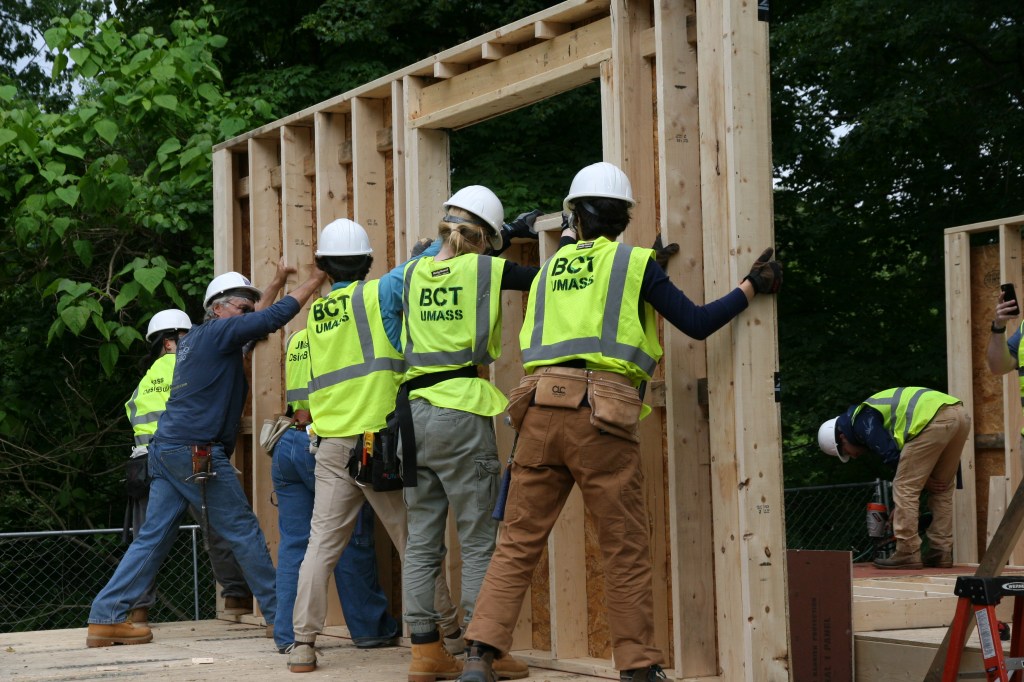
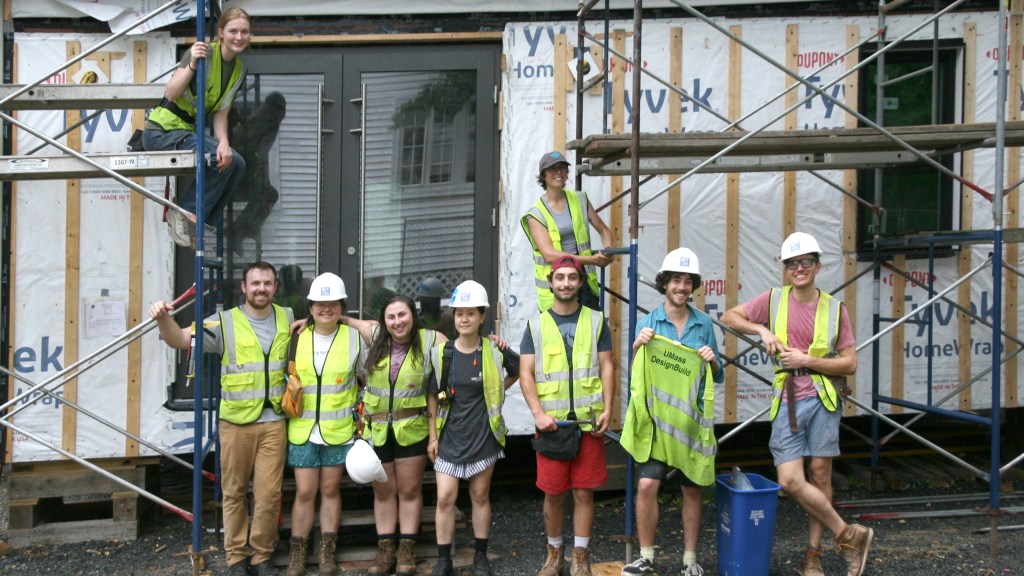
The UMDB houses are modular and designed to be constructed off-site. This makes them easily replicable and adaptable to many different unique site conditions. The Hygge House and Paper House were both constructed off-site and are awaiting final installation in Holyoke in 2024.
For more information about UMass DesignBuild, please visit the UMDB website.
Robert Williams is a practicing architect and assistant professor in the Department of Architecture at UMass Amherst.
Discover more from THE AMHERST CURRENT
Subscribe to get the latest posts sent to your email.
 THE AMHERST CURRENT
I’m glad that UMass is helping to explain why ADU’s can be a part of the housing solution in Amherst.
I’d like to see (and have suggested for years) that UMass also lend a hand by having students imagine the mixed use building we want downtown, that is 3-4 stories, set back from street, including human places to sit and talk, attractive design elements, like the nicest buildings already there, with lots (60%? 80%?) of commercial space aimed at a year round population, dwellings above the commercial space that is attainable pricing and aimed at the many kinds of people who’d like to live downtown. The project would also calculate pricing of development and a realistic and healthy amount of profit and Return on Investment for local developers.
Then the Planning Department and Planning Board and Town Council and Town Manager could tell the world “This is what we want built in our downtown and village centers. We will approve and support projects like this, that are aimed at a year round economy and community, and not distant investment companies piling on 5 story private dorms downtown.
LikeLike
Agree that more homeowners would be interested in building an ADU if they knew they were allowed. Wondering if there is any estimate of costs to build each prototype ADU?
LikeLike