
By Connie Kruger
Building accessory dwelling units, or ADUs, will no longer require owner occupancy of either the main dwelling unit or the ADU, as a result of the new law, the Affordable Homes Act. Amherst, like most cities and towns in the state, currently has such a requirement, which is designed to protect residential neighborhoods from disruptive behavior. The requirement is also designed to reduce questionable management practices by out-of-town investors who may not be able or willing to regulate tenant behavior adequately.
The new law allows towns to institute “reasonable regulations” of ADUs. These might involve height, and minimum distance from a property line.
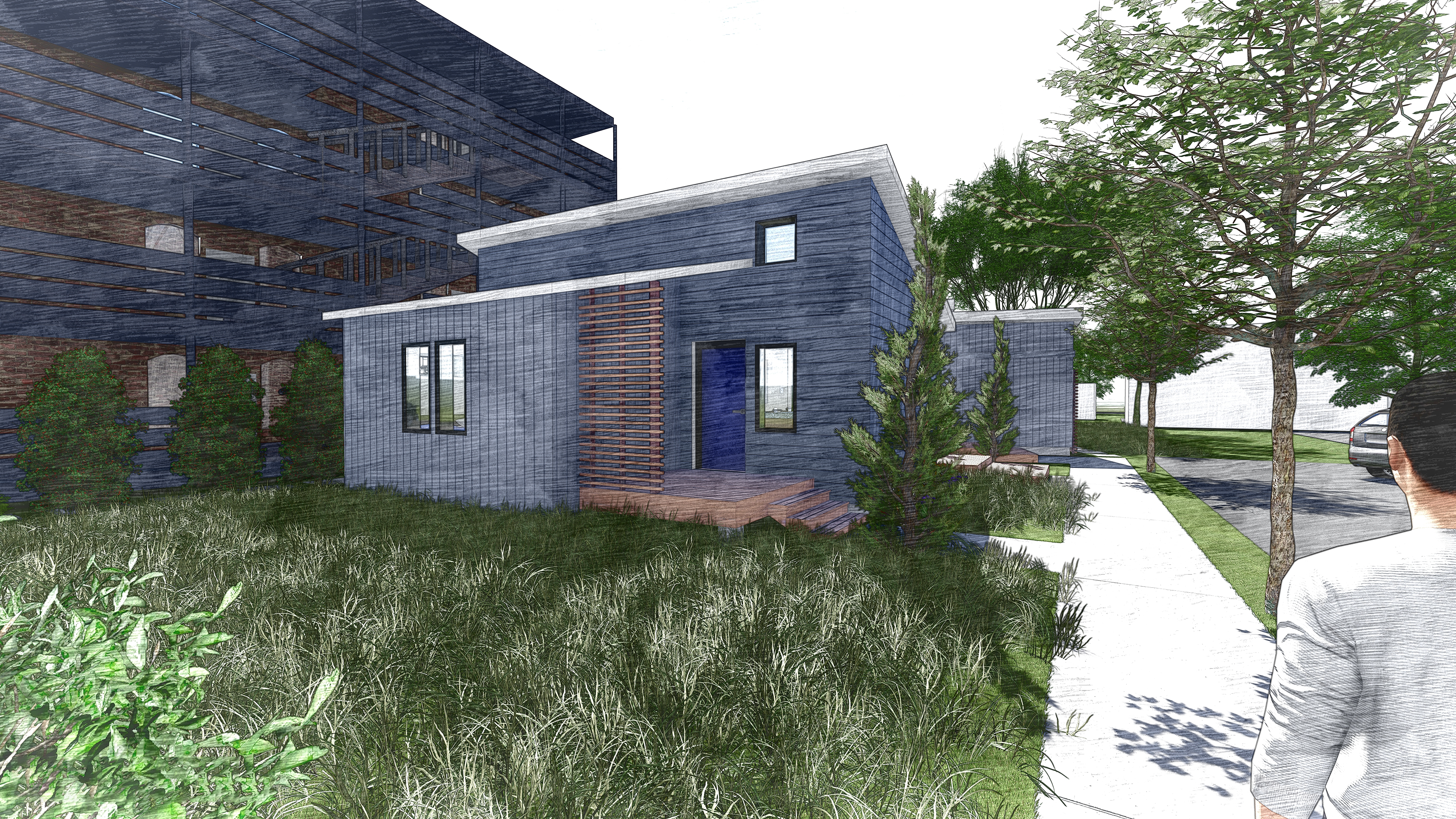
The $5.16 billion Affordable Homes Act was signed by Gov. Maura Healey August 6. It is the state’s largest housing bill, more than tripling the one passed in 2018, and is intended to create or preserve over 65,000 units. Without it, the state was projected to have a shortfall of 220,000 housing units in 2030. The new state law anticipates the creation of between 8,000 and 10,000 additional housing units because of the ADU provision.
The act also supports the preservation of existing housing and the rehabilitation and modernization of state-owned public housing. Massachusetts has the most public housing in the US, with 43,000 units, and is known to have been chronically underfunded.
The act also institutes 49 policy changes with respect to housing. The change with the biggest potential impact on Amherst relates to ADUs, because it allows them “by right” in residential zoning districts.
Cities and towns are typically loathe to give up local control in most areas of governance. But on ADUs, the legislature and the governor felt that the need for more housing was pressing enough to warrant a state mandate.
State regulations are sometimes unable to account for local issues. In Amherst, the impact of student renters and investor owners has often made residential neighborhoods, especially those near the UMass campus, reluctant to support making it easier to build ADUs.
But Amherst has enacted bylaws to manage unacceptable tenant behavior. Under a rental registration bylaw, property owners can lose their licenses to operate under certain circumstances. We also have a noise bylaw and a nuisance housing bylaw.
In addition, town officials have worked with UMass staff to enforce a student code of conduct off campus. There have been joint meetings to share information and strategies for dealing with student misbehavior in rental housing.
The text of the law the governor signed includes this sentence: “No zoning ordinance or bylaw shall prohibit, unreasonably restrict or require a special permit or other discretionary zoning approval for the use of land or structures of a single accessory dwelling unit, or the rental thereof, in a single-family residential zoning district.”
The act gives communities 180 days to adjust local zoning requirements to bring them into compliance. The Massachusetts Municipal Association and state officials are expected to provide guidance on how the law will be applied on a local level.
In addition to requiring owner occupancy, Amherst currently requires a special permit for ADUs over 1,000 square feet. This may or may not be allowed under the new law.
It is not yet clear which Amherst restrictions on them will be deemed “reasonable,” and how many property owners will be interested in constructing them.
Connie Kruger is a former Amherst Senior Planner, Select Board member, a Massachusetts Housing Partnership Project Manager and served on the Massachusetts Housing Appeals Committee.
Discover more from THE AMHERST CURRENT
Subscribe to get the latest posts sent to your email.
 THE AMHERST CURRENT
Amherst has regulations governing the behavior of students and landlords in rental properties. However, it does not allocate enough funds or have personnel enough to enforce these regulations. In theory there is supposed to be cooperation between the Amherst police and UMass disciplinary authorities regarding infractions of regulations in rental properties. in practice, this does not happen. It will be interesting to see if ADUs pop up on the more spacious lawns of Amherst upscale neighborhoods, or if they will be confined to smaller properties in neighborhoods where the conversion of single-family homes to student rentals is already problematic .
LikeLike