
By Nick Grabbe
In Amherst, Labor Day is a little like New Year’s Day. With the resumption of public school classes and the return of college students, there’s a sense of a new start.
Many of us have been out of town, for weeks or months, and may need a refresher course on what’s been happening in Amherst. And so the Amherst Current is presenting this summer summary, with links to relevant posts. In between each section is a link to a recent Current post, in italic.
Public Schools
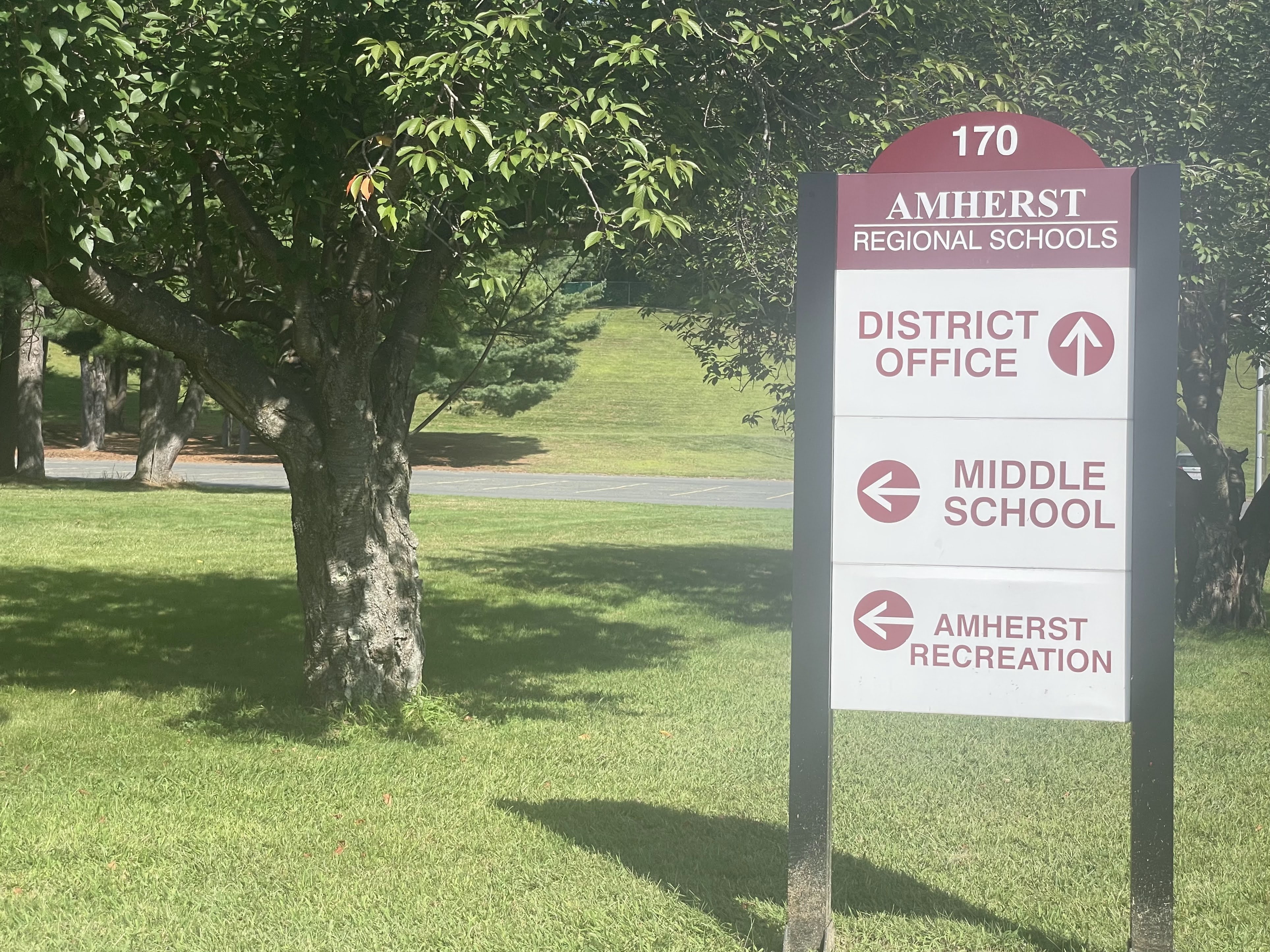
New Superintendent E. Xiomara Herman started in July, and she has a full set of issues to confront. The Town Council approved the long-debated $35.27 million budget for the regional schools, accepting an increase higher than the established guideline. Now, attention has turned to next year’s spending plan, as a committee has formed to seek out possible savings and potential revenues. Securing financial help from Amherst College, with its impressive endowment, hasn’t been ruled out.
In this Amherst Current post, parent Cathleen Mitchell argued that the schools have a funding problem, not a spending problem. In this post, Bryan Harvey analyzed changes in school spending.
Meanwhile, construction bids were sought for the expansion of Fort River School, which is estimated to cost $97.5 million for the net-zero energy building. After the way-over-budget bid for the Jones Library expansion, everyone is hoping for a happier fate for this major project. Also in the works is a $4.41 million plan to rebuild and reconfigure the ARHS track.
The turmoil of last year, which went national through a New Yorker article that detailed a “meltdown,” resurfaced in August as a former middle school counselor filed a federal lawsuit. Tania Cabrera claims she faced religious discrimination in her work with transgender students.
When it was revealed that Amherst’s own Emily Dickinson is related to pop superstar Taylor Swift, the Amherst Current wondered what they would say to each other. So we asked ChatGPT to create a dialogue between them. Check it out here.
Jones Library
In June, the expansion and renovation project had a near-death experience as the Town Council voted 7-6 against stopping it. Now, the long-delayed plan faces another crucial hurdle: a second round of construction bids, after the sole bid in the first round was rejected.

The state has extended the deadline for submitting a final plan, and architects have scaled back some features to make the bidding more likely to fall within the $46.1 million spending limit. These changes involve woodwork, roofing materials, windows, metal roofing, brick exterior and scaled-back landscaping.
Allison McDonald provided a history of the project, and details about the changes and next steps, in this post.
Despite the Town Council vote, and a referendum in which almost two-thirds of voters supported the library project, opponents have not given up. They circulated an online petition urging the Council to withdraw its support for the project.
Meanwhile, library officials warned that abandoning it would cause the forfeiture of over $20 million in state and federal grants and private fundraising. Money for basic improvements, such as a new HVAC system and roof, plus asbestos removal and a new fire alarm system, would have to come exclusively from local revenues.
What will happen if the money available for the library project falls just short of the lowest bid? Would the Town Council save the day by providing more money, even though it has said its contribution would go no higher? Would the library trustees make up the difference by spending more of their endowment?
With Hampshire Mall facing possible foreclosure, Stephen Schreiber and Ann Marshall reported here on UMass architecture students’ ideas for reimagining the space.
Town Government

Money matters came up this summer. Amherst retained its favorable bond rating, keeping borrowing costs low for big-ticket projects. Local expenditures for roads and sidewalks were greatly reduced for the current year, limiting the amount of repairs that can be done. The revenue shortfalls at town-owned Cherry Hill Golf Course are due to get some scrutiny, and the $4 million plan to rebuild the bath house at War Memorial Pool was put on hold.
For an insider’s look at Amherst’s financial facts and future, check out Andy Churchill’s interview with Sandy Pooler, as he finished a return stint as finance director.
One controversy the Town Council faced this summer was over a Planning Board vacancy. On a 6-5 vote, it rejected the appointment of Melissa Farris because of remarks she made that seemed to some to prioritize neighbors’ concerns over the master plan. Lawrence Kluttz was appointed instead. And speaking of controversy, nine residents were named to a new committee to review the town charter, which voters strongly endorsed in 2018 after a bitter battle.
In other news: A a new trash hauler bylaw that would involve curbside compost collection was under review (David Porter provided details here); solar/battery development off Shutesbury Road started going through a permit process; and the town bought 11 acres off Sand Hill Road to protect water coming from the Atkins Reservoir.
How can we help older adults in Amherst age well in community? Pat Romney reported here on the activities and services of Amherst Neighbors.
Housing
Several proposals to deal with Amherst’s chronic housing shortage advanced this summer. An 85-unit apartment complex at the corner of Amity Street and University Drive, with two four-story buildings comprising 14,000 square feet, moved through the permitting process. It’s the site of the former cannabis dispensary (Rafters restaurant before that) and the Encharter building. A roundabout is planned for that intersection to handle increased traffic.
In North Amherst, a 30-unit affordable housing project is in the works. Amherst Community Homes will include 15 duplexes just off Montague Road. Water and sewer lines are due to be connected to the site this fall, and the target date for moving in is in 2027.
A new state law making it easier to build accessory dwelling units was signed by the governor. Connie Kruger explained here what this means for Amherst.
Sixteen apartments for college students could become available at the former University Motor Lodge at 345 North Pleasant St. But a plan to convert a farmhouse at 180 North Whitney St. into a duplex housing up to eight people failed to receive ZBA approval, after neighbors opposed it.
And longtime Planning Director Christine Brestrup, who brought calm and expertise to the often-contentious-development process, announced that she will retire this fall.
In this post, Nick Grabbe ranked the top 10 problems facing Amherst, from parking and student rentals to tribalism and high taxes.
Nick Grabbe is a co-founder of The Amherst Current. He has been a resident of Amherst for nearly 40 years and served as writer and editor for the Amherst Bulletin and the Daily Hampshire Gazette 1980-2013.
Discover more from THE AMHERST CURRENT
Subscribe to get the latest posts sent to your email.


Seems like repetition is necessary, once again. Amherst’s finances are greatly impacted by having non-tax-paying institutions with students, staff, faculty, service providers, and deliverers of materials/food/drink/ utilizing its roads on a daily basis. As well, they utilize water/sewer/electricity/waste recycling… As few students own homes, they aren’t paying property taxes. Until the MA legislature can somehow be influenced to alter its abstemious payment in lieu of taxes formula, property owners will continue to get squeezed to pay to subsidize the non-permanent residents and the total related impacts of these institutions. Local schools, roads, and facilities need fair support from these (nearly) free riders.
LikeLike
Payment in lieu of taxes (PILOT) could certainly help Amherst finances. But, UMass and Amherst College aren’t (nearly) free riders IMO. Users of water and sewer pay for these directly to the Town, not through property tax. And electricity and waste hauling are not paid for through the town, but direct with the provider. Also, while renters don’t pay property tax to the town, their landlords do…and presumably they pass the property tax onto their tenants through the rent they charge. That doesn’t mean that PILOT isn’t important, just that there are other, worthy reasons why.
LikeLike
You are correct that bills are paid to private companies for electricity and waste/recycling. However, roads are damaged by heavy waste trucks, and excavation is done for grid repair and upgrades. Both add to the wear of roads, and the companies aren’t sharing profits with the town to cover added costs.
LikeLike