
By Corinna J. Moebius
Amherst residents and stakeholders came together in September at the Downtown Design Standards Visioning Session to imagine the future of the town center. From increasing sidewalk dining to slowing traffic, attendees shared ideas aimed at preserving Amherst’s small New England town feel while accommodating the needs of a growing community.
The workshop, held at Amherst-Pelham Regional High School, was part of a broader series of community engagement activities that will help shape downtown Amherst’s future streetscape and development. The standards developed from this process may guide private development projects and zoning permits, and be used by the Design Review Board to ensure that new buildings and improvements reflect the needs and aspirations of the community.
In addition to the workshop, other engagement activities in September and October included a walking tour, a listening session, and a virtual visioning workshop. The town is encouraging ongoing participation through a visual preference survey, open until Sunday, October 27, where residents can share their preferences for downtown’s look and feel. Public forums are also scheduled for December, February, and May.
Hands-On Activities Spark Ideas
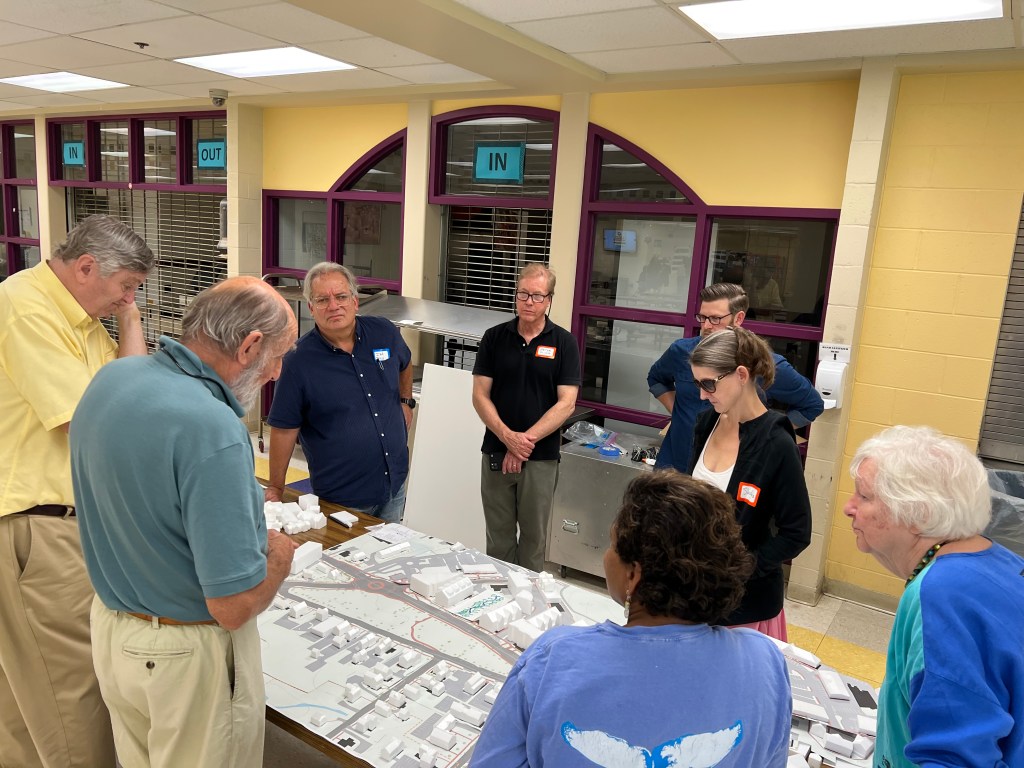
During the visioning workshop, more than two dozen attendees split into small groups and rotated through interactive stations, sharing their ideas about the future of downtown. At one station, participants used a map of downtown and 3D paper models to visualize development options. One group visiting this station highlighted the importance of Tan Brook’s watershed, placing a blue strip east of Kendrick Park to represent its underground flow and emphasizing that future developments consider its impact on the environment and local buildings. Group members suggested “daylighting” the stream so it could become a more visible and appreciated feature of the town center.

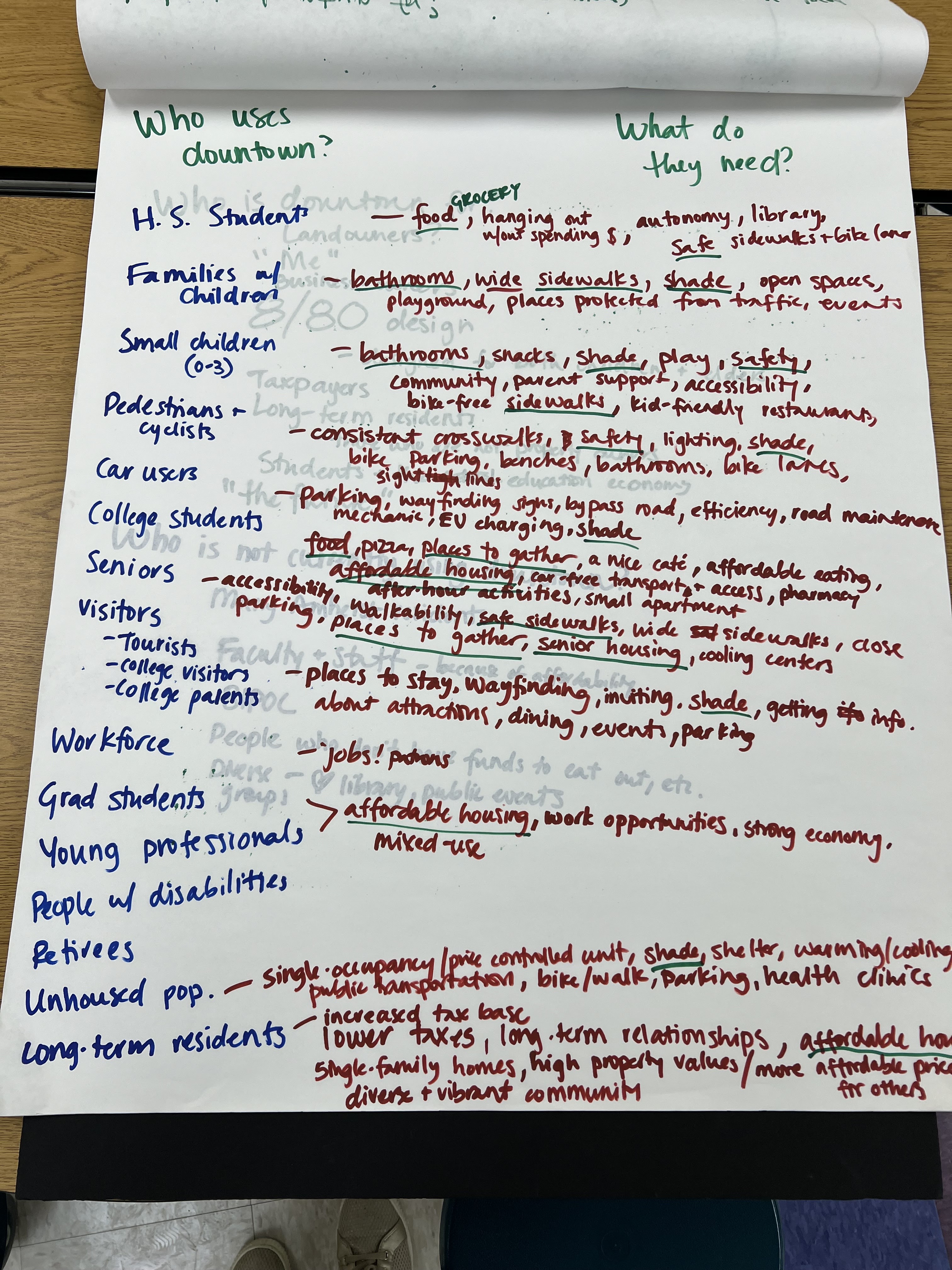
Another station focused on identifying the needs of different stakeholder groups. Participants discussed which groups had access to gathering spaces and everyday amenities like dining and shopping, and considered which people or groups were underrepresented in downtown spaces. At a third station, attendees placed sticky dots on photos of existing downtown buildings to indicate which design features they liked or disliked, keeping in mind what would complement Amherst’s character. Sets of photos focused on different examples of setbacks, parking approaches, window treatments, etc.
When attendees arrived at the fourth station, they discussed their visions for Amherst, often finding common ground despite differing perspectives. The facilitator asked participants to describe how change might happen and what forces would need to be harnessed to realize the vision.
Walking Tour and Listening Session

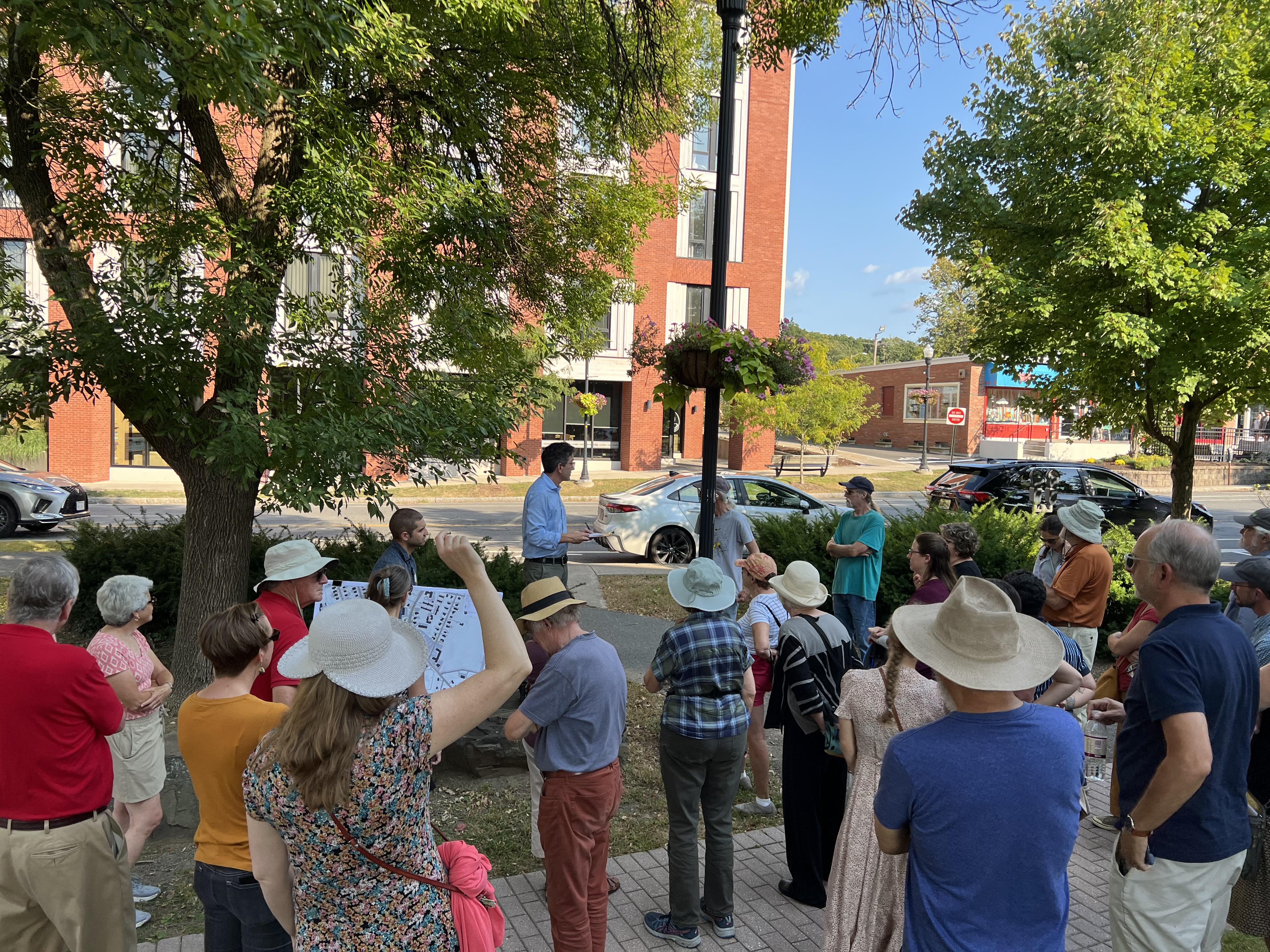
On September 13, the day before the visioning workshop, residents, business owners, and students participated in a walking tour along North Pleasant Street, beginning at the North Common. As they moved through the downtown area, facilitators asked for feedback on streetscape features such as sidewalk widths, building heights, and outdoor dining areas.
Reactions to newer buildings like the five-story Kendrick Place varied, with some participants appreciating the contrast with older structures, while others expressing concerns about its impact on the town’s unique sense of place.
Next Steps for Design Standards
These public activities are being led by Dodson & Flinker Landscape Architecture & Planning, the consulting firm hired by the Town of Amherst. A Working Group of local stakeholders—including business owners, residents, developers, and design professionals—has also been meeting since June 2024 to help guide the process.
Beginning in January 2025, the town will develop two sets of design standards: one for streetscape and the other for private property (site and architectural standards). Streetscape standards may address sidewalks, street furnishings, crosswalks, accessibility, outdoor dining areas, lighting, and public art, while private property standards may include building orientation, architectural styles, parking, and landscaping.
The project is funded by the Town of Amherst and a grant from the state Executive Office of Housing and Livable Communities. Once the design standards are developed, they will be adopted by an official town body such as the Town Council or Planning Board, and will be subject to a public process.
How to Get Involved
Community members are encouraged to continue participating in shaping the future of downtown Amherst. You can take the visual preference survey until October 27 to share your input on the look and feel of downtown. (Take the Survey.) Public forums are scheduled for December, February, and May. For more information about the project, including the schedule, meeting summaries, draft documents, and ways to participate, visit the project website.
Corinna Moebius, Ph.D., founder of TerraViva Journeys, is a consultant/coach who connects people to place and to each other through transformative experiences. Raised in Amherst, she earned her BDIC at UMass.
Discover more from THE AMHERST CURRENT
Subscribe to get the latest posts sent to your email.
 THE AMHERST CURRENT