
By Allison McDonald

Amherst’s elementary and regional schools are again projecting deficits in next year’s budgets of over two million dollars combined and the school committees are wrestling with how to close the gaps. Their focus has been on pressing the Amherst Town Council to direct more funding toward the schools than is currently projected in the Town’s overall budget. Without additional funding, the districts are facing significant staff cuts in order to balance their budgets.
Advocates for increasing funding to schools above the Town’s projection often frame the debate around valuing education, suggesting that those who disagree with their position do not value education or are acting to destroy public education in Amherst.
In my 22+ years in Amherst, I have not met a single person who does not value education. Indeed, our community is teeming with passion for our public schools and education overall — it is our town’s largest employer, and many of us are here for reasons related to education.
Framing any debate about school budgets and funding as one about whether or not we “value” public education shuts down any reasonable dialogue about the many ways a community can provide a quality public education.
The facts behind our “crisis” situation are known and not in dispute: the expenses in our school budgets are increasing more than the revenues are.

Certainly, there are multiple issues on the revenue side of the equation that if addressed, would bring greater revenue to our schools. The state could fully fund its commitment to special education, charter school tuition reimbursement, or transportation reimbursement, for example. The state also could reform how it funds charter schools as well as the foundation formula for determining basic state aid to public school districts. Indeed, a broad coalition of state education organizations, educators’ unions, parent-teacher associations, advocacy groups, and civil rights leaders are joining forces to advocate for changes like these.
Local groups also are advocating for more funding support from Amherst College and increased funds from the Amherst town budget (such as from reducing reserves or through increased property tax).
More revenue would help and is needed. But without also considering the expense side of our school budgets, we are doomed to repeat this cycle of annual budget crises.
Again, the basic facts are known and not in dispute: enrollment in both our elementary and regional districts has declined significantly (down 43% in the region and 33% in the elementary schools since the 2001-02 school year) and the proportion of students with high needs has grown.
But, to date, we have refused to explore options to reform our schools to meet this new reality, shutting down any discussion about examining cost structure by characterizing such an examination as devaluing or hollowing out our schools.
Our regional schools are designed for a district of over 2,000 students and a high school of over 1,400. The district today enrolls 1,182 students with just over 800 students in the high school. Our elementary schools served over 1,500 students in 2002, and now serve just over 1,000. Certainly, a reform of our schools to restructure our cost base would necessarily mean change that impacts the student experience. But that does not necessarily mean a lower quality education, or a decline in student outcomes.
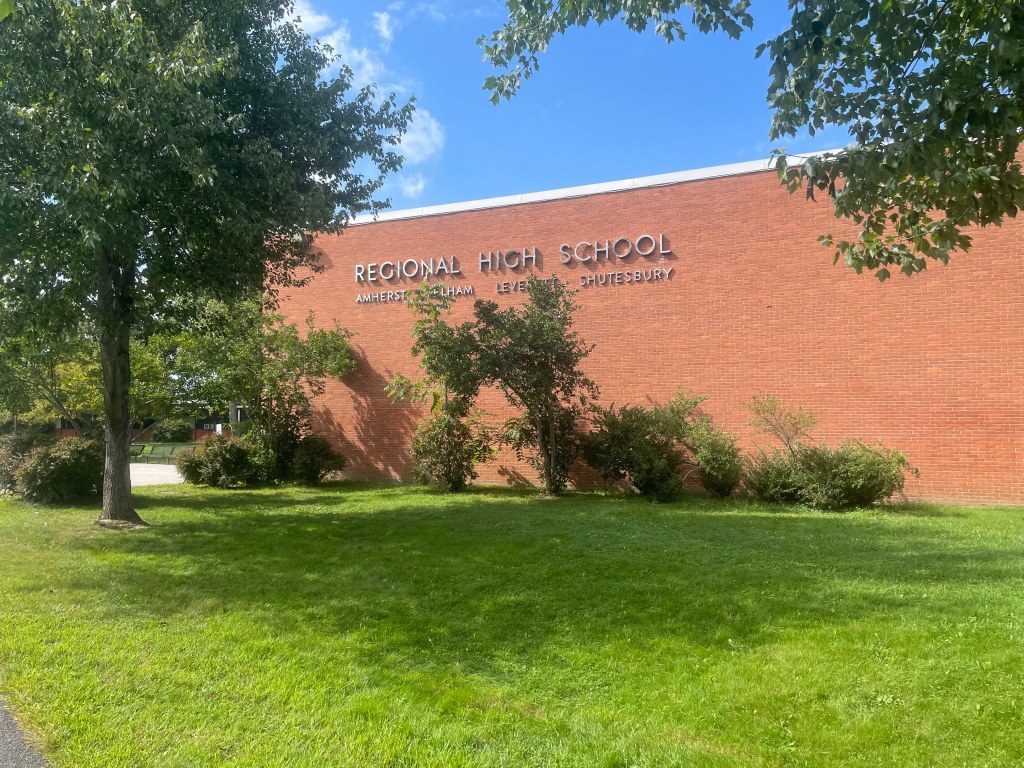
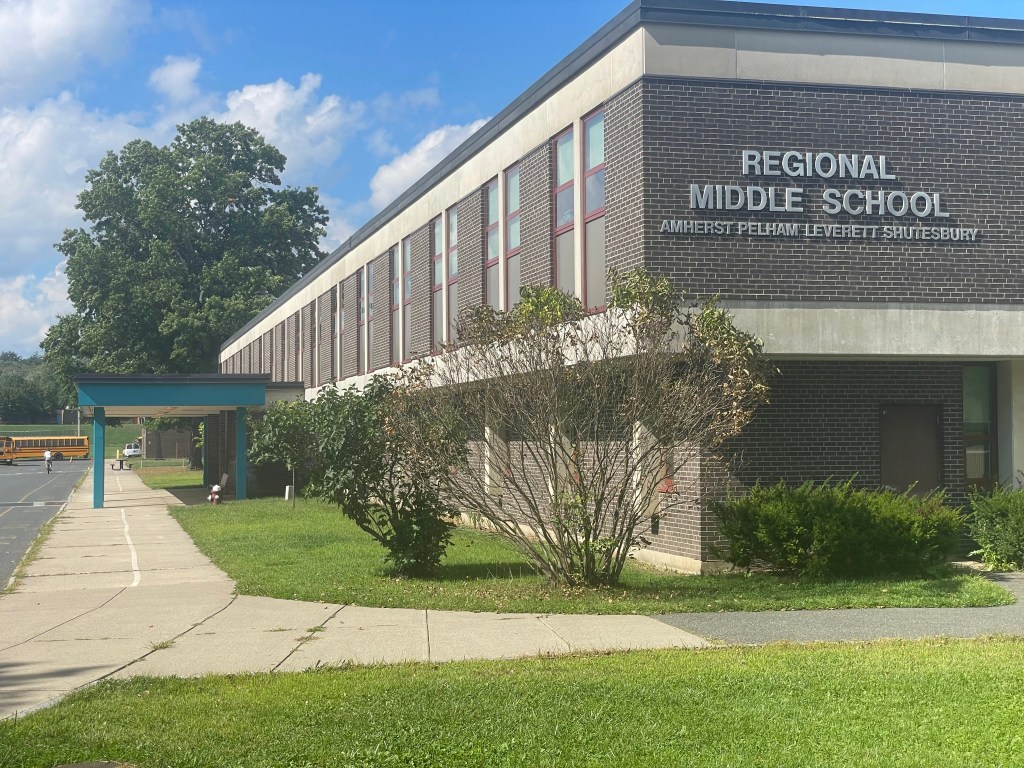
Can Amherst “right size” its education program while maintaining quality and addressing the needs of all students?
I believe we can, but it requires us to have open and constructive dialogue about possible changes.
Class size and the number of courses should be up for discussion, for example.
- The average class size is 13 in the regional schools. The statewide average for PK-12 is 17. (In the elementary schools, average class size is 18.)
- In English Language Arts in the region, the average class size is 10, compared to the statewide average of 16. 11th graders at ARHS can choose from 5 different English courses; 12th graders select 2 courses from 7 options.
- World languages in the region have an average class size of 11 while the statewide average is 17. ARHS offers courses in 4 world languages.
- ARHS offers 9 year-long music ensemble courses, 5 of which are by audition only.
While the multitude of courses offered and some year-long music courses at the high school make it challenging, increasing class sizes to still-manageable numbers could save money.
We could presumably reduce spending and still offer a high-quality education for the smaller numbers of students in our schools by considering changes like these in how we serve our students, as well as in what buildings.
Will discussions like these be difficult? Of course. Still, we need to be able to consider such changes to see if they can work, without having discussions shut down at the outset by accusations of bad faith or not caring about kids.
Other districts manage similar challenges to ours with lower costs. The town of Dedham, for example, enrolls around 450 more students than our districts combined and has similarly large proportions of students with low income or disabilities. Yet its school budget is comparable in size to the combined budgets of Amherst and the Region (around $70 million).
There aren’t easy solutions to our budget challenges and we will disagree about how to get there. But, we need to examine the full scope of options, including both revenue and costs, to enable strong, sustainable public schools in our community. And we need to find a way to do so without accusing each other of not valuing education.
Allison McDonald has lived in Amherst since 2002 and has two sons who attended Amherst public schools. She served on the Amherst School Committee 2018-2023, and as chair 2020-2023. She volunteers as managing editor of The Amherst Current.
Discover more from THE AMHERST CURRENT
Subscribe to get the latest posts sent to your email.
 THE AMHERST CURRENT
The performing arts opportunities in the regional schools have set us apart for at least the last three generations of students. Also opportunities for advanced level courses.
Cutting these “frills” along with higher taxes will affect the number of families who can afford to live here. Those who can pay the taxes and fees will attend private or charter schools.
Amherst Forward has made a five star library a higher priority than the schools. The schools need to go after Jones Library for the $4,900,000 they owe to the town taxpayers! $900,00 promised for January, 2024 and $4,000,000 promised for January, 2025. Unfortunately I don’t see a source for these huge sums—now or in the future.
LikeLike
Allison, thank you for your thoughtful piece. It would be great if we could engage with each other respectfully in Amherst. That hasn’t been the trend for some time now.
I’m certainly not anxious to see a tax increase proposed as a solution!
LikeLike
Thanks for this article. The Charter School funding formula has been problematic since the first 25 schools (including PVPA) were launched. Working to change that needs to be part of the solution. The benefits of Amherst children and families having other publicly funded options are substantial and provide our region with a competitive edge over areas that do not have an Arts-oriented or Chinese immersion school, but the amount of funding we lose each year from families choosing other options is daunting.
LikeLike
I have attended many of the town council and ARPS meetings regarding proposed cuts to our 2025 school budget. I feel for our elected officials in these difficult moments of public opposition to their legislation and in the past I have witnessed some very vocal, aggressive and disturbing personal attacks on our elected officials. In this current impasse, however, I have seen very little – if any – of those kinds of personal attacks. At tonight’s Amherst School Committee meeting the three principals of our elementary schools described the devastating effects the cuts they were forced to outline would have on the quality of our children’s education. There is no question that we are about to see an outcry against this devastation and that people will say that these cuts are against our community values. There is no question that we will continue to see calls – some impassioned and demanding – by hundreds of our residents to reevaluate our use of public monies in order to save these critical student-facing teaching positions. My sincere hope is that town officials be able to see that outcry as something other than personal attack and find productive ways to move forward to better meet our children’s needs.
LikeLike
Part of human complexity is that we are capable of saying one thing with our words and then doing something entirely other with our actions. Just because one feels positive feelings toward education in Amherst, doesn’t mean the decisions they make are automatically in the best interest of the schools or the town. And it certainly doesn’t mean that as a public figure, they should be free from public criticism. If the public doesn’t like the choices their leaders make, criticism will follow. If the would-be leaders remain intransigent and unresponsive to the public, they may very well face more intense ridicule and even social isolation. Anthropological studies show us that mockery and ridicule of those who would lord over us are powerful tools for human communities to protect ourselves against bullies and petty tyrants. In the modern day we still, ostensibly, have the right to free speech. I think it shows a real weakness of actual policy vision to continue harping on the aesthetics of political discourse in town and tone-policing the public: since one can’t make a compelling case for “supporting” the schools by cutting teachers and programs, one attacks the public for their outcry over cuts instead. Asking people to prioritize civility above justice, as a way of pushing their austerity agenda, is a flagrant display of ersatz leaders prioritizing their own comfort and privileges above the public interest. Ad hominem attacks, those on someone’s personhood are, of course, unproductive. But elucidating the political, social, historical, cultural contexts from which your interlocutor operates, or criticizing the material consequences of your activity as a public official? That’s responsible citizenship.The working classes are not going to comply with this rule of “politeness for me, systemic violence for thee, and you better not complain about it.”
LikeLike
I am all for honest conversations, but we need to make sure we’re working with correct information.
ARHS currently offers seven half-year music ensembles, with four of them by audition. The enrollment for all of these ensembles meets or exceeds the average class size in the district. Three of these ensembles currently have more than twice the average class size in the district.
Todd Fruth
LikeLike
Thank you, Todd, for the clarification. I pulled the information about the number of ensemble courses from the 2024/25 Program of Studies for ARHS, https://docs.google.com/document/d/1o6HbUJAI59nNHmQy_HIAViPS3E9D_ntx/edit?tab=t.0, which listed 9 ensembles, 5 with auditions.
The average class size data reported to DESE does not break out music ensembles from classroom/general music courses, so thank you for sharing that information.
LikeLike
Got it–thanks for citing your source! Steel drumming is a one-quarter course that is technically an ensemble, but is truly more of a classroom music course designed for non-musicians. The two orchestra ensembles are essentially combined at this point due to previous low enrollment, though the numbers are rising.
LikeLike
Thanks for this thoughtful, reasonable and informative article. Budgets are just one factor among many that determine the quality of public education. It’s unfortunate that so many folks focus only on money…as if it were the sole determinant of educational outcomes. By any comparative standard Amherst’s spending on schools is tremendously generous. If the Town seeks better outcomes for its students, lots more money is the easy but incorrect answer.
LikeLike
I am not sure why “crisis” was placed in quotes in this piece, but it has the effect of suggesting that what many educators and parents of school-aged children are experiencing as a very troubling situation in our schools, is not actually a problem. I think statements like this have led families to feel dismissed and not heard, especially by community members and elected officials who don’t currently have children in our schools. What I heard during dozens and dozens of public comments over the last two nights was a tremendous amount of fear and emotion, of parents with real worry that their children will not get an adequate education in Amherst and educators emotional at the idea of no longer being able to provide that for our kids. I think it would be helpful to the conversation if we could have more listening and less tone-policing of families experiencing a very troubling situation. That would be a step toward potential “civil” engagement.
LikeLike
I’m still waiting for the day, in Amherst, that some proponent for some course of action in the public arena, faced off against an opposite point of view, actually utters or writes these words, or words to this effect: “The full meaning of my views was heard, and carefully considered, and I lost the argument.” I do believe that THAT actually happens in Amherst, but without any acknowledgement by those on the losing end that public policy decision-making necessarily involves tough choices. So, in Amherst, as sure as night follows day, when one loses an argument HERE, one always disparages the process or the character of the people making the decisions. And we are, oh so very good at that.
LikeLike