
By Peter Demling
The Challenge
The world is in a difficult place today, to say the least.
So much pain and suffering born of prejudice and hatred, so much violence between divided groups of people, too little care and compassion for the basic needs of every human being, and such enormous difficulty for the world to work together on solving these problems.
When looked at this way, it is a bleak picture. And to see this real human suffering happening every day, on our own shores or in distant parts of the world, to feel like things are getting worse and that we’re powerless to stem the tide, to try and confront the full scope and magnitude of our inhumanity to each other?
It’s asking a lot to live under such conditions and maintain an overall sense of hope. Feelings of cynicism, pessimism and jadedness are an understandable response when faced with a shared fate that feels inescapable, driven by the core problem of a divided humanity that seems unsolvable.
I don’t think there’s one “right” or “wrong” way to bear witness to the human suffering in the world and try to integrate a response to it in our daily lives. We each have to come to terms with it for ourselves, decide if we’re in a position to do something, and if we are, figure out what can be done.

The Root Cause
If someone is hungry then we give them food. That is an immediate and effective response; but if that’s all we ever do then we’re not getting at what caused the hunger in the first place. A person not having enough to eat is a symptom of a larger problem.
We can then look at the underlying causes of hunger by trying to address things like poverty, geopolitical conflict, climate change, housing insecurity, and economic instability. And there are many shining examples of excellent work being done in these areas that are reducing hunger for millions of people.
But these issues have their own underlying causes, which if left unchecked will continue to create these problems without end. And on it goes; causes upon causes, with the resulting pain and suffering of the world at the end of the chain. But what’s at the beginning?
I think when the origins of most human suffering are traced back in this way, we find that the ultimate root cause is a lack of shared humanity: the treatment of others, especially from groups different than our own, as not having intrinsic value. Because when we cut our connection to others, compassion disappears; and when that’s gone, the pain and suffering of others doesn’t matter anymore.
We have more than enough food to feed the entire world multiple times over every day. Hunger is not a resource or distribution problem: it’s a compassion problem. Collectively, we don’t yet care enough about others to want to meet everyone’s basic needs.
We are living in an era of humanity where selfishness, tribalism and divisions dominate; where wars and other terrible conflicts of unspeakable violence are the natural outcome. So this lack of shared humanity needs to be addressed at the root, in addition to treating the symptoms of suffering that result from it.

From Inner Peace
Without seeing evidence to the contrary, it can seem like selfishness and tribalism are unchangeable parts of human nature that we’ll be living with forever. So I’ll submit what may feel like a radical proposition: we can each actively cultivate and promote a collective feeling of shared humanity. Millions are already doing this today; and it’s by doing so that we’ll create a future of lasting unity among all people.
There are available today what I would call “pathways to peace.” Whether classified as spiritual or religious, contemplative or introspective, or something else altogether, these are free and open invitations to explore and evaluate different ways of opening the door to an entirely new landscape of possibility within ourselves: a direct personal experience of deep inner stillness, and the oneness of all life.
It’s the prospect for a wholly new dimension of experience, fostering our connection to each other through expansive feelings of love and peace. And direct personal experience is essential because it’s difficult to create and share unity in the world without first feeling the truth of it ourselves. As Tony Nader says, “love is the highest and most unifying expression of the value of oneness; but what is missing is to know it on the deep level of our being.”
This is what I think “to change the world, change yourself” means; why the Dalai Lama says “world peace must develop from inner peace.” Where amplifying the feelings we discover within creates ripple effects in the collective consciousness of the world, radiating outwards, inviting and encouraging other hearts to vibrate in a shared resonance.
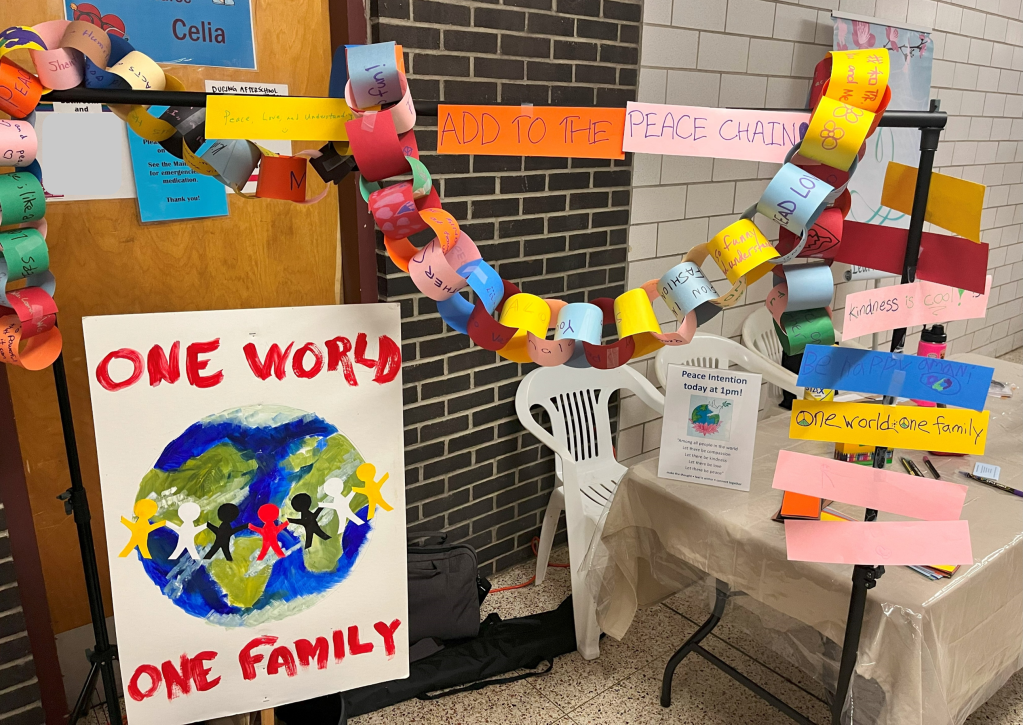
To World Peace
And so inner peace can create world peace when hearts become progressively brighter beacons in the world, conduits drawing from a shared wellspring of inspiration, acting collectively through acts of intention, and expressed individually through lives of ever-expanding kindness, compassion and love.
It can be difficult to embrace such an approach based on lofty ideals alone. And so pathways to peace provide the missing piece of personal experience, uncovering a profound depth of feeling, a reservoir to draw upon that infuses our thoughts, actions, and consciousness. We become the instruments to create the world we aspire to see.
The path I’ve found that works best for me is Heartfulness Meditation, a free and simple daily practice to connect deeply with the heart. There are many paths to choose from and even when they have very different methods and beliefs, they can each contribute to global unity through a shared aspiration to bring peace to all people, everywhere.
At the recent Amherst Global Village Festival practitioners from different backgrounds and traditions gathered together in this spirit to share a universal “Peace Intention”:
Among all people in the world
Let there be compassion
Let there be kindness
Let there be love
Let there be peace
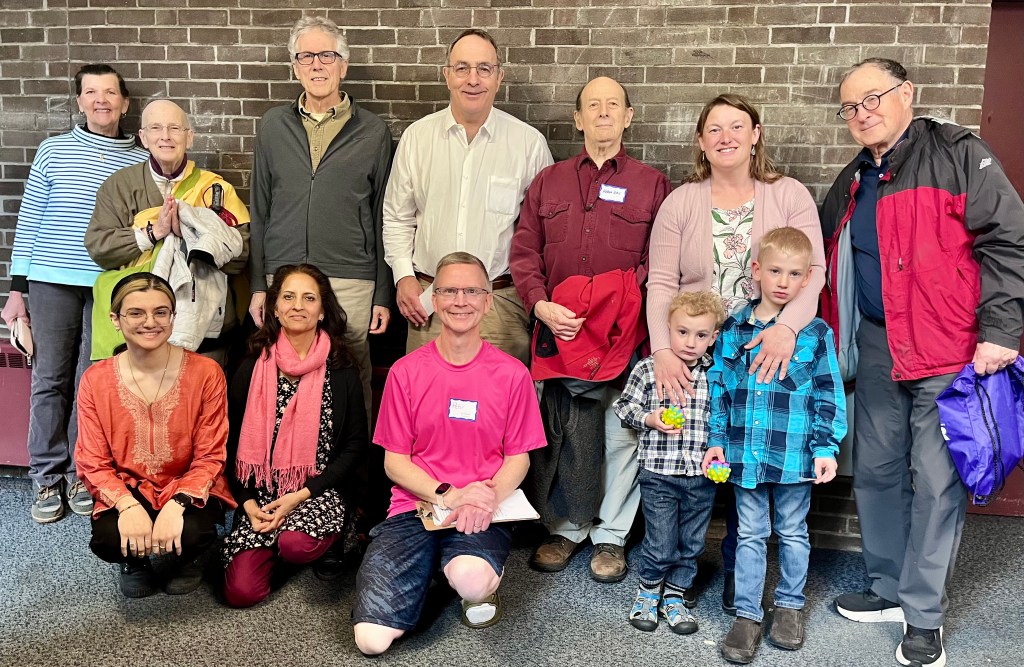
Photo by Peter Demling.
One action at a time, embracing our differences yet united as one human family: every day is an opportunity to explore new possibilities within ourselves, cultivate our shared humanity and create the future together; connecting with and supporting each other wherever we happen to be in life, on our shared pathways to peace.
Peter Demling lives in Amherst and practices at the Heartfulness Meditation Center on Rte 116 in Sunderland
Discover more from THE AMHERST CURRENT
Subscribe to get the latest posts sent to your email.
 THE AMHERST CURRENT
Comment from Mary Lou Conca:
This is an impressive and grand approach to peace among all persons on the globe.
The idea of spreading the good word and performing daily gentle deeds is a vital step towards peace.
However, I must take notice that there is not one Black, brown, or poor white person depicted in the photograph.
I am also curious to learn what the group(s) are doing to ensure the children attending the building behind them receive clean, organic foods. There is a mention of food in the article that has brought my attention to write today. It mentions those who are hungry, and to get to the root cause of their hunger. My concern is hunger among our children, especially in our schools. The school menus serve foods -for instance, leavened breads cannot be eaten during certain cultural holidays, and pork can never be eaten in other cultures. And then there is my cause, which, simply put, reads: What good does it do to grow our children’s minds if we poison their bodies with all the chemicals, glyphosate, Round UP, growth hormones, antibiotics, pesticides, herbicides, etc., etc., etc. lurking in the foods we feed them now?
Perhaps the author of the article might contact me to learn more about the clean food petition for children attending preschool through grade twelve in the Amherst, Pelham, & Regional Schools. And to my readers, to learn more about the Wellness Committee and how to join, please contact Student Services at (413)362-1833 or (413)362-1834. This is where the overall wellness of all students is set into policy. If you are what you eat, as the famous cliche goes, why aren’t we feeding our children the best there is to offer?!
Thank you for reading. ~Mary Lou Conca
LikeLike