
By Allison McDonald
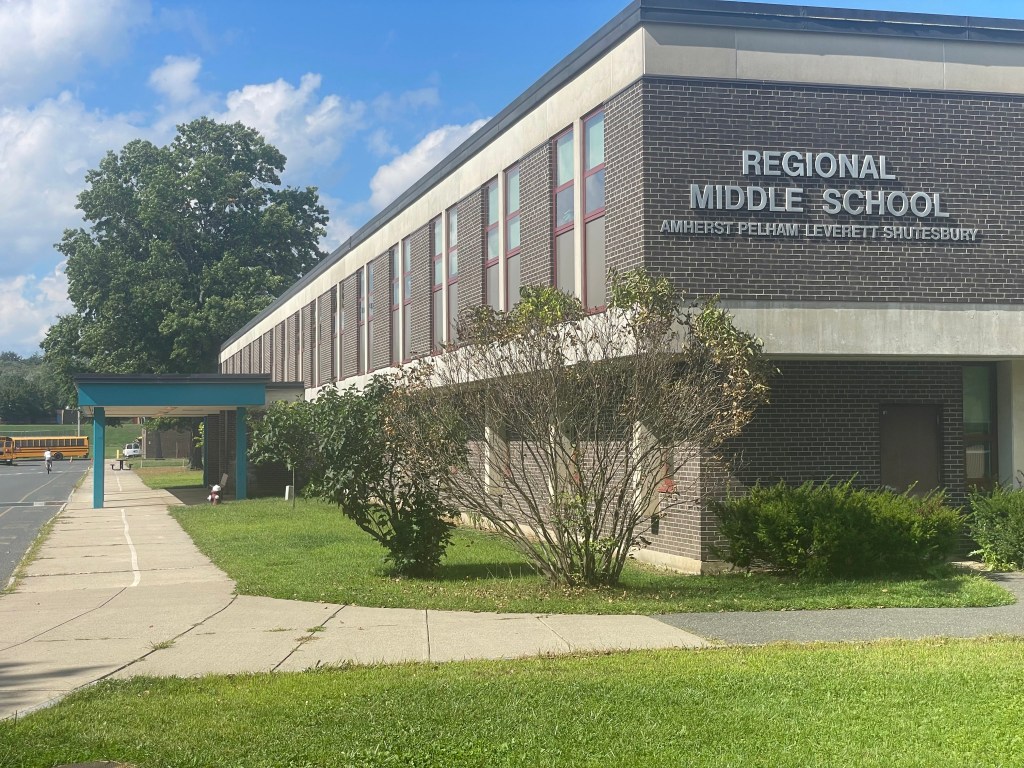
The four towns that make up the Amherst-Pelham Regional School District—Amherst, Leverett, Pelham, and Shutesbury—are proposing working together to tackle a growing challenge: how to sustainably fund the grade 7–12 regional schools in the face of rising costs and limited revenues.
Leaders in the four towns developed a draft joint memo to be shared with the district leadership outlining their concerns, goals, and next steps for what they’re calling the Four Town Fiscal Sustainability Process. The Amherst Town Council will discuss the draft memo at its meeting on Monday, June 30.
The proposed process comes after two years of challenging budgets that created tension between the towns and the Regional School Committee. Amherst, which sets budget guidelines early in the year, has seen school spending requests from the regional school district exceed expectations—while the other three towns have faced steep increases in their contributions to the school budget. According to the memo, the current approach is putting real pressure on all four communities. The writers note “This is a widespread issue that, in our estimation, will become more acute with each passing year.”
The draft memo describes a simple but ambitious goal: develop a shared understanding of what the towns can realistically afford and how the region can maintain excellent schools within that reality.
The town leaders propose a process that aims to take a longer view—looking 5+ years ahead and planning responsibly rather than reacting year by year. While the four towns stress that they remain deeply committed to high-quality public education, when it comes to developing annual budgets, a “business as usual” approach no longer works.

The Proposed Process
The process will explore two main questions.
1. What do the towns have to spend?
Each town will evaluate its financial capacity considering four main sources of revenue:
- Local taxes and Proposition 2½ limits
- State aid trends
- Local fees and grants
- Use and limits of financial reserves
The goal is to get a clear, comparable picture of what each town can contribute without overextending.
2. How do we spend it?
The draft memo proposes evaluating both municipal spending commitments and practices as well as school district spending.
Regarding municipal spending, while each town is unique, the town leaders note in the memo that they will examine spending across three common major areas:
- Services (municipal, library, education)
- Capital and public infrastructure
- Fixed costs (debt service, pensions and benefits, state assessments, and other expenses that come off the top before spending on services can begin)
When it comes to school spending, the memo acknowledges the role of the school committee as responsible for “the staffing, the curriculum, and all the programs that create the educational experience, and for presenting a budget request to accomplish all that.”
Still, the town leaders note that they “have the responsibility to evaluate all the claims for public funding and strike a balance that best serves their communities. Meeting that challenge requires that they be informed and confident in their judgments.”
The process proposed by the town leaders therefore includes an examination of what’s driving increasing costs in the school district even as enrollment is declining, with particular focus on key areas including:
- Staffing and compensation
- Curriculum needs
- Student services
- Facilities and overhead costs
The four towns also are interested in hearing the school committee’s thoughts on structural strategies that may bring cost-savings like:
- Sharing programs between middle and high school
- Consolidating schools or buildings
- Collaborating with local colleges
They also note the importance of public trust. A big focus of this effort is on transparency, data, and collaboration. The hope is that the towns and the school committee approach this as a “free and open exchange in which all questions are accepted as valid and all answers are viewed as part of a learning process.”
What Happens Next?
- A joint Zoom meeting to kick off the conversation is being scheduled.
- Each town is working to gather and analyze local revenue data.
- The group hopes to involve the Regional School Committee in collecting and reviewing data on costs, trends, and future needs.
- Their goal is to have better insights by the time the FY27 budget process begins in the fall.
The Big Picture
In a time of financial uncertainty—from rising costs to shrinking state and federal aid—the leaders of the four towns are hoping to find a financially stable future for the schools. They acknowledge there will be tough questions, but by sharing data and working cooperatively they hope to engage the community in these important discussions.
Discover more from THE AMHERST CURRENT
Subscribe to get the latest posts sent to your email.
 THE AMHERST CURRENT
Enrollment is about half of what it was 20 years ago, yet all buildings are still in operation. The memo doesn’t reference this 20 year sea level change, though it includes continued enrollemnt decreases as one of the challenges. Consolidation would appear to be a fundamental strategy.
LikeLike
How much more does enrollment have to decline before the budget can be reduced from the prior fiscal year?
LikeLike
Mark’s Meadow was actually closed in June 2010 because Wildwood’s enrollment had dropped so much (as had Fort Rivers) so it was deemed necessary to close the amazing and fully functioning Mark’s Meadow as a budget efficiency measure.
LikeLiked by 1 person