
Opinion By Evan Naismith
It’s a common refrain in Amherst: we pay experts to write technical reports, and then we completely ignore them. In 2015, Amherst hired a nationally-renowned economic planning firm to analyze our housing situation and issue recommendations. The firm concluded, unsurprisingly, that Amherst needs significantly more housing and outlined several dozen small changes to promote affordability and broaden the tax base. The Amherst Town Council incorporated some of these findings into its 2021 “Town of Amherst Comprehensive Housing Policy” (CHP) and committed to encouraging the development of “a minimum of 1,100 units [over the next five years].”
Those five years have passed, so how did we do? Pitifully. Only “400 to 500 units have been produced in the last five years.” To make matters worse, the Olympia Drive fire destroyed more than 100 units, reducing property tax revenues by more than $300,000 annually. At our current development pace, we’re barely replacing older units. We are in a declared regional housing crisis; we need to act accordingly.
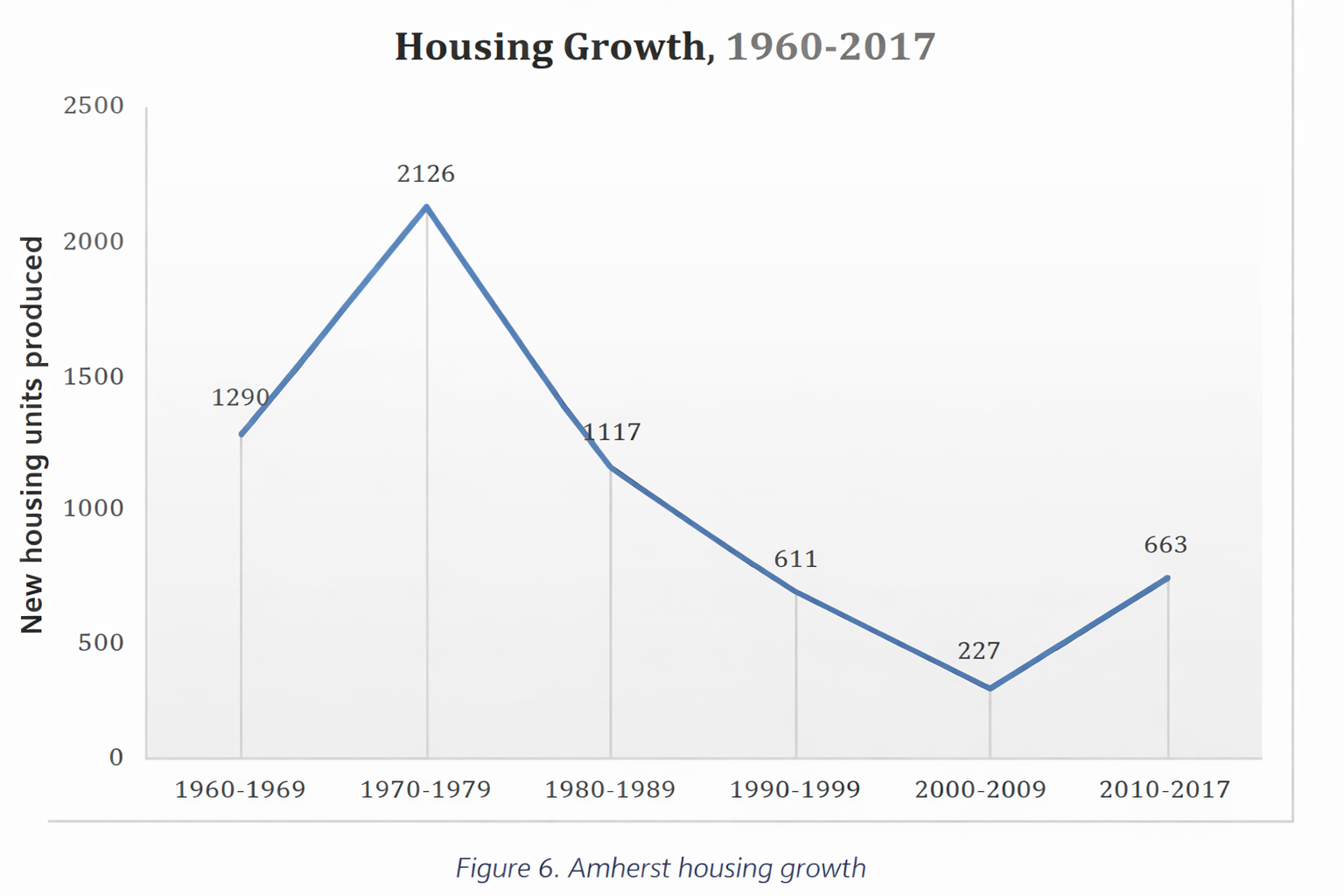
What is the result of this housing shortage? According to the CHP report, “renters are pushed out of the community, jeopardizing Amherst’s diversity…BIPOC residents are disproportionately impacted by Amherst’s housing affordability problem.” Not good! All of the research points to the same conclusion: Amherst’s reluctance to prioritize off-campus student housing primarily hurts year-round residents.
When we fail to build, students can weather the price increases by (1) moving to Sunderland; (2) taking on more roommates; or (3) asking dad for $200 more per month to pay rent.
Year-round residents, however, face far starker choices: Young adults give up on Amherst homeownership (my friends). Senior citizens are distanced from their grandkids, retiring in Belchertown or South Hadley (my mother-in-law). Homeowners are incentivized to rent out rooms just to afford mortgages (me). Our reluctance to build student housing hollows out our own year-round community just to spite developers and UMass leadership. It needs to stop.
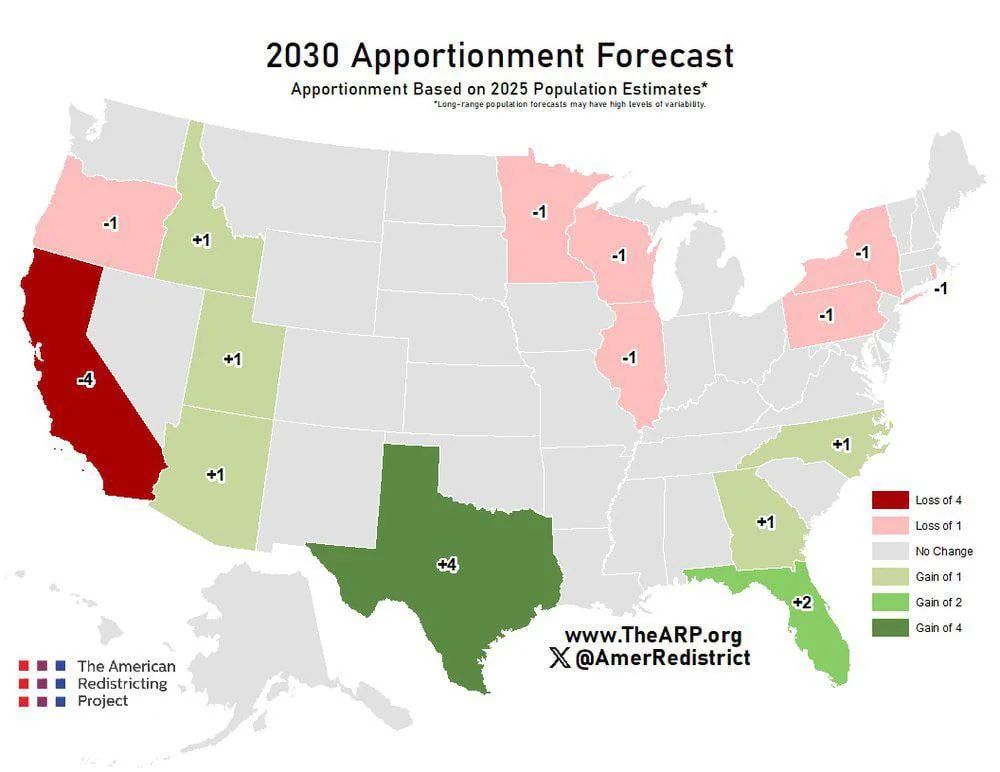
If that weren’t bad enough, NIMBY policies have driven lower-income residents out of blue states. That’s not very progressive. These refugees move to Republican-leaning states, which have more permissive zoning laws than blue states. Blue-state underdevelopment is estimated to yield a +22-seat benefit for Congressional Republicans by 2030, who will obviously gerrymander the influx of new residents to their advantage.
In this sense, potential development in Amherst is more environmentally neutral than some residents assert: when we refuse to build locally, developers simply build elsewhere, chopping down the same number of trees. Granted, there are benefits to Amherst exporting its environmental harm. But with it, we also export affordability, property tax revenue, and political power.
Multiunit student housing is far more environmentally responsible than detached traditional houses, using only one-third as much fossil fuel per unit. It is easier to centrally locate along bus routes. Unlike detached family homes, student housing actually contributes to the town’s finances (example: Amherst loses $50,000/year on my family, since we have two kids in the public schools).
I cannot say this emphatically enough: all of Amherst’s civic woes are directly related to our housing shortage. Want to fill potholes? Demand housing reform. More money for schools? Demand housing reform. Senior services? Fire Department? CRESS? No matter what your pet issue is, it is primarily financed via property tax revenues. Therefore, addressing the declared housing crisis must be the top priority for the town council.
We created this mess, and we can get ourselves out of it, but we must act boldly. The housing report we purchased identified several dozen action items for Amherst. They increase revenue while decreasing costs for long-term residents. Perhaps unsurprisingly, we haven’t even attempted most of them. This is a political failure, and we must do better.
The most effective way to advance equity, racial justice, and public services in Amherst is to support progressive housing policies. Call your town council. Tell them to implement the expert report that the taxpayers paid for. Tell them to aggressively enforce the provisions of the Comprehensive Housing Policy that they themselves recently adopted. Tell them we need a Director of Housing. Tell them to reject the NIMBY nonsense that has gotten us into this quagmire in the first place.
Evidence-based housing policy is the foundation of a progressive and diverse Amherst. But we need the town council to wake up and fulfill its obligations. Please call them today.
Evan Naismith is a five-year resident of Amherst and a graduate from the Commonwealth Honors College at UMass Amherst. He is the VP of the American Constitution Society at UConn Law School, where he specializes in public interest law.
Discover more from THE AMHERST CURRENT
Subscribe to get the latest posts sent to your email.
 THE AMHERST CURRENT
“The most effective way to advance equity, racial justice, and public services in Amherst is to support progressive housing policies.”
That may be true—but it depends on what “progressive” means.
The Progressive Coalition of Amherst (PCA), which recently saw two of its candidates elected to the Town Council, states that it supports “well-researched and carefully-crafted planning and zoning policies, to assure that new commercial and residential development is fully compatible with the community’s needs.” On its face, that sounds prudent and responsible.
Yet, as Ray La Raja has recently argued (https://theamherstcurrent.org/2026/01/15/does-amherst-have-a-democracy-problem/), an overgrown web of procedures—however well-intentioned—can end up stymying progressive democracy rather than advancing it. In Amherst’s case, layers of planning and zoning review risk becoming obstacles to the very housing production that equity goals require. When “carefully crafted” translates into a prolonged process, discretionary hurdles, and delays, the result can be fewer homes of all kinds.
The Planning Board and Zoning Board of Appeals are asked to walk a narrow line: protect community character while also enabling desperately needed housing—affordable, student, and market-rate alike. But if the balance tips too far toward procedural caution, the outcome is stagnation.
If Amherst is serious about equity and opportunity, perhaps its guiding principle should be simpler: all housing is good housing.
LikeLike