
Opinion by Nick Grabbe
Connie Kruger didn’t like calling opponents of new housing “NIMBYs.” She preferred calling them “neighborhood defenders.”

The tributes to Connie, who died May 10, addressed this compassion as well as her commitment to affordable housing and her service on the Select and Planning Boards. She was “a quiet force for good” in Amherst.
But the best tribute to Connie that I can think of would be to meet our goals for building new housing, and thus stabilizing prices and providing more tax revenue.
The median sale price of a home in Amherst last year was $578,000. That’s 8.6 times the median income of individuals and 5.9 times for families. In the U.S., the median price has increased from 2.5 times the median income in 1950 to 4.9 times today.
There’s a cost to high housing costs. Employers have trouble hiring qualified people, and lower-wage workers have to commute long distances or live in cramped conditions. Young families and people of color have trouble buying houses and building wealth.
The people who benefit from rising house prices are existing homeowners, realtors and landlords.
If you support larger-than-normal increases in the school budget, there’s good reason to support new housing. New growth in housing expands the amount of taxes Amherst can collect, and thus the amount we can spend.
The 140-unit proposal between Montague and Sunderland Roads, which was abandoned this month after neighbors filed a lawsuit, would have brought in up to $400,000 a year in tax revenue. We lost $300,000 a year in taxes because of the fire at Olympia Place, and last year the developer withdrew a proposal for housing near Atkins Farms after hearing complaints from neighbors and failing to gain Conservation Committee approval.
I spoke to Connie four days before she died about the opposition to the North Amherst proposal, which would have had 140 units of affordable, 55+ and family housing. Six people, most of them neighbors of the site, hired attorney Michael Pill, an expert in land use law, and filed a lawsuit that Town Manager Paul Bockelman called “frivolous.” It was enough to get the developer to back off. Bockelman, who is usually cautious with his comments, called it “a travesty.”
Connie told me that the developer, Beacon Communities, whose North Square has brought more activity to North Amherst, is a company with integrity and is not just looking to make money.
The neighbors who opposed the Beacon development brought up some valid concerns. They warned of increased traffic at the congested intersection south of the North Amherst Library, and cited wetlands at the site and the cost of extending the water and sewer lines.
The appropriate place for raising these questions is during the permitting process.
Instead, the heavy-handed opponents filed a lawsuit at the beginning of the process. No plans were even submitted, and so we were denied the opportunity to weigh the pros and cons of the project and provide responses to neighbors’ concerns.
We should accept as a given that whenever a housing development is proposed on open land, no matter how worthy the goal, there will be people living nearby who will oppose it. We should consider and respond to their concerns but also prioritize the interests of Amherst as a whole. We should keep our eyes on the common good and not give neighbors veto power.
It’s possible to put a lid on housing costs by building more of it.
Austin, Texas is, like Amherst, the host community for a state university. Despite rapid growth, its median home price is just 4.6 times the median income. That’s partly because Austin has broken ground for 140 homes per 1,000 residents over the past decade, according to a recent editorial in The New York Times.
Connie wrote in The Amherst Current about the need to address the “missing middle,” housing that is denser than single-family but not as dense as apartment buildings. Duplexes and triplexes, for example, increase housing supply without using more land by putting two or three units on one lot. They tend to cost less than single-family housing.
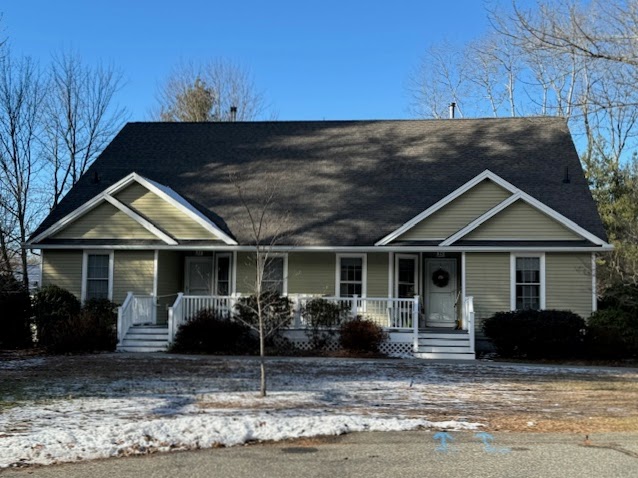
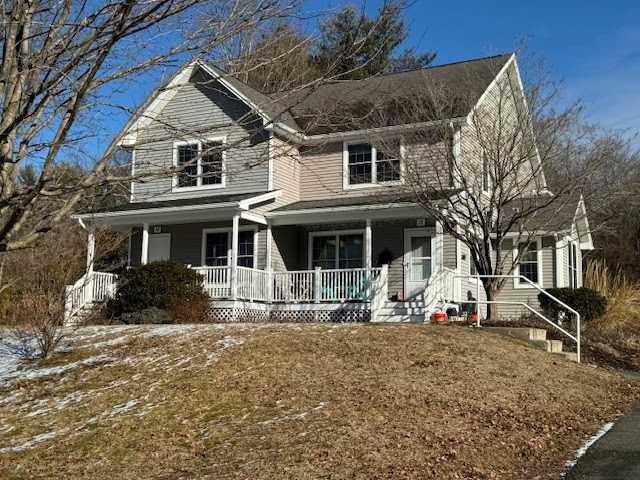
Three years ago, Town Councilors Mandi Jo Hanneke and Pat DeAngelis made a proposal that would have encouraged the construction of duplexes, but it did not achieve a sufficient level of support. The Council should revisit this issue and loosen zoning restrictions to allow a broader range of housing.
I’m told that the Council is near-unanimous in its determination to see taxable development on the former Hampshire College campus, probably including housing, and that developers have been speculating about what they could build there. The Council controls the zoning, so it has the power to decide what will happen. With creditors pressing Hampshire for payment, we can assume that talks are ongoing.
Connie Kruger believed in public participation in housing decisions, even after she endured a 10-year battle with Longmeadow Drive neighbors before the Butternut Farms project was built there.
She didn’t always go along with conventional wisdom. She told me that building more housing would not bring prices down, as the increases have already been baked in. Because of the strong demand for housing in Amherst, even the Great Recession of 2008, which caused 20 percent declines in house prices around the country, had little impact on Amherst.
Maybe our housing prices would decline only if President Trump’s assault on immigration, and demographic shifts, cut off UMass’s ability to attract enough students.
Connie Kruger would have been saddened but not surprised by the shelving of the Beacon proposal. She might have talked about how people who oppose new housing often identify as progressive. She might have wondered how a small group of people can stop something that could benefit the town as a whole.
There will be calling hours for friends, associates and admirers of Connie Kruger this Sunday from 1:00-3:00 PM at Douglass Funeral Home, 87 North Pleasant St, with a reception at the Inn on Boltwood from 3:00 to 6:00 PM.
This post has been updated. The sentence about a proposed housing development near Atkins Farm Country Market has been edited to clarify that the developer withdrew the proposal after failing to gain approval from the Conservation Committee.
Nick Grabbe, a co-founder of The Amherst Current, was a newspaper editor and writer in Amherst for 32 years.
Discover more from THE AMHERST CURRENT
Subscribe to get the latest posts sent to your email.
 THE AMHERST CURRENT
Comment from Tina Swift:
Before discussing building housing at Hampshire College, I hope the Town will do a thorough inquiry on utilizing the existing dorms and buildings for housing. The plumbing is already there, roads exist, and there are parking lots for vehicles. It would seem that renovation would be more affordable and faster than building from the ground up.
LikeLike
It bears repeating: “New growth in housing expands the amount of taxes Amherst can collect, and thus the amount we can spend.” Nicely stated. This bears directly on the quality of the services we collectively can provide, especially in our schools. Or, to be more blunt, and speaking directly to certain Town Council members and School Committee members (do they grasp the numbers?), you cannot get all pious about providing “for the children” unless you are willing to look carefully, intensively, and calculatingly, in a sustained fashion, at this Town’s pathetic tax base. The land and the buildings at Hampshire does represent an opportunity for us, but it’s hardly salvation.
LikeLike
“The 140-unit proposal between Montague and Sunderland Roads, which was abandoned this month after neighbors filed a lawsuit, would have brought in up to $400,000 a year in tax revenue. . . . and last year the Conservation Commission nixed a proposal for housing near Atkins Farms after hearing complaints from neighbors.”
I find both these recent anti-build actions in Town highly disturbing in light of a local, regional, and national housing crisis, and feel the Town should respond by fast-tracking future permit applications and rolling back “over-reach” in our wetland regulations so they are no longer significantly stricter and broader than the baselines set forth in the Massachusetts Wetland Protection Act. When Amherst is already a statewide leader in land preservation, with approximately 30% of its total land area permanently protected as open space, conservation land, or agricultural reserves, does the Town really need one of the strictest wetland bylaws, too? Why does Amherst like to have housing development proposals hamstrung when we sorely need the development that Connie so passionately advocated?
LikeLike
Hi Nick,
This is Connie’s daughter Sarah. Thank you for writing this piece. I agree completely that building more housing in Amherst would be the best tribute to my mom.
And as I learned from my mom, it all starts with zoning. Reducing minimum lot sizes and addressing the shortage with more multifamily housing would be a great start.
My 25 year old moved out of Amherst a year after graduating from UMass, in part because the cost of housing is so high.
I have a friend who is a lifelong Amherst resident who is moving as well because she is tired of being rent poor.
It is a complex problem that I hope will be solved in my lifetime, and I am saddened that it was not solved in my mom’s.
LikeLiked by 1 person
Just a note that the Amherst Zoning Board of Appeals denied a variance request for the Hampshire Housing project behind Atkins Farms before it even came to the Conservation Commission, which significantly impacted the projects viability. There is no mention of that your article. For the purpose of balancing your reporting you might consider all regulatory barriers that impacted the project rather than singling out one town board with inaccurate statements that don’t reflect the facts.
LikeLike
Comment from Nick Grabbe:
Thanks to Erin Jacque for setting the record straight on the procedure by which the proposed development near Atkins Farms did not take place.
LikeLike
Thanks for this coverage of barriers to housing construction in Amherst. I’ve shared it with housing advocates in our town of Bellows Falls, VT. It would be helpful to know why the Amherst ZBA denied the variance request for the Hampshire Housing project.
LikeLiked by 1 person