
By Pat De Angelis with Nick Grabbe
The Survival Center, at 138 Sunderland Road, has grown into a unique Amherst institution. To help celebrate its 50th anniversary, we asked staff, volunteers, and participants what brought them to the center. Here are some of their stories.
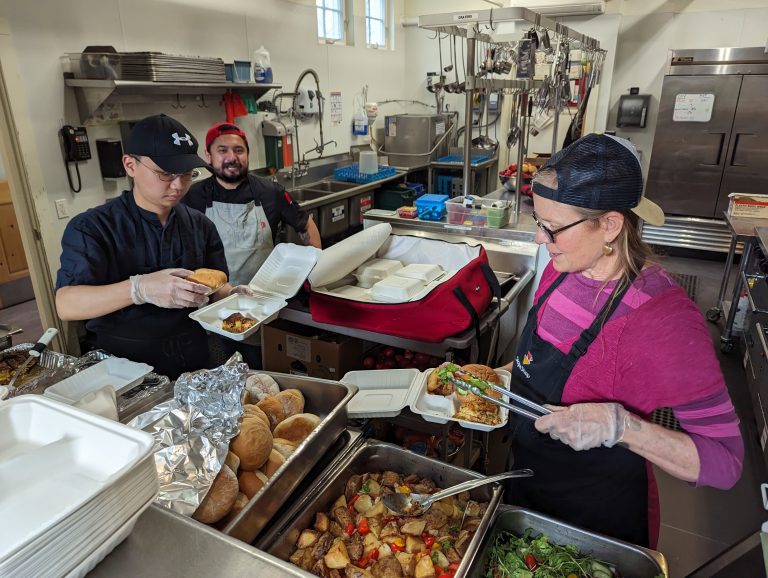
Kathy first came to the Survival Center 50 years ago when it was run from Jane Holappa’s basement. “I was dirt poor, a single mom with two kids trying to go to school and there wasn’t community support outside of welfare. There were a lot of other single moms in the same position, we connected at the center and out of necessity became a network around childcare, we became our own early intervention program.
Thanks to this place I completed my undergraduate and graduate work. I became a Forensic Social Worker and worked for many years at the Women’s Correctional Center in Chicopee. What has kept me here all these years is connection and community. This feels like a family. We have lunch together, sit and talk together. When someone does come, whether they’re new or just seem down, we ask are you okay, do you need anything. We notice them, acknowledge them – They feel invisible in the larger community.”
Maria came to the center as a young girl with her mom. “We came to the old place in the basement. It had a small kitchen and a few tables where we would all sit and eat together. We were like a family and the company was wonderful. I met my husband David there. We met again, many years later, fell in love, got married, and moved to Springfield. We were married for fifteen years. He passed away two years ago. When I think of him, I also think about the center and the community, the family. After all these years I decided to visit. To see what it had become. Seeing this place made me cry. It’s so beautiful. I came back because of memories and was surprised by the facility and so many services for people. How have you done so much?”
Part of the answer rests in the work of the center’s staff.
“We’re all working to accomplish what is impossible, so we won’t be needed anymore,” says Sam, “End hunger, level basic needs and economic disparities, ensure dignity and grace always.”
“At the Survival Center, we can be messy and human together,” says Miranda. “I’ve learned we are stronger when we acknowledge how struggle connects us. People come here for all kinds of reasons: lack of money, support, accessing resources, loneliness. There’s a cool ripple effect when many people connect despite their assumptions.”
““It’s not easy to walk in and ask for help, says Bianca, there is a stigma, imposed by society and ourselves, about needing help. I remember when my son was eleven or twelve and was struggling with defining himself saying to him, you need to be unapologetically who you are and let the world adjust.
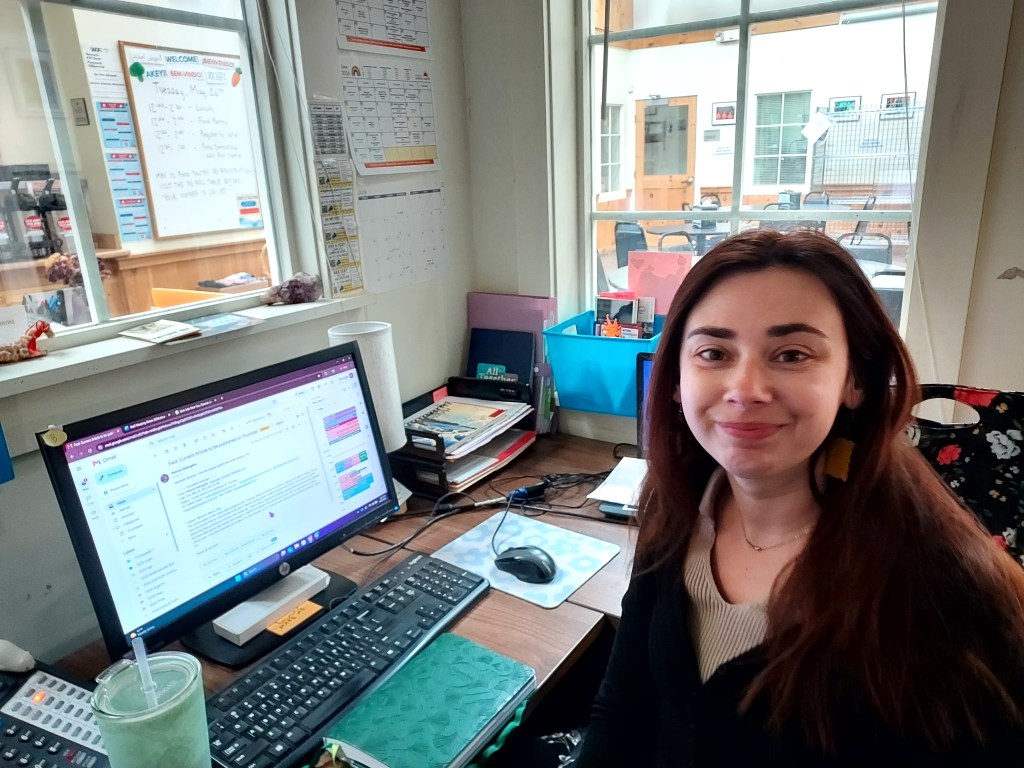
Many Survival Center workers have experienced economic or social hardships themselves and are determined to eliminate the accompanying stigma.
“I’ve struggled with food insecurity for most of my life – food stamps, using pantries,” says Karolyne. “My mom would have to decide whether to put gas in the car or buy milk.”
Lisa “instantly felt at home” when she started working at the Center. “I was feeling untethered and not used to Amherst’s academic world. I came from a working-class town and felt a bit isolated. At the Survival Center, I found my people. Some folks come with their guards up for a while, finding it hard to cross the threshold. But it is such a warm community. I love our emphasis on treating everyone fairly and equitably and that anyone can get help without having to ask or explain why they are with us.”
“There are people living in town who don’t want to be seen,” says Elizabeth. “We need to work on taking away the stigma, to be present without judgment” she says. “We get into our little worlds, our privileged socioeconomic worlds, but we need to ask ourselves how many people need some support or help. People are afraid of what they don’t know.”
Emma spoke about a participant who told her kids that the Survival Center is a “farmers’ market.” Emma hates that but understands the impact of the shame any of us can experience. “What I’ve learned is to see equals and that I don’t get special points for helping. Guests can get angry and argue at the Survival Center and not worry about being rejected. We give people agency and don’t require them to police their feelings. There is safety in allowing people to have difficult emotions here.”
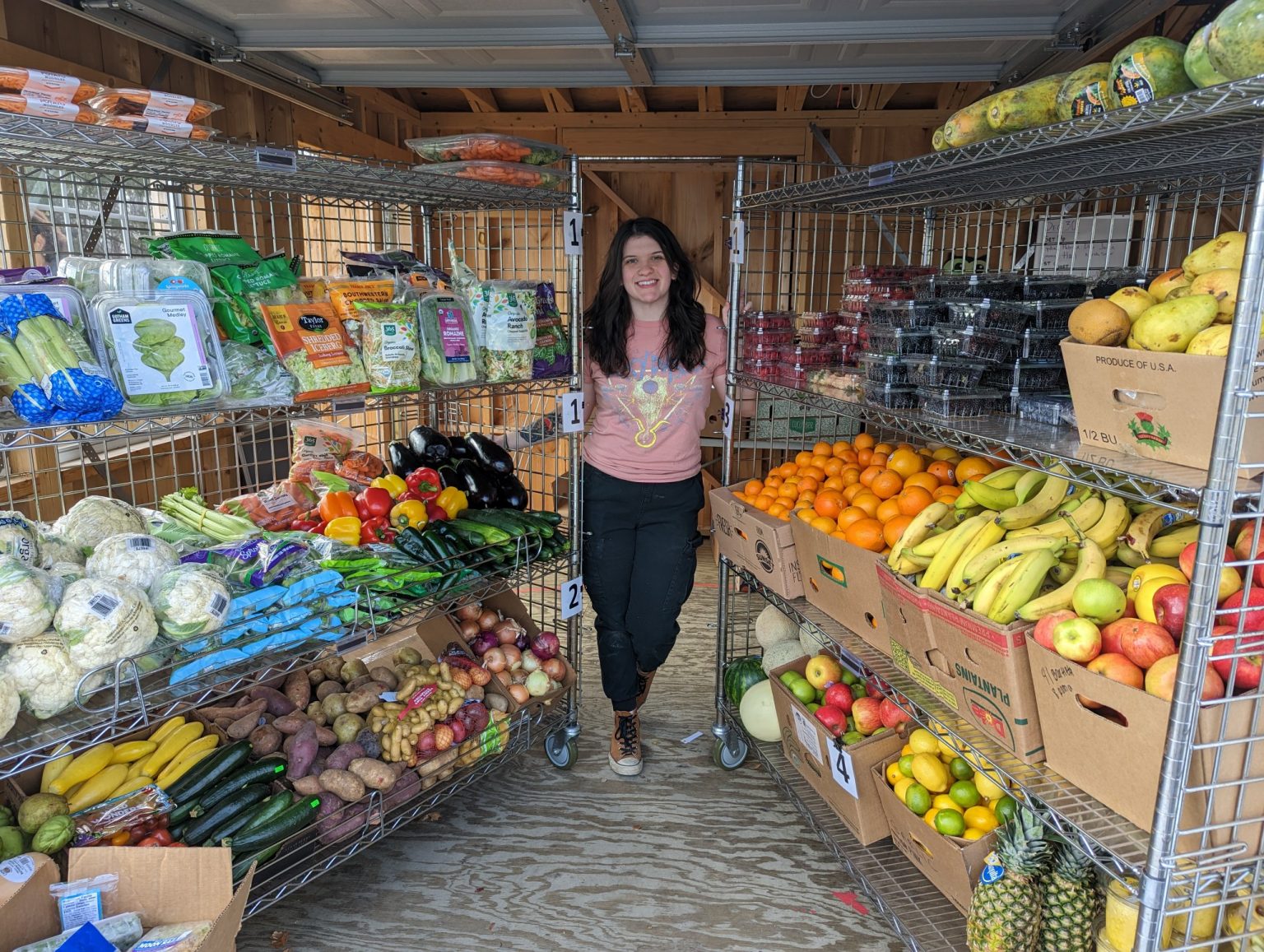
People who work at the Survival Center cherish this feeling of community and mutual support.
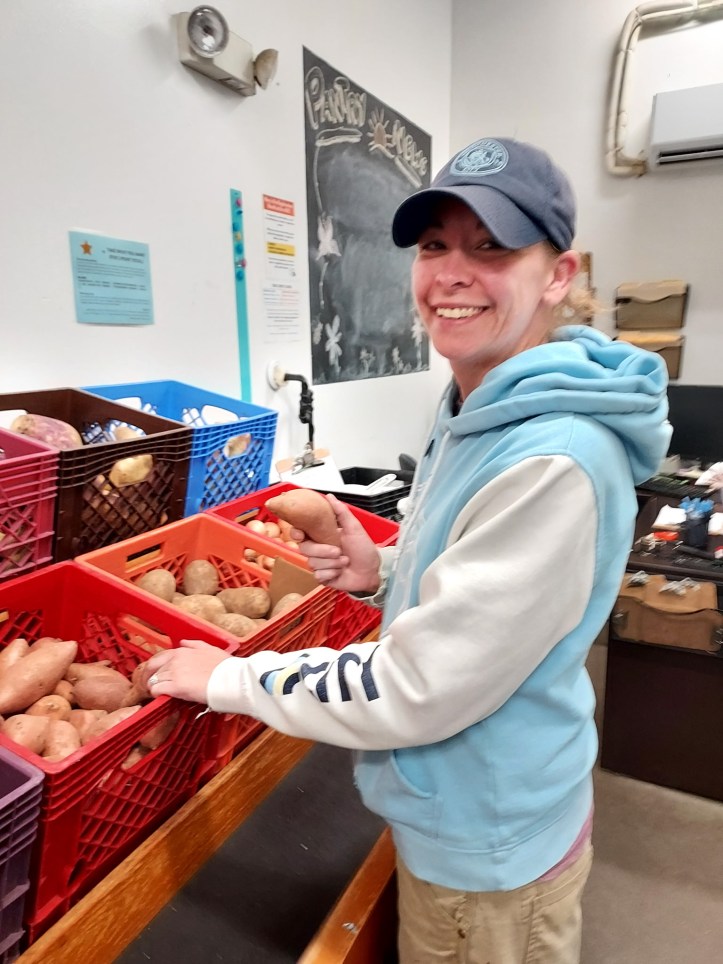
Chris loves “the mission and the chaos” and that “staff, interns and volunteers work playfully and enthusiastically together.”
Karolyne says that “this place holds my heart.” I can show up here irrespective of what I wear or have. I can be heartbroken or depressed and all I need to do is show up, and then magic happens.”
Allison says she has never “felt a part of something, belonged, but I do here. My co-workers, wow, I haven’t ever met a better group of misfits. I recently had a loss, and the staff came together to support me.”
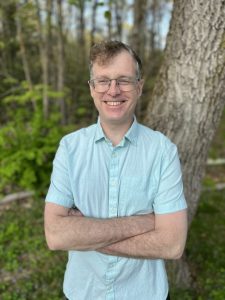
“The Survival Center is accepting of all sexual orientations. This is a place where I learned to be myself regardless of how other people felt,” says Sez. “I feel valued and that can be hard to come by. It’s important for me as a queer/trans person – knowing you can make an impact, make connections with others, even when the world feels out of control, is powerful.”
“I see our community of volunteers, staff and guests as a tree,” says Marcus. “The staff is the trunk, offering structure, and the volunteers are the roots bringing nourishment and water up from the ground. Together, the trunk and the roots support the abundance of leaves and fruit, which are the participants we serve. It’s the diversity of the people who come here that gives us meaning, Marcus says. “Each of us has to cross the tracks of our assumptions to see, listen and celebrate this community.”
About 500 volunteers donate their time to work at the Center, taking on a wide variety of jobs. We spoke to some of those volunteers.
Peggy says she’s gained a lot from volunteering. “I have social anxiety, so it’s nice to be given a concrete task like stacking food outside, and to finish it means something. It’s not exciting, but quiet and makes a difference. Everybody has something unexpected and frequently surprising to share. People here feel like they belong.”
Janice is a former nurse who started volunteering in the Survival Center’s medical clinic in 2016. “I’m full of gratitude that people using the clinic and other services don’t need insurance,” she says. Janice also volunteers in the pantry because it “gets me into the community.”
Kyven calls the Center “one of the least ablest places offering services to folks. The volunteers are a diverse lot. There’s been some tension, but we work to make access equitable, make sure the rules apply to everyone and are not ignored, whatever your role is in the community,” she says.
“How have you done so much?” Maria asked.
By listening to the voices of the community, by seeing who stands next to us, by questioning our assumptions and honoring the diversity of stories we share.
All images provided by and used with the permission of Amherst Survival Center.
Pat De Angelis and Nick Grabbe are volunteers at the Survival Center. Pat is a former member of the Amherst Town Council. Nick was a newspaper editor and writer in Amherst for 32 years.
Discover more from THE AMHERST CURRENT
Subscribe to get the latest posts sent to your email.

