
By Nick Grabbe
If a woman who fled pogroms in Russia as a teenager could speak to a former member of the tsar’s inner circle, what would she say? And how would he respond?
In this improbable dialogue, two very different people reckoned with their shared historical trauma, listened deeply to each other, and found some common ground. The dialogue is imaginary but it was not created by A.I.
Ed Tick, my partner in this meeting of minds, is a Belchertown therapist who specializes in healing the trauma of war and has led 19 trips to Vietnam for American veterans. He is currently working with Russian and Ukrainian therapists whose clients include veterans of that ongoing war.
Ed’s grandmother Minnie fled Russia in 1914, three years before my grandfather Alexander fled Russia. They were both living in New York City in the mid-1940s. Ed and I speculated that they could have met there and had a conversation.
We wanted to expose to the light some long-ago fears and misunderstandings, and perhaps begin to heal the kind of trauma that ensuing generations can inherit. So we assumed the personas or our grandparents to see what they would say to each other, by speaking through their grandsons.
Minnie was born Mennecha Waskoboinik in a part of the Russian empire. The oldest child in a Jewish family, at 15 she was smuggled out of Russia, fled through the Black Forest, and boarded a steamer, alone, to cross the ocean. She worked in New York sweatshops to earn money to send home to enable her six siblings to come to the U.S. Only one stayed behind and died in the Holocaust.
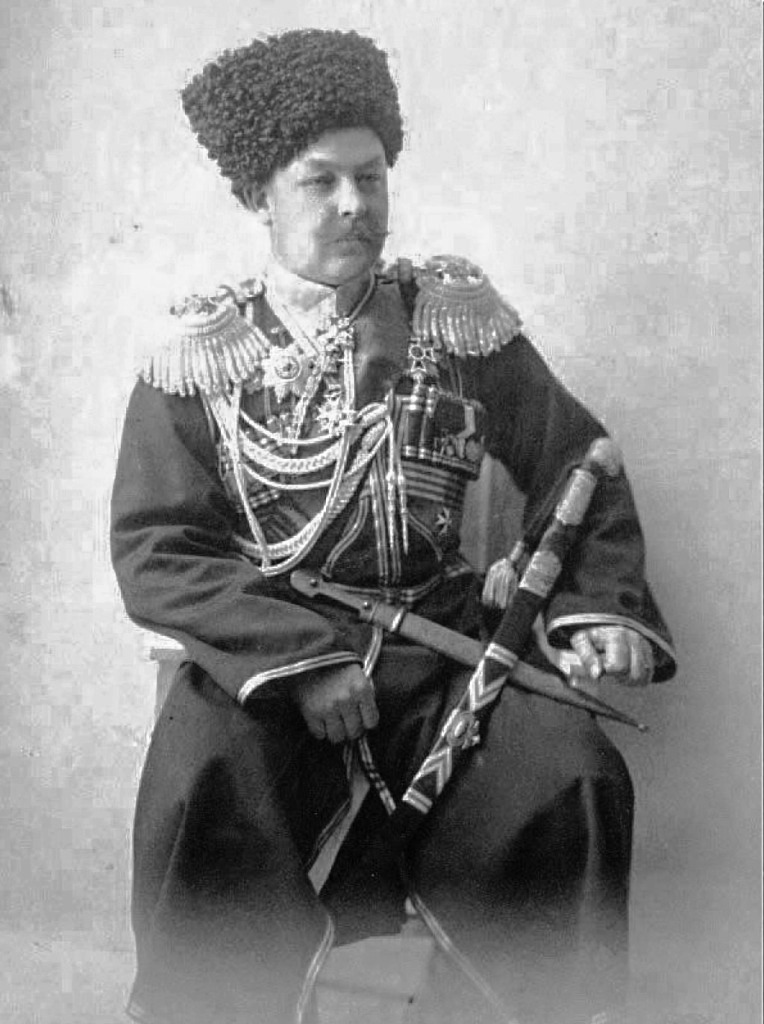
Alexander Grabbe graduated from a military academy in St. Petersburg, where he served as a page for the imperial family. He became aide-de-camp to the doomed tsar, Nicholas II, and frequently traveled with him. He was a major general and an unofficial court photographer. When the revolution came in 1917, he abandoned the tsar and fled with his family (including my father, then 15). He wound up in Denmark and then in Germany, where he worked as an accountant in a hotel. He came to the U.S. during World War II.
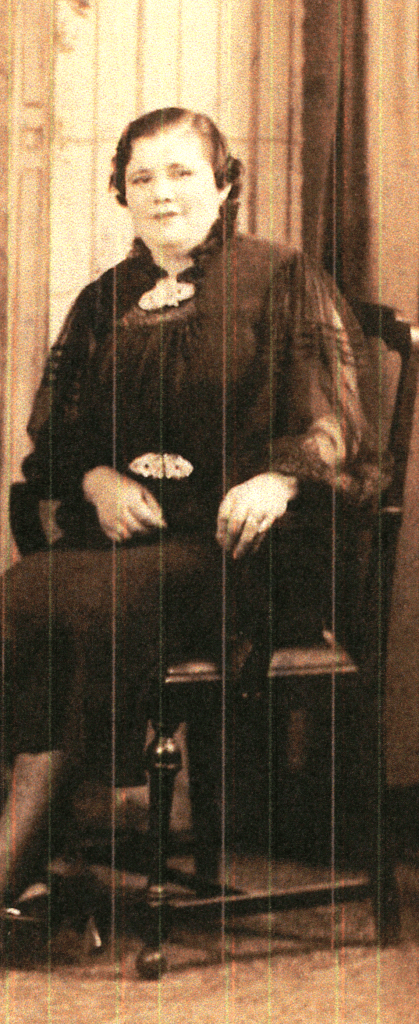
Minnie opened the dialogue. “I tremble with fear talking to you,” she said to Alexander. “Will you accept me? Will we talk with compassion and respect or will you try again to silence or destroy me?”
But she also admitted that they are both survivors of trauma, and she cited an African proverb: “My enemy is someone whose story I have not yet heard.”
In response, Alexander thanked Minnie for meeting with him. He referred to the things they share: leaving their common homeland, never to return, and the persistent emotional hardship of being refugees.
He told Minnie that he wanted to train to be an engineer, not become a soldier. But his father had gambled away all his money, and his wealthy grandmother insisted that he join the Cossack regiment in which his ancestors had served.
Although he served as commander of a regiment that was the tsar’s elite guard, it was largely a ceremonial role. He played games of dice with the tsar, took lots of photographs of the royal family, and chaperoned the tsar’s daughters on their dates with officers.
“I know that wealth and privilege cannot guarantee happiness, Minnie, and they don’t insulate a person from the impact of trauma,” he told her. “Perhaps we can reach across the divide of class and know each other more deeply.”
Minnie reiterated the hope and terror she feels. “Am I being a fool and will I experience hatred, rejection, more oppression and defilement as I experienced in Russia and from units like your Cossacks?” she said.
Their lives may have been very different, but they shared the pain of displacement, and Minnie noted this duality. “You played games and took photos while I hid in terror,” she told Alexander. “It seems like your life was unhappy and unfulfilled. We share that. Neither of us wanted the fate that Mother Russia imposed. But you can remember your childhood. I cannot even bear to remember my life in Russia.”
Minnie asked Alexander what his family’s flight from Russia actually cost him, adding, “Can we grope toward one story that includes us both?”
Alexander replied that he regrets the suffering that Minnie went through, and he honors the sacrifices she made for her children and grandchildren. He accepted some collective responsibility, as a representative of the Russian military, for the oppression of Russia’s Jews.
But he also said the catastrophic dismemberment of the Russian empire almost broke him. The Bolsheviks wanted to kill him and his family and almost succeeded, and he lost a son in the civil war that followed the 1917 revolution.
“Minnie, I appreciate the opportunity to get to know you,” he said. “Your story has broadened my perspective on the Russian diaspora. I hope we can keep this meeting of souls going.”
At this point in the dialogue, Ed imagined that he showed his grandmother the book that my parents wrote in 1984, “The Private World of the Last Tsar,” featuring many photographs that Alexander took. The book includes a photo of himself in his parade uniform, reproduced here, and also photos of groups of Russian peasants.
When Alexander and Minnie met again, she said, “Though we are both Russian and of the same era, our stories both profoundly diverge and connect. Life is a strange interweaving more complicated than we can ever understand or untangle.”
She said she felt intimidated looking at the photo of Alexander in his uniform. “I was one of those peasants, lost in crowds of countless, poor, bedraggled. My people and I knew we were the unwanted ones.”
Back in Russia, Alexander was a military officer and a wealthy aristocrat while Minnie was a Jewish peasant girl. “But as refugees caught in a history that caused so much loss and displacement, we become of the same tribe,” Minnie said. “Disparate peoples, former foes, can become one through their shared traumatic history. Perhaps we can achieve that.”
Minnie asked Alexander if he was personally involved in the persecution of Russian Jews.
Alexander responded that he was a companion to the tsar and wasn’t involved in policy. He disapproved of the use of Cossacks to quell civil disturbances but had no influence over this barbarism. He spent a lot of time abroad in the first decade of the 20th century, so was not involved in the pogroms of 1903-06. During the pogroms of 1881-82, he was still a cadet at a military academy.
“I may look imposing to you, but the reality is that, like you, I struggled to find meaning and happiness in my life,” he said. “I had to deal with the social isolation that is common among the ‘upper’ classes. I had to spend years away from my wife and three sons. I saw the corruption of the Russian government but could do nothing about it. I grieved for a son who died young. I had to flee my native land and settle for work far below what I had been led to expect.”
He added that “we wound up in the same place: uprooted and sad and disoriented.”
As they parted, Alexander told Minnie that “I am awestruck at your resilience and determination.”
Minnie said, “I thank you for opening to me, this other you were supposed to hate,” she said.
The dialogue will continue.
Nick Grabbe, who was a newspaper editor and writer in Amherst for 32 years, is the co-founder of The Amherst Current.
Discover more from THE AMHERST CURRENT
Subscribe to get the latest posts sent to your email.


Thank you for writing and sharing with us this beautiful imaginary yet truth filled story.
LikeLike