
Opinion By Evan Naismith
Last week, a majority of Amherst Town Council members signed a letter to UMass Chancellor Reyes, asking him to build more tax-exempt housing on campus. The letter is academically vacuous and contains demonstrably false information.
Here are the facts: Amherst taxpayers recently hired data analysts to diagnose our tax base. Their assessment? Amherst suffers from a “lack of housing production in Town to satisfy both student and non-student demand” (p. 1). This conclusion is evidence-based and is shared by:
- A majority of the Finance Committee resident members
- A majority of the Planning Board resident members
- Amherst’s Planning & Economic Development Director
- Amherst’s outgoing Assistant Director of Planning & Economic Development
These experts offer a mountain of data showing that off-campus student housing would generate revenues and increase affordability. Inexplicably, the following councilors apparently disagree:
- Councilor Jill Brevik (Dist. 1)
- Councilor Amber Cano-Martin (Dist. 2)
- Councilor Hala Lord (Dist. 3)
- Councilor Pam Rooney (Dist. 4)
- Councilor Cathy Schoen (Dist. 1)
- Councilor Jennifer Taub (Dist. 4)
- Councilor Ellisha Walker (At-Large)
They offer zero evidence for this exclusionary housing policy. Purely anti-student vibes. Here’s some of the text from the letter:
“Because UMass has not kept up with housing demand:
- Amherst’s year-round population has declined to only 13,000 residents out of 40,000, as families lose out to student rental demand and have to leave.
- The elementary school enrollment has declined by half from its peak, as shown in the Housing Production Plan.
- The town’s tax base is strained, while 27,000 students live here for nine months a year without contributing directly to road repairs, public safety, and other services they rely upon.
- Inadequate PILOT (Payment in Lieu of Taxes) contributions leave Amherst covering an array of costs without fair support.”
The signatories conclude that tax-exempt student housing will help solve these problems.
Since these town councilors didn’t fact-check the letter they signed, I’ll do it for them.
Claim #1: UMass is responsible for Amherst’s population decline.
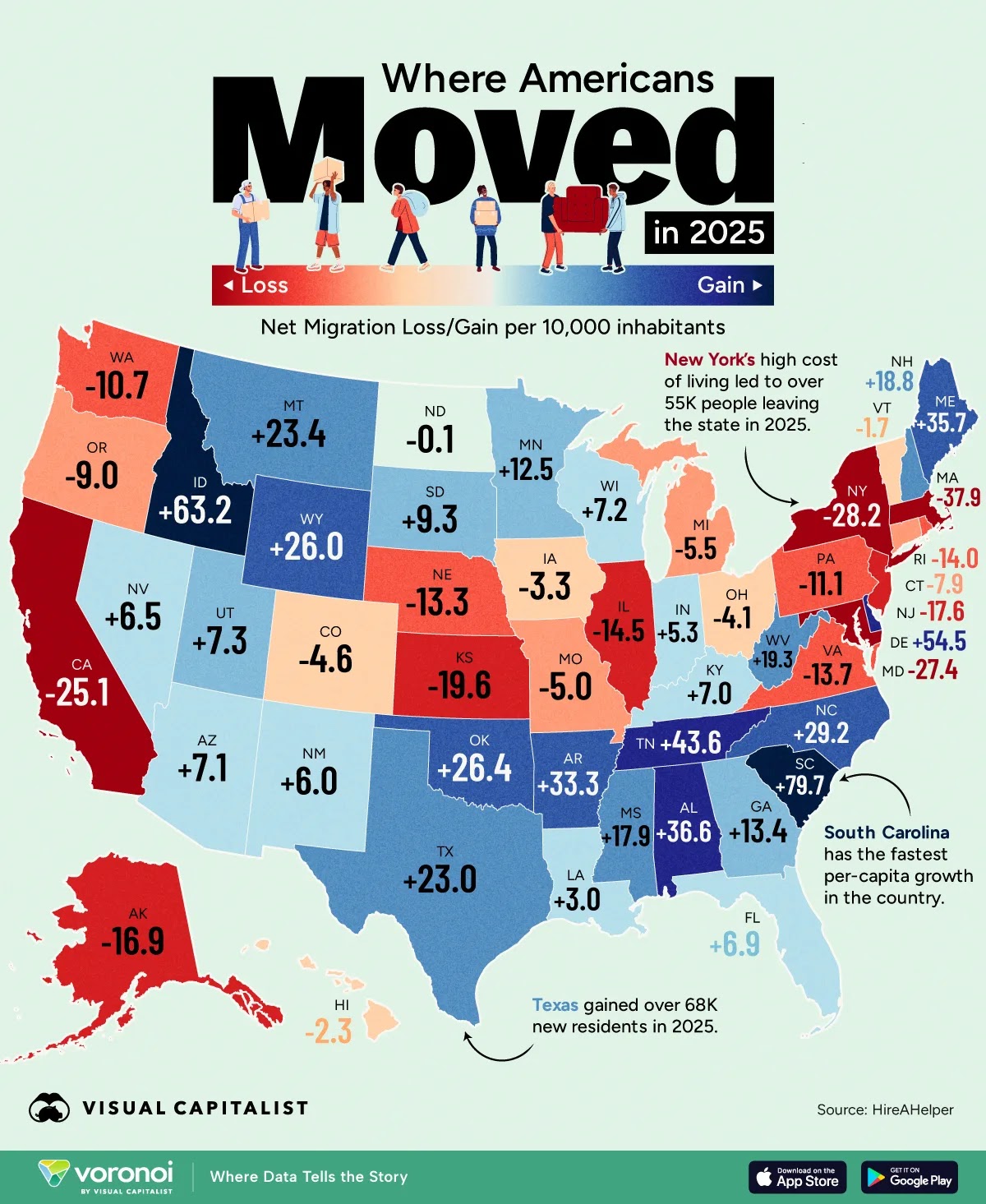
Wrong. Population loss is not unique to Amherst; our state is losing population faster than any other. Why? Because of NIMBY-imposed housing scarcity. This isn’t my opinion; it is the conclusion of rigorous studies conducted by the state itself. Amherst is especially conservative on housing, so we are disproportionately affected. NIMBYism isn’t the cure for Amherst’s woes, it’s the cause.
Signatories will disingenuously argue, “This letter asks to build more housing!” This is not a good-faith argument: The author strongly and openly endorses local building moratoria.
Claim #2: UMass is responsible for ARPS’s declining enrollment.
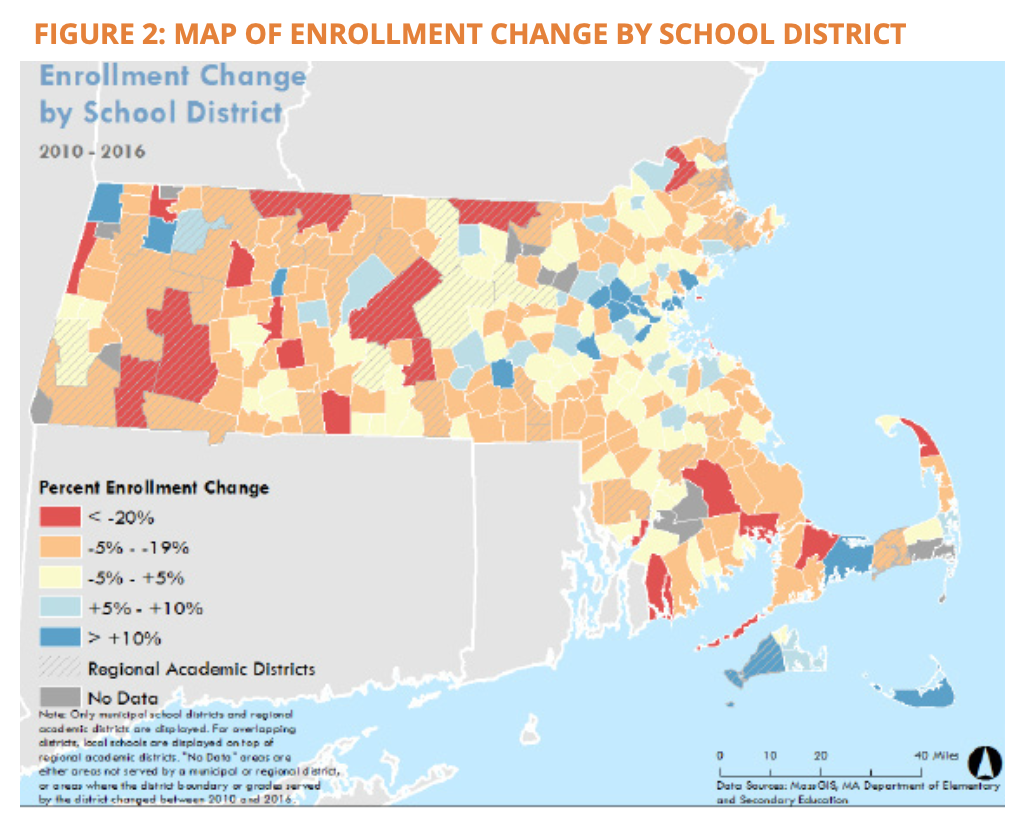
Incorrect. Don’t overcomplicate it: enrollment is declining because parents don’t want to send their kids to crumbling schools. The number of students leaving ARPS for other public districts has increased by 45.8% since 2020. Simultaneously, incoming school-choice students declined by 6.4%.
And why are Amherst’s schools crumbling? An insufficient property tax base, again caused by NIMBYism.
Here, too, the trend is statewide: Data scientists attribute declining enrollment to charter schools and declining birth rates. They note that enrollment decline is especially strong in housing-scarce suburbs like Amherst. Once again, housing-restrictive policy is the disease, not the cure.
Claim #3: Students are a net negative on the tax base.
This is verifiably false. Since I have two kids in ARPS, Amherst loses $45k per year on my family (2 kids @ $30k each minus my property tax contribution of $15k). Mathematically speaking, I am the budgetary net negative, and off-campus students subsidize my kids’ education:
- College students don’t enroll their children in ARPS, which accounts for 70% of the town’s expenditures, so they’re a huge fiscal positive–so long as they’re off campus.
- The Amherst Inclusionary Zoning bylaw (Art. 15) mandates that student housing developments must include 10% affordable housing “set-asides” or their cash equivalent. That means that developers literally cut a check to the Town of Amherst before they even get a shovel in the ground.
- Amherst’s new developments added $1.9 million in revenue last year. How many teachers would we have to lay off if we didn’t have that revenue?

Contrast our backward policies against UMass Lowell’s LINC project, expected to create 2,000 local jobs. The 500 units of new rental housing helps create 4-6 million dollars in annual property tax revenues. Or consider State College, PA, where rents are half that of Amherst’s because they have twice as much off-campus student housing.
NIMBY town councilors overcharge students and year-round residents double the market rate because they refuse to permit development at scale. How is this not the #1 priority of the town council “progressives”?
Claim #4: UMass doesn’t pay enough PILOT fees.
Look, I’m not going to fight you too hard on this one, because it’s true. However, it’s worth noting that PILOTs usually represent a quarter of the taxes they’re meant to replace. So taxable student housing is four times more preferable than (theoretical!) PILOT fees on tax exempt housing.
Claim #5: “Public–private partnerships are [now] permitted,” so Amherst will share future revenues from on-campus housing.
First of all, public-private partnerships (PPPs) have always been permitted. But, here, the word “public” refers to the Commonwealth of Massachusetts, not the town of Amherst. The Fieldstone apartments are exempt from $3.9 million in annual local property, despite being a PPP. Don’t take my word for it, call Kim at the assessor’s office. She’ll tell you straight up: on-campus PPPs are tax-exempt.
Considering that local residents own $3.5 billion in taxable property, you’d hope town councilors would pursue evidence-based housing policy. Amherst’s longstanding policy of intentional housing scarcity is a cruel game of musical chairs, and “year-rounders” suffer, too. It’s abhorrent that half the town council has convinced themselves that this type of economic violence is a “progressive” policy.
Town councilors are welcome to harbor their personal opinions, but when they act in a decision-making capacity, they have a duty to consider facts, or risk their decisions being overturned in court. (see: McLaughlin v. Board of Appeals, overturning a MA zoning decision for being “unreasonable, whimsical, capricious and arbitrary.”) By willfully ignoring the evidence, these councilors are toeing that line.
So here’s my challenge to the signatories: show your work, right here in the comments.
- How is Chancellor Reyes responsible for our housing failures?
- How is this not textbook NIMBYism?
- How can you claim this is progressive?
- Does anybody benefit from Amherst’s exclusionary housing policies?
Evan Naismith is a five-year resident of Amherst and a graduate from the Commonwealth Honors College at UMass Amherst. He is the VP of the American Constitution Society at UConn Law School, where he specializes in public interest law.
Discover more from THE AMHERST CURRENT
Subscribe to get the latest posts sent to your email.
 THE AMHERST CURRENT
Here’s a few questions, after reading this article: How much building has there been aimed at affordable housing for year round residents? Do residents in other towns get as many calls, offering top dollar for their homes, and when you ask who they are, they hang up? Weren’t the attempts at moratoriums in Amherst to take a break to figure out what we’re doing? Aren’t seniors with no children in the public schools even more profitable than students? Is there even any PILOT programs for UMass or Amherst College, other than a general agreement about how much they will pay the town, covering a fraction of their true costs? Would our budget not be in better shape if the second largest industry in town (student housing) paid at a higher rate (like several other Mass towns and cities)? Given that many Amherst residents and officials long believed PPP dorm projects were once illegal and only recently legalized—when this actually reflected misunderstandings about bonding rules and the UMass Building Authority’s existing powers—and that since that clarification there has not been the expected pent up construction of dorms on campus, and UMass leaders now say all dorm‑related funding will go only to renovating 1970s residence halls and not to additional new housing, and that UMass grew their student population without considering the capacity of the town to accomodate that growth, that UMass is kind of at fault, a tiny bit, including the numerous conflicts of interest and loyalties, with UMass and town deciders too often being the same people? Is it not possible that NIMBYs are not the villains they are portrayed as, but normal human people whose largest investment is threatened by short term, get rich quick thinking? Is it possible that our town is as divided as it is from the unnecessary aggression in our conversations?
LikeLike