
Opinion By Evan Naismith
Last week, a majority of Amherst Town Council members signed a letter to UMass Chancellor Reyes, asking him to build more tax-exempt housing on campus. The letter is academically vacuous and contains demonstrably false information.
Here are the facts: Amherst taxpayers recently hired data analysts to diagnose our tax base. Their assessment? Amherst suffers from a “lack of housing production in Town to satisfy both student and non-student demand” (p. 1). This conclusion is evidence-based and is shared by:
- A majority of the Finance Committee resident members
- A majority of the Planning Board resident members
- Amherst’s Planning & Economic Development Director
- Amherst’s outgoing Assistant Director of Planning & Economic Development
These experts offer a mountain of data showing that off-campus student housing would generate revenues and increase affordability. Inexplicably, the following councilors apparently disagree:
- Councilor Jill Brevik (Dist. 1)
- Councilor Amber Cano-Martin (Dist. 2)
- Councilor Hala Lord (Dist. 3)
- Councilor Pam Rooney (Dist. 4)
- Councilor Cathy Schoen (Dist. 1)
- Councilor Jennifer Taub (Dist. 4)
- Councilor Ellisha Walker (At-Large)
They offer zero evidence for this exclusionary housing policy. Purely anti-student vibes. Here’s some of the text from the letter:
“Because UMass has not kept up with housing demand:
- Amherst’s year-round population has declined to only 13,000 residents out of 40,000, as families lose out to student rental demand and have to leave.
- The elementary school enrollment has declined by half from its peak, as shown in the Housing Production Plan.
- The town’s tax base is strained, while 27,000 students live here for nine months a year without contributing directly to road repairs, public safety, and other services they rely upon.
- Inadequate PILOT (Payment in Lieu of Taxes) contributions leave Amherst covering an array of costs without fair support.”
The signatories conclude that tax-exempt student housing will help solve these problems.
Since these town councilors didn’t fact-check the letter they signed, I’ll do it for them.
Claim #1: UMass is responsible for Amherst’s population decline.
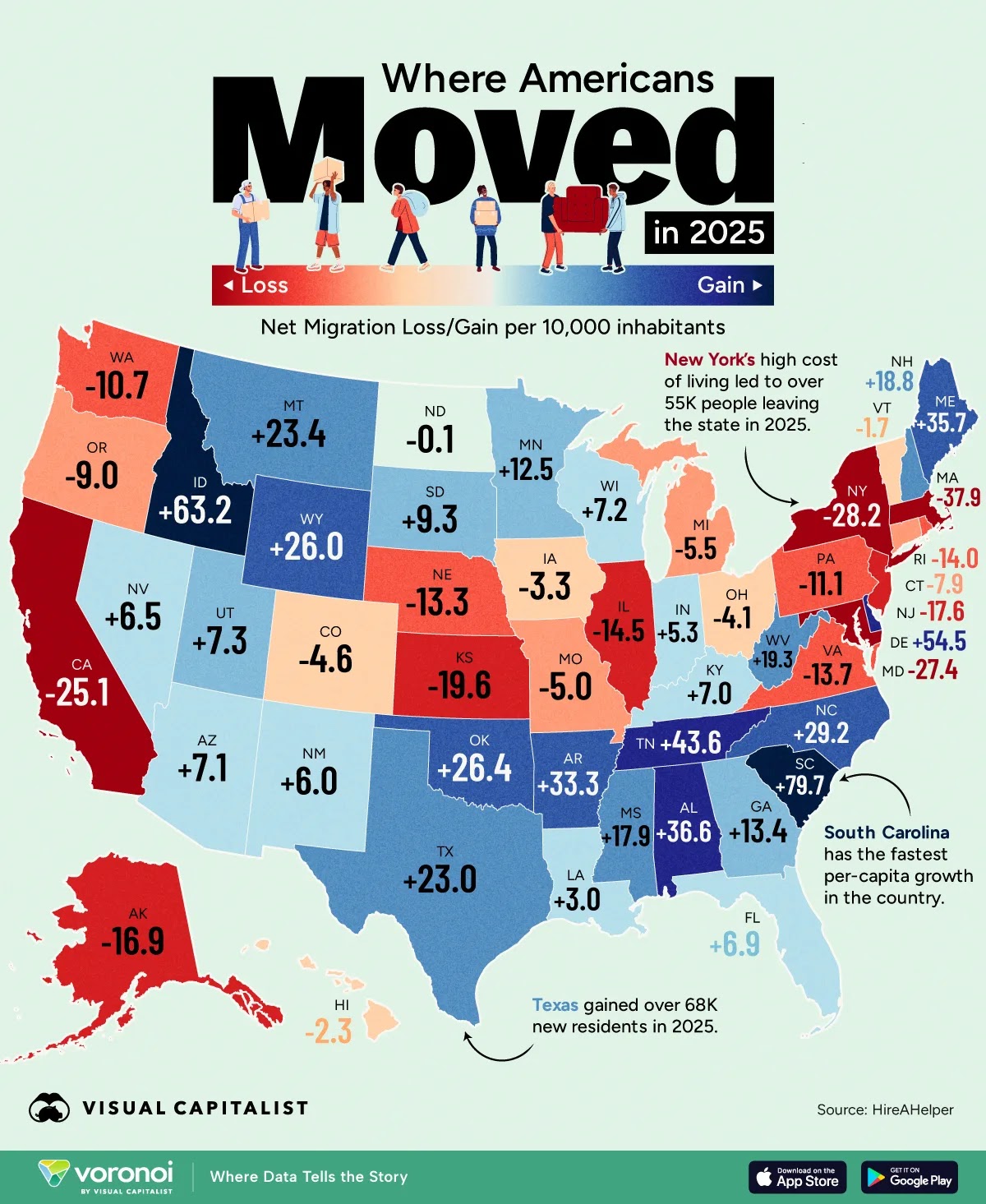
Wrong. Population loss is not unique to Amherst; our state is losing population faster than any other. Why? Because of NIMBY-imposed housing scarcity. This isn’t my opinion; it is the conclusion of rigorous studies conducted by the state itself. Amherst is especially conservative on housing, so we are disproportionately affected. NIMBYism isn’t the cure for Amherst’s woes, it’s the cause.
Signatories will disingenuously argue, “This letter asks to build more housing!” This is not a good-faith argument: The author strongly and openly endorses local building moratoria.
Claim #2: UMass is responsible for ARPS’s declining enrollment.
Incorrect. Don’t overcomplicate it: enrollment is declining because parents don’t want to send their kids to crumbling schools. The number of students leaving ARPS for other public districts has increased by 45.8% since 2020. Simultaneously, incoming school-choice students declined by 6.4%.
And why are Amherst’s schools crumbling? An insufficient property tax base, again caused by NIMBYism.
Here, too, the trend is statewide: Data scientists attribute declining enrollment to charter schools and declining birth rates. They note that enrollment decline is especially strong in housing-scarce suburbs like Amherst. Once again, housing-restrictive policy is the disease, not the cure.
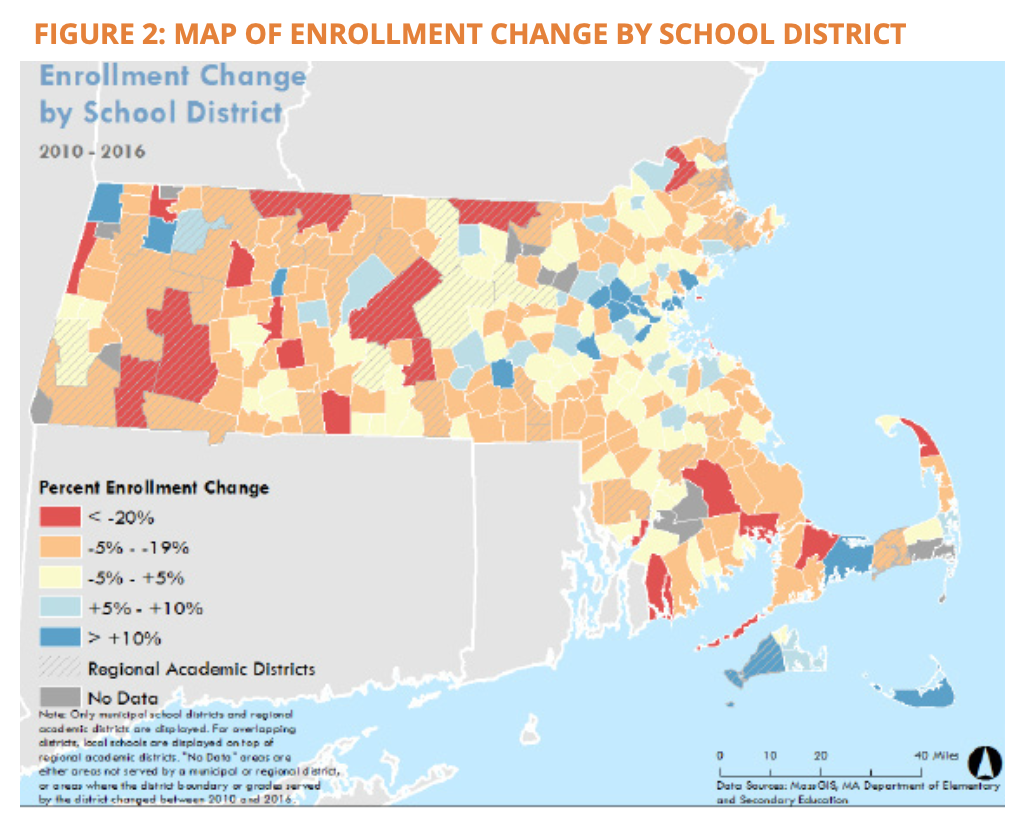
Claim #3: Students are a net negative on the tax base.
This is verifiably false. Since I have two kids in ARPS, Amherst loses $45k per year on my family (2 kids @ $30k each minus my property tax contribution of $15k). Mathematically speaking, I am the budgetary net negative, and off-campus students subsidize my kids’ education:
- College students don’t enroll their children in ARPS, so they’re a huge fiscal positive–so long as they’re off campus.
- The Amherst Inclusionary Zoning bylaw (Art. 15) mandates that student housing developments must include 10% affordable housing “set-asides” or their cash equivalent. That means that developers literally cut a check to the Town of Amherst before they even get a shovel in the ground.
- Amherst’s new developments added $1.9 million in revenue last year. How many teachers would we have to lay off if we didn’t have that revenue?

Contrast our backward policies against UMass Lowell’s LINC project, expected to create 2,000 local jobs. The 500 units of new rental housing helps create 4-6 million dollars in annual property tax revenues. Or consider State College, PA, where rents are half that of Amherst’s because they have twice as much off-campus student housing.
NIMBY town councilors overcharge students and year-round residents double the market rate because they refuse to permit development at scale. How is this not the #1 priority of the town council “progressives”?
Claim #4: UMass doesn’t pay enough PILOT fees.
Look, I’m not going to fight you too hard on this one, because it’s true. However, it’s worth noting that PILOTs usually represent a quarter of the taxes they’re meant to replace. So taxable student housing is four times more preferable than (theoretical!) PILOT fees on tax exempt housing.
Claim #5: “Public–private partnerships are [now] permitted,” so Amherst will share future revenues from on-campus housing.
First of all, public-private partnerships (PPPs) have always been permitted. But, here, the word “public” refers to the Commonwealth of Massachusetts, not the town of Amherst. The Fieldstone apartments are exempt from $3.9 million in annual local property, despite being a PPP. Don’t take my word for it, call Kim at the assessor’s office. She’ll tell you straight up: on-campus PPPs are tax-exempt.
Considering that local residents own $3.5 billion in taxable property, you’d hope town councilors would pursue evidence-based housing policy. Amherst’s longstanding policy of intentional housing scarcity is a cruel game of musical chairs, and “year-rounders” suffer, too. It’s abhorrent that half the town council has convinced themselves that this type of economic violence is a “progressive” policy.
Town councilors are welcome to harbor their personal opinions, but when they act in a decision-making capacity, they have a duty to consider facts, or risk their decisions being overturned in court. (see: McLaughlin v. Board of Appeals, overturning a MA zoning decision for being “unreasonable, whimsical, capricious and arbitrary.”) By willfully ignoring the evidence, these councilors are toeing that line.
So here’s my challenge to the signatories: show your work, right here in the comments.
- How is Chancellor Reyes responsible for our housing failures?
- How is this not textbook NIMBYism?
- How can you claim this is progressive?
- Does anybody benefit from Amherst’s exclusionary housing policies?
This post has been updated to remove a statement about the proportion of Town spending that goes to public schools.
Evan Naismith is a five-year resident of Amherst and a graduate from the Commonwealth Honors College at UMass Amherst. He is the VP of the American Constitution Society at UConn Law School, where he specializes in public interest law.
Discover more from THE AMHERST CURRENT
Subscribe to get the latest posts sent to your email.


Here’s a few questions, after reading this article: How much building has there been aimed at affordable housing for year round residents? Do residents in other towns get as many calls, offering top dollar for their homes, and when you ask who they are, they hang up? Weren’t the attempts at moratoriums in Amherst to take a break to figure out what we’re doing? Aren’t seniors with no children in the public schools even more profitable than students? Is there even any PILOT programs for UMass or Amherst College, other than a general agreement about how much they will pay the town, covering a fraction of their true costs? Would our budget not be in better shape if the second largest industry in town (student housing) paid at a higher rate (like several other Mass towns and cities)? Given that many Amherst residents and officials long believed PPP dorm projects were once illegal and only recently legalized—when this actually reflected misunderstandings about bonding rules and the UMass Building Authority’s existing powers—and that since that clarification there has not been the expected pent up construction of dorms on campus, and UMass leaders now say all dorm‑related funding will go only to renovating 1970s residence halls and not to additional new housing, and that UMass grew their student population without considering the capacity of the town to accomodate that growth, that UMass is kind of at fault, a tiny bit, including the numerous conflicts of interest and loyalties, with UMass and town deciders too often being the same people? Is it not possible that NIMBYs are not the villains they are portrayed as, but normal human people whose largest investment is threatened by short term, get rich quick thinking? Is it possible that our town is as divided as it is from the unnecessary aggression in our conversations?
LikeLike
Ira,
I’ll try to take these one by one, and in good faith:
How much building has there been aimed at affordable housing for year-round residents?
700-900 units of affordable housing are “in the pipeline” or recently built, according to this Gazette article: https://gazettenet.com/2025/05/28/final-draft-housing-production-plan-calls-for-amherst-to-produce-700-to-900-housing-units-by-2030-61377893/ But we need more! And I support a broad mix of housing to suit all residents!
Do residents in other towns get as many calls, offering top dollar for their homes, and when you ask who they are, they hang up?
I don’t know.
Weren’t the attempts at moratoriums in Amherst to take a break to figure out what we’re doing?
Outside of the Jones Library construction, we are basically in a de facto moratorium downtown right now. What other downtown construction is occurring right now? And this is silly logic: the Survival Center doesn’t shut down for a month to concoct a plan to serve more residents. They walk and chew gum at the same time.
Aren’t seniors with no children in the public schools even more profitable than students? In theory, yes, but retirement homes like Applewood are usually 501(c)(3) nonprofits, exempted from property taxation. I enthusiastically support more senior housing, but we need revenues to build these projects.
Is there even any PILOT programs for UMass or Amherst College, other than a general agreement about how much they will pay the town, covering a fraction of their true costs?
It is my understanding that PILOTs are authorized by the MA legislature, and then the amount is negotiated by the town and Ch. Reyes’s office. Amherst College’s PILOT payment is voluntary and actually quite generous, having increased from $150k to $750k just last year. UMass’s payments are extremely small, though, but we don’t have much leverage to change that. Bottom line: asking for handouts is poor fiscal policy, and asking other entities to build housing for us is poor housing policy.
Would our budget not be in better shape if the second largest industry in town (student housing) paid at a higher rate (like several other Mass towns and cities)?
According to Massachusetts General Laws Chapter 40 Section 56, you can charge different rates to different classes of property (residential, industrial, etc.) but you cannot differ rates within those categories. Do you have specific examples? That would be a good option.
LikeLike
Amherst Schools face the many strengths and challenges, fiscal and educational, that public schools across the Commonwealth and the country are facing post-COVID.
We have vibrant schools with hardworking, skilled, creative educators and students who are working hard to develop academic, social, emotional, growth-mindset.
Yet in on broad stroke, with no supporting evidence, you dismiss the entire educational framework in Amherst as ‘crumbling’.
YouBoardDocs link in Claim #2 is broken, your “Data Scientists” source is from 2017.
It is not productive to have a fact-checking opinion piece to support UMass while baselessly disparraging Amherst’s other public educational institutions.
LikeLike
Deborah,
I don’t mean to demean anyone in the school system, and I believe everyone is doing the best they can with what they have. School Committee included. Five years ago, I joined the AEF to help provide for the schools. Here, I advocate for taxable student housing primarily to help fund schools. I bust my butt for the same cause as you.
But blaming Ch. Reyes for declining enrollment is absurd.
Sorry for the broken link, I think you need to register a username on the site to see the data. Here’s a 2025 article corroborating my arguments, though, showing that homeschooling is +45% and private school enrollment is +14% post-pandemic, leading to a 4% statewide decline in public school enrollment.
https://www.bu.edu/articles/2025/public-school-enrollment-down/
LikeLike
Given the paucity of dialogue on these matters in town, I’ll take the alleged “unnecessary aggression” in conversations over what we usually have: no dialogue at all. So thank you both, Mr. Naismith and Mr. Bryck. The Current does us all a favor presenting these arguments. When I voted for the Charter, I hoped that elected Town Council members would jump at taking an inquiring, student-like posture to town matters, learning the finances of the Town up, down, and sideways, rather than a primarily partisan, advocacy approach. I even wanted some folks that would question their own assumptions, and might even talk back to the assumptions of their constituencies. It’s a kind of leadership. Now I’m not sure that’s what we’re getting. We certainly DON’T have election seasons that provide a focus for debate on actual issues, rather than on simply political identities. Alas.
LikeLike
Evan’s comments about the college PILOT issue deserve some more definition. (1) College or non-profit PILOTS are not the sole domain of the state legislature but are up to each town or city. Boston Mayor Menino established a very progressive and long standing PILOT program that exists to this day. (2) Amherst does not receive generous PILOT payments from its local colleges as compared to what so many other college towns receive. And in the last 5 to 8 years college PILOT agreements have significantly increased in almost all of these towns. (3) It is not poor form or poor fiscal policy to approach our colleges to seek reasonable PILOT contributions. Every February, Princeton President Eisgruber meets in public with the Princeton Town Council to hear their views on town and college issues that deserve funding or support. (4) Evan refers to our state legislature but what should be noted here is that the Connecticut State Legislature has had a long running program that reimburses towns and cities for their tax exempt properties. (5) Amherst has 3 colleges that are tax exempt covering hundreds of acres of land and Amherst lacks tax generating commercial properties. It is not unreasonable to expect that Amherst should seek PILOT funding similar to what other college towns are currently receiving. Could anyone operate their own home budgets with a 2.5% salary cap?
LikeLiked by 1 person
Here are some more responses to your responses, Evan:
The expert who guided the town’s housing production plan, Tony Duong, of Barrett Planning Group,, said: “First and foremost, the town needs to build more housing for students. The demand is overwhelming and continues to displace long-term, permanent residents, so this must be addressed if the town wants to alleviate any pressure on the housing market” – his solution to build more year round housing is to build lots more student housing. But what about new affordable housing specifically for families? Despite what has been claimed over the years, the 5 story private dorms are designed for students, and that’s who lives there. You can not “legislate use” but if you build it for students, they will come.
You say we’re in a de facto moratorium. That could be partially caused by (a) developers are sensing decreased demand and private dorms downtown being unpopular with many, (b) we are in the Dodson & Flinker planning process, and builders are waiting to see what happens, and for more opportunities. (c) it’s 18 years after the birth decline of 2008, the cause for what UMass president Marty Meehan described as the demographic cliff (d) all the other trends of higher ed, AI, and so on, that are expected to be very disruptive. It is not an inability to walk and chew gum that is at the root of “fail to plan, plan to fail.”
Seniors in private homes, whose children are launched, are the most profitable customers in town. Residents in not for profit senior communities are non-profit in most towns.
Amherst has no PILOT program with Amherst College or UMass Amherst – their donations are voluntary, not to mention comparably low, compared to comparable schools and towns/cities.
Towns and cities in Massachusetts with a dual or split tax rate system: Worcester, Boston, Springfield, Lowell, Lawrence, New Bedford, Fall River, Pittsfield, and Holyoke – this is another myth – that such a system is against Massachusetts law
LikeLiked by 1 person
Thank you for writing this piece Evan.
Property tax revenue is the largest source of revenue that our town has. We can no longer ignore this fact. For the last 40 years there has not been enough building to meet the demand and we are now experiencing the consequences of NIMBYism. We are not alone in this either. This is largely a nationwide problem.
Ira made the comment “Do residents in other towns get as many calls, offering top dollar for their homes, and when you ask who they are, they hang up?” I’m not sure what the point of the comment was, but it demonstrates the fact that housing is so scarce in our town that investors are willing to pay top dollar for any homes they can get because they know it will be profitable to rent them to students. This is not the fault of students. It is the fault of NIMBY policies that have artificially restrained housing production over the past 40 years. Moratoriums, design standards, Local Historic Districts, opposition to “skyscrapers”, and continually using “character” or “identity” as a reason to prevent housing, has been and continues to be, the problem. Protecting your investment is reasonable, but preventing future generations from being able to achieve the same investment is just plain greedy. Housing prices in Amherst are artificially high because of a long-term lack of supply. People did not “earn” the high assessments of their homes, they just stood in the way of progress for decades while being in a position to reap all the rewards. This isn’t protection, it’s extortion.
It is important that we all realize that nobody is coming to save us. Not the state, certainly not the federal government, not UMASS, not Amherst College. We must do everything that we can to be as self-sufficient as possible so that we are in a position to be financially strong and able to weather any storm.
Regarding our schools, there are a lot of great people that are doing everything they can with shrinking resources. Our town, and Town Council, should be doing everything that they can to encourage more homes being built, for all types of people, but especially or families.
We say that we are a place that values education, but then so many residents turn around and say that they don’t want our teachers to be able to live in the same town where they teach, unless those teachers are living in subsidized housing that will never provide the economic opportunity that owning a home provides. They wish to maintain the system of a permanent underclass that is meant to serve the wealthy landowners, then try and blame “elitist developers” for all our problems. That is what the NIMBY movement is all about.
LikeLike
Ira and Terry,
As I said in my original piece, UMass is contributing far less than its fair share in PILOT fees. However, we need to credit Amherst College for voluntarily contributing an amount ($750k/yr) exceeding that of peer institutions:
Smith: $200k
Williams: $0 recurring, although they gave a $5m gift to build a fire station in 2023
Bowdoin: $0
Swarthmore: $0
Middlebury: $0
Princeton gives $5m/year, but its enrollment and endowment are both 10x bigger than Amherst’s, so Amherst is actually more generous proportionally. But, yes, we need UMass to step up. 100% agree. But that’s got nothing to do with student housing.
Ira, I am quite confident that you cannot charge differential rates within categories. This is very clearly laid out in government documents here: https://www.haverhillma.gov/living-here/property-taxes-and-assessments/property-assessments/property-classifications/
LikeLike
Once again, Evan is offering comments that are not factual or omit important information. (1) Evan omits that to its credit, Amherst College has offered several special contributions with $1M for the Library and $1M in a one time contribution to the Town. But there is no formal PILOT agreement when there should be. (2) Princeton contributes over $14M per year (not $5M). And to excuse or accept that Amherst receives essentially very little because of endowment sizes is apples and oranges. The Princeton Model has worked for years and it is that they are engaged, seeking community requests and then offering direct financial support for mutual goals. And Yale just announced additional PILOT increases for their existing PILOT agreement. Why should Amherst not be worthy of PILOT payments? And does listing college towns that receive nothing a validation of those town policies? (3) Comparing endowments is only one measuring tool. Why not consider the assessed value of each campus? The Boston Menino PILOT program asks for 25% of an organization’s assessed value be contributed. Repeat: 25% of the assessed value – not 100% or 50% but 25%. This is not a huge ask. (4) Under the Connecticut State PILOT reimbursement program college towns like Mansfield and New London receive annual payments of $7M to $14M. (5) The issue of promoting the expansion of off campus high rent corporate dorms is full of very legitimate concerns. (6) And yes Evan why are corporate for profit dorms on campus tax exempt? How are state taxpayers helped by this?? Perhaps I am wrong but is Slate Fieldstone a private entity? And it appears that their web site does not display asking rents. How does this keep the cost of education down for working families who send their kids to U Mass? Dorm costs should not be a profit center.
LikeLiked by 1 person
Look, we can nibble around the edges of my claims, but nobody seems to be disputing my main point: The NIMBY crowd is purposefully misrepresenting the facts, and half the town council nods approvingly. Amherst residents own $3 billion in personal real estate, and 70% of our town budget is derived from property taxes. We deserve an evidence-based housing policy.
———–
Terry, here is a link proving that in 2025, Amherst College agreed to PILOT payments to the town, “Split into three $750,000 payments over the 2026, 2027, and 2028 fiscal years.” That’s about as formalized as a voluntary PILOT payment will ever get:
https://www.amherst.edu/news/news_releases/2025/february/amherst-college-makes-2.5-million-contribution-to-the-town-of-amherst
—————-
You’re right about Princeton, sorry I was citing their previous PILOT agreement.
—————-
UMass and Archipelago did what savvy actors do: they crafted the deal intentionally to avoid taxes. And they’d do it all over again if they had the chance (which is, indeed, what the misguided letter to Ch. Reyes encourages).
Archipelago financed and built the apartments on UMass land, then “gave” the building (plus $20 m) to UMass. In exchange, Archipelago gets to “operate” the property at a profit for several decades. This model allows UMass and Archipelago to avoid $3.9m in annual property taxes to the town. UMass can justify this because this tactic saves money for the 99.8% of MA taxpayers who are not full-time Amherst residents.
It’s good for their students because expensive housing is better than no housing. Market-rate housing gets vilified in Amherst because some residents assume that local students *want* to live in brutalist panopticons for their entire college careers. Yet the evidence shows that some of them are willing to pay for the privacy and dignity that come with apartment living.
The median family income of Amherst College students is nearly $200k, nearly triple that of local residents. UMass families are also wealthier than ours. Our town council continues to insist that out-of-town families keep their money. Archipelago and UMass don’t make that same mistake.
Claiming that “UMass should provide property taxes to Amherst” is no different from claiming “Trump should resign.” Both statements are 100% morally correct, but are almost certain not to materialize. The sooner we harness our own destiny, the better.
LikeLike
Evan –
Thank you for noting the 3 Year PILOT Agreement with Amherst College. I was not thinking accurately. But your statement that the new U Mass on campus corporate dorms would be paying $3.9M in taxes if they were off campus deserves accurate definition. I checked with the Town Assessor and she could not confirm your figure. I don’t want to drag her into this debate but you have to be accurate about the PILOT figures and tax assessments that you cite. In order for a building to pay $3.9M in taxes its market value would have to be under $200M. This is a huge number for a dorm building but maybe you can explain this. And to the question raised before – why are these recurring profit earning properties not paying taxes no matter where they are? And as the cost of education for our low to middle class grows out of reach how can we justify turning dorms into profit centers? I grew up in Westchester County which has 44 municipalities and lots of colleges. Off campus housing into residential neighborhoods is not permitted in Westchester town after town! Pace University — Mercy College – Iona – on and on. There may be exceptions but not many.
LikeLike
It is true that a house in Amherst that is in the business of student rentals cannot be considered a commercial business because it is not a store or factory etc (though an old house can be used as a restaurant and then be considered a commercial property), Amherst could legally have residential exemption that lowers taxes on owner‑occupied homes while increasing the share paid by non‑owner‑occupied properties, including much of the $80‑million‑per‑year student rental industry.
also:
Here are U.S. colleges and universities broadly comparable in selectivity/mission or scale to Amherst College or UMass Amherst that are known to make relatively large annual PILOT‑style payments to their host communities, sorted roughly from largest to smaller annual cash PILOT (rounded):
Yale University – New Haven, CT – about 23 million dollars per year under a recent six‑year agreement with the city, plus state PILOT money flowing to New Haven as a result of Yale’s presence.
Harvard University – Boston and Cambridge, MA – about 10–11 million dollars per year in voluntary PILOT to Boston and Cambridge combined in recent years (roughly 6 million to Boston and under 5 million to Cambridge), plus substantial in‑kind community benefits.
Princeton University – Princeton, NJ – about 14 million dollars per year on average under its latest announced 71‑million, five‑year PILOT framework and related municipal/school contributions (roughly 5 million in direct municipal payments plus additional school and grant support now totaling over 7 million annually).
Brown University – Providence, RI – roughly 11 million dollars per year equivalent under an earlier 31‑million, 11‑year deal plus a newer 442‑million, 20‑year multi‑institution agreement that brings Providence about 22 million per year from four universities; Brown is the largest single contributor in that group.
Boston University – Boston, MA – about 6.3 million dollars per year in PILOT payments to the City of Boston in the most recent fiscal year, in addition to programmatic community benefits.
Cornell University – Ithaca, NY – about 4 million dollars per year on average under a 60‑million, 15‑year PILOT agreement with the City of Ithaca.
University of Pennsylvania – Philadelphia, PA – about 10 million dollars per year under a 100‑million, 10‑year voluntary PILOT pledge to fund city public schools (functionally a PILOT‑like payment notwithstanding its earmark).
LikeLike
Ira,
You’re so opposed to student equality that you propose increasing renters’ property taxes to subsidize homeowners? Heather McGee wrote a book on this kind of thinking, called “The Sum of Us.” Check it out.
The average Amherst homeowner has seen their home equity grow by ~$45k/year over the last half-decade. Due to SALT and the mortgage interest deduction, the average homeowner already receives a tax break $2,000 larger than that of renters. Additionally, home appreciation is only subject to capital gains tax, not income tax.
Combining these phenomena, the average UNEMPLOYED Amherst homeowner “makes” more money (measured as an increase in equity) than the average Amherst renter working a full-time job. That’s a disgrace to our “progressive” posture. Measured in real dollars, we are among the most conservative and regressive towns in America.
LikeLiked by 1 person
Over the past decade, housing prices have risen sharply in Amherst, across Massachusetts, and nationwide, driven by low interest rates, limited construction, and strong demand. In Amherst, that general trend is amplified by a local reality: single‑family homes are being bought by investors focused on student and multifamily rentals, reducing the number of houses available to families and workers. When more deep‑pocketed buyers compete with residents for a limited supply of homes, prices go up. At the same time, UMass enrollment has grown faster than on‑campus housing, creating a steady stream of students who must live in town and contributing to what feels like an insatiable demand for beds.
Despite the many new student‑oriented buildings that have gone up, prices have not come down. In a market like this, supply and demand are hard to manage when demand is effectively open‑ended—each new building fills quickly, and success attracts more investment rather than easing pressure. New student housing can help at the margins, but it has not restored balance; it has mostly slowed how quickly things get worse, while prices and rents remain high.
Looking ahead, many higher‑education leaders, including UMass President Marty Meehan, have warned about a coming “demographic cliff”—a decline in the number of traditional college‑age students. If enrollment growth slows or reverses, demand for student housing could fall, leaving Amherst overbuilt with private dorms and heavily priced around student rentals. In that case, the same forces that drove values up—strong investor ownership and heavy reliance on student renters—could instead create instability and a difficult adjustment for the town.
In light of all this, it’s understandable that some people say “to help families, build more student housing.” But if Amherst wants to stay balanced, diverse, and healthy, a more direct path is to build more housing that is actually designed for year‑round residents. That can mean making better use of by‑right ADU rules, encouraging small mews‑style neighborhoods, and allowing multifamily housing downtown that fits young families, young professionals, and 55+ residents. Many college towns deliberately invite former students to return as young families and long‑term neighbors. Amherst can do that too—by shaping its housing not only around students and investors, but around the people who want to make a lasting life here.
PS: tax-policy summaries indicate that a majority of homeowners with mortgages no longer benefit from the mortgage interest deduction, because their total itemizable expenses (mortgage interest + state/local taxes + others) don’t exceed the new, larger standard deduction
LikeLike
I think the issue that is being missed about PILOT payments is how little Amherst College pays proportionally compared to other schools.
Let’s take Princeton as the ideal model. Their endowment is valued at $36.4 billion. Their yearly PILOT payments of $14 million only take 0.04% from their endowment. Over the five years of the plan, it comes out to 0.2% and that’s without factoring in inflation and natural growth of their endowment.
Comparatively, Amherst College’s yearly PILOT payment of $750,000 only takes 0.012% from their endowment. Over the three years of the plan, it is only 0.05% of their endowment, again without factoring in inflation and natural growth. If Amherst College’s PILOT payments were equivalent to Princeton’s, they would be contributing $1.92 million to the town of Amherst.
Personally, I think Amherst College could
afford paying an additional 0.03% in their yearly PILOT payment and I think it’s about time the Town Council considered this.
LikeLiked by 1 person
How did Archipelago get brought into this thread?.
They have not built projects on UMass land.
LikeLike
Terry,
We estimate Fieldstone’s value by first approximating its annual rental income (number of beds × average rent), subtracting typical operating costs, and then dividing the result by a standard “cap rate” used to value income-producing properties. As a cross-check, we compare that figure to what it would cost to build a similar project today, which yields a consistent estimate in the roughly $170M–$210M range. Remember, it’s not just rooms; it also has integrated laundry, waste disposal, a huge gym, and food services.
This would yield $3.9m in property taxes.
Steven, you’re 100% right, Fieldstone is a product of Axium Infrastructure of New York City and Balfour Beatty Campus Solutions. I referenced Archipelago because they were mentioned in the same article I cited. Thanks for bringing this to my attention.
PILOT discussions are missing the mark because any future increase (while morally justified!) is 100% speculative. Further, PILOT payments do nothing for our housing crisis.
Did you, dear reader, live on campus your junior and senior years? Me neither! Campus living is a rite of passage for freshmen, but 20-year-olds appreciate the safety and dignity that come with apartment living. UMass doesn’t want to build more dorms because the market for ON-campus living is saturated.
What if we just–bear with me here–treated students like full-on humans, subject to equal protection and representation? Think of how easy our housing policy would be: people need housing, so we permit new housing. And everyone would be better off for it.
Instead, we get stuck Googling what a PPP is and trying to define who owes whom a “duty” to build, etc. It’s tiring and pitiful. And it’s cruel. Right now, an international student is realizing he can’t afford to return to UMass for his junior year because rent here is DOUBLE what it is in a similarly sized State College, PA. We should be ashamed of ourselves.
The state has a “duty” to feed its residents, too. But we don’t shut down the Survival Center in protest. Students are our most vulnerable population, and we are betraying them. Shame on Amherst.
LikeLiked by 1 person