
Opinion By Allison McDonald
Spring is here and as flowers and trees are blossoming, Amherst is facing yet another round of budget battles that are sure to be as vitriolic as in past years. Accusations of not caring will fly, and arguments over the facts will abound.
And, yet again, Amherst will excel at defining myriad worthy ways to spend money that we don’t have. Should the state change how it funds public schools and send more money to Amherst? Should Amherst seek more funding through PILOTs with the university and college? Should there be more taxable housing and development in Amherst? Absolutely, yes to all of those questions.
But none of these are imminent and none can be counted on to deliver any increase in funds in the upcoming fiscal year. Just look at the last time the state made substantial changes to public school funding. The landmark Student Opportunity Act, signed in 2019, implemented many recommendations presented by the Foundation Budget Review Commission in 2015 and impacted school budgets in 2020/21. That’s five years from recommendation to increased funding flows.
We can and we should be investing energy and time doing the advocacy and work on multiple ways to increase funding and revenue for our town over time.
When it comes to the annual budget, however, we need to work within our current fiscal reality and make hard choices about how to spend the money we have today, not the money we wish we had, and won’t have in the upcoming fiscal year.
But, yet again, the elementary School Committee (SC) is engaging in wishful thinking about funding its annual spending plan and gambling that the Town Council can be guilted into acquiescing.
The SC recently adopted a budget that’s more than $570K higher than the $982K increase that the Town Council had said it would be able to fund. To put that into perspective, the entire increase in Town operating spending is $2.5 million, and most of that increase is earmarked for the elementary and regional schools.
To fund an increase of that magnitude for the elementary schools would require massive cuts to municipal spending or capital spending—at a time when many residents are clamoring for higher increases to support new and expanded services (CRESS, Senior Center, Youth Empowerment Center, for example) or to expand the road repair program to chip away at the nearly $50 million backlog.
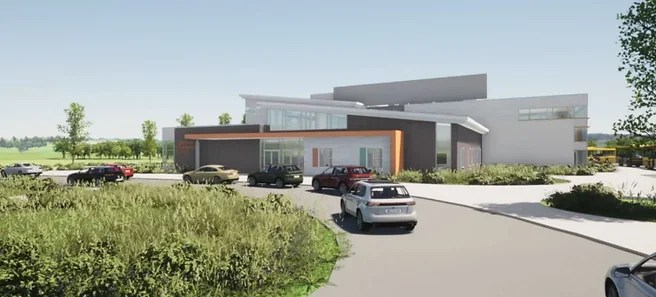
Furthermore, the SC is seeking this outsized increase in a year when the elementary school consolidation means the district can expect lower overall operating costs and, yes, can reduce staffing without negatively impacting educational services. The original draft budget presented to the SC recognized these savings and was in line with the Town Council funding guidance as a result. The school principals told the SC that that draft budget was workable and would not “harm” students’ education. But the SC members knew better, apparently, and rejected that budget.
One of the sticking points was the reduction in art and music teachers (“specials” teachers) that was recommended in the draft budget. It’s useful to remember that our elementary schools never had more than one full-time-equivalent music or art teacher for any one school building—even when enrollment at Fort River or Wildwood was comparable to anticipated enrollment at the new school. Yet, the SC did not believe district administrators when told that quality specials classes could continue with reduced staffing.
Assuming that the district will be able to secure more than half a million dollars more in funding for next year is not just wishful thinking. It is an abdication of fiscal responsibility for the district. The SC has no control over its funding and, while advocacy may help to get more funding in the future, it has no place in the annual budget development process.
As difficult as it may be, the SC’s job is to put together an annual budget that uses the funding it has now to support quality educational services for Amherst’s students. To do otherwise is irresponsible.
Allison McDonald has lived in Amherst since 2002 and has two sons who attended Amherst public schools. She served on the Amherst School Committee 2018-2023, and as chair 2020-2023. She volunteers as managing editor of The Amherst Current.
Discover more from THE AMHERST CURRENT
Subscribe to get the latest posts sent to your email.


The reality has been staring us in the face for DECADES: we do not have the property tax base to fund the services (not just schools) that we expect, at the quality that we expect. The people who sat in Town Meeting seats, many who were there also for DECADES, were told this, over and over and over. This predicament is their legacy. Going hat in hand to the College and the University is not the answer. If you design a town that is essentially a PARK for seniors and students, you get the revenue problems that we have now.
LikeLike
I’m so curious- was it an abdication of fiscal responsibility when you, Ms.McDonald, voted to pay off $200k to a former superintendent?You are conveniently ignoring the fact that the new school has twice as many students, so therefore needs more essential and core teachers. There’s absolutely an argument to be made that the town council has allowed the town manager to mismanage funds and hold literally millions back from the schools for years. School committee has an obligation to put students first.
Laura Jane Hunter
RSC and ASC member
LikeLike
Dear Ms. Hunter,
I believe you are referring to the separation agreement that the School Committees approved and signed with then-superintendent Dr. Mike Morris in August 2023. The details of the SC’s deliberation about that agreement are public, and indicate that a majority of the Regional and Union 26 committee members, including me, believed that the agreement was in the best interest of the school community and students. (https://go.boarddocs.com/ma/arps/Board.nsf/files/CUZ2GD021943/$file/APPROVED%20-%20minutes%2008-17-23%20RSC%20and%20U26%20ES.pdf)
The new school will not have “twice as many students,” at least not of Fort River. The enrollment capacity of the new school is 575. The current year enrollment at Fort River is 365. Nor will the new school have twice as many students as Fort River or Wildwood did 25 years ago: enrollment in 2001 was 559 at Fort River and 512 at Wildwood. (This data is easily accessible on the DESE profiles website, FYI. https://profiles.doe.mass.edu/) The point I’m making is that most of us believe that our schools have been excellent for more than 25 years, including when Fort River had 559 students and one FTE music and one FTE art specials teachers.
~ Allison
LikeLike
I would like to remind the writer that when she herself sat on SC, she addressed this specific topic during a Budget Coordinating Group meeting on March 31st, 2023.
During that meeting she spoke about how her job as an elected official on the School Committee was to advocate for the school budget, even if that meant making an argument for money (in this case $84K) that goes beyond the guidelines set forth from the town. (You can hear it yourself at timestamp 1:05 in this video:https://www.youtube.com/watch?v=dwYu-oF_S04).
School committee members are charged with advocating for the budget that the schools need and to call that advocacy irresponsible is unfair.
LikeLike
Thank you for raising this point ~ I do indeed remember this.
I also remember that the state had increased the amount of Chapter 70 education funding that the town would receive, meaning that the town’s revenue was higher than what had been included in the Town Council guidance. I and my fellow SC members were advocating that the town direct that increase to the schools. (Ch. 70 funds go to the town general fund, not directly to schools, and towns have discretion on how to spend its general fund.)
The $84K that we requested was lower than the additional state funding — and is hardly comparable to the current SC ask for $570K with no known new source for that money.
I didn’t say that advocacy for increased funding for schools is irresponsible; in fact I wrote that we should be advocating for more money for our schools. What I wrote is that approving a budget that relies on funding that the schools do not have–and is not likely to have in the upcoming year–is irresponsible.
LikeLike