
By Freke Ette
Several fascinating films passed through Amherst Cinema over the past month. Here are my reviews of three films.
The Christophers
Steven Soderbergh continues his annual metronomic releases. “Black Bag” came out around this time last year. And “John Lennon: The Last Interview,” premiered at Cannes in May.
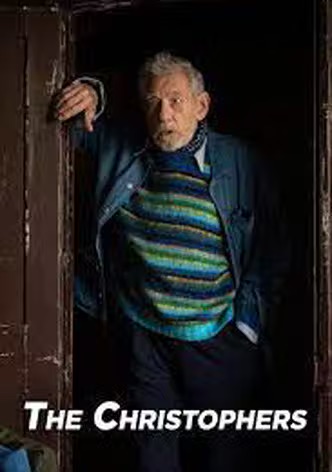
His latest film, “The Christophers,” features a struggling artist Lori Butler (Michaela Coel) hired by an acquaintance to complete an unfinished series of eponymous paintings by the once famous Julian Sylar (Ian McKellen).
The ruse involves Lori getting hired as his assistant, obtaining access to the original painting materials, imitating his style and then passing off the forgeries as recently discovered masterpieces upon his demise.
Julian quickly discerns Lori’s intentions. A confrontation ensues between the proud, washed-up painter and the arrogant mercenary. From the showdown we discover why Julian abandoned the Christophers series and why Lori never fulfilled her artistic aspirations.
To be candid, “The Christophers” isn’t an art film, but rather a film about art. Hardly any works are displayed and, indeed, the few pieces displayed onscreen illustrate neither Julian’s brilliance nor Lori’s promise.
Underneath grimy canvases, petty filial resentments and paternal disappointments hide a stage play with Ian McKellen channeling Francis Bacon via King Lear. Julian is vindictive and querulous like the Old Fool, yet a tender, self-aware soul resides somewhere within.
The drama touches on the essence of painting, the artist’s contribution to culture, the responsibilities of (ubiquitous) criticism, the role of commerce in the art world, and related themes, but not as a lecture.
Soderbergh delights in the beauty, ambiguity and deception of language. Julian’s final retrospective exhibition turns on whether he is “revived” or “reviled.” In another instance, three artworks employ the word “Cloud” in their titles. The audience’s response depends on what a cloud evokes for each viewer.
Both leads, McKellen and Coel, play credible artists with contrasting temperaments and concerns. While Julian speaks only in soliloquies, it would be a mistake to judge Lori’s equanimity as pathetic gestures normally associated with her race, sex or class. Her poise, even in the most intense scenes with Julian, marks her as his intellectual equal.
Where Julian retreats into a world of artistic autonomy, art for the artist’s sake, Lori brings him back to earth. “My relationship is with the canvas,” he says. To which she responds, “And the canvas goes where?”
“The Christophers” is funny and, at times, a deeply moving film that recognizes the playful and serious belong together. It suggests that our world is richer when artistic instinct is nurtured rather than instrumentalized or commercialized.
Find viewing information, here.
Blue Heron
Canadian film director Sophy Romvari, known for her highly personal short films, delivers a stunning debut with “Blue Heron.” A family coping with the antics of their troubled first son, Jeremy, moves to a new neighborhood in Vancouver. His parents are drained and quarrelsome, diverted from caring for his three siblings, who, in turn, are deprived of affection and demure.

“Blue Heron” is split into two parts. The first section, a slow burn sketch, portrays the family’s challenges. The second, shorter section, switches to a documentary director applying final touches to a film about Jeremy.
Despite the difficult subject of mental illness, Romvari possesses a confident hand as director. She is meticulous in recreating the intimate, forbidding setting where we watch events with a child’s naivete and await the next stressful incident like an angsty parent.
No matter how close the audience may feel to the family, confined together in the house with an albatross child, the proximity is deceptive. A separation remains. Sometimes a window, a door, a wall or a camera lens intrudes.
The pensive mood comes from deliberate choices in production design and editing. Normally, audacious displays of technique call attention to artifice, but Romvari has a light touch. She relies on ambient inference, allowing the film’s immediate environment and selected artifacts to represent a character in their absence, a technique she’s used in her shorts.
In “Remembrance of József Romvári,” a film essay about her granddad, a Hungarian film production designer, she fashioned a collage from old films, photographs and a voiceover narration by famed director Istvan Szabo.
Similarly, in “Grandma’s House,” Romvari visits her grandparents’ home in Hungary, holding up old family photos taken at the exact spot. Blending past and present, we encounter not only a house, but a still-living web of relationships between the dead and those remaining.
“Blue Heron” requires the viewer to assemble a collage from a photo album, home videos filmed by Jeremy’s dad, tape recordings from therapy sessions and testy bedroom conversations.
Practically all the information about Jeremy comes from secondhand sources.
Human beings are complicated enough that I wonder if we can really know anyone based only on what we learn about them. Surely, we lose insight when observing characters who choose not to speak or are unable to explain themselves.
On the other hand, what could Jeremy say to justify his actions of petulance? From experience, it is easier to describe incomprehensible behavior as the work of a monster or a child “invested in chaos,” as his therapist warns his parents.
Weeks after seeing “Blue Heron,” I keep returning to certain scenes from the film. What we know of the past can’t repair a loss and may not even count as truth. Nevertheless, our memories remind us of things we’ve lost—innocence, loved ones and dreams— granting us permission to reconcile our past to our future. And that’s the beginning of healing.
A short note of appreciation to the designers of the “Blue Heron” poster: A ripped photo of the family in a wide shot with Jeremy isolated on the left, staring at his mom and siblings to his right. Are we looking at a single photo torn in two or two photos clumsily assembled with clear tape? A hazy memory or a figment of the imagination? The film’s complex themes captured in “one” shot. Simply brilliant.
Find viewing information, here.
Silent Friend
The least curious person invested in the truth will acknowledge a reality that resides beyond access to the senses. Whether such knowledge is perceptible through finely tuned instruments or exists entirely outside perception is a separate question.
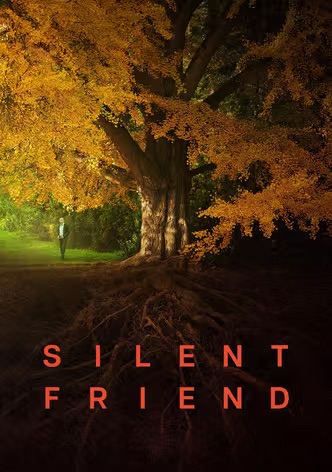
Ildiko Enyedi’s latest film, “Silent Friend,” builds on the mystery of human consciousness for a triptych spanning three distinct timelines.
A single character connects the stories: a Gingko situated in the arboreal garden at Marburg University, imperious, towering over the humans like the olive in the mosaic depicting Plato’s Academy.
In one story, Dr. Wong (Tony Leung), a scientist stranded at the university during the COVID shutdown studies whether plants are “conscious’ like humans. Another follows Grete, a female student who enrolls to study biology at the university and as the first woman admitted to the college—this seems around the turn of the 20th century—she faces off a hostile faculty and jealous male colleagues.
A third, set during the student agitations of the late 60s/early 70s, features a student, Hannes, and his relationship with Gundula, a spunky neighbor interested in plant communication.
“Silent Friend” is gorgeously photographed, intelligently conceived and composed with an arresting calmness. The film uses its photography, precise dialogue, and human relationships to carefully distinguish the stories.
Director Enyedi conjures an allusive ambience appropriate for a narrative fiction film. This is no eco-friendly, hippie-adjacent, pseudo-scientific documentary.
Despite the trailer and clever marketing, I am unconvinced “Silent Friend” is primarily interested in exploring consciousness. Its concerns are more grounded in our relationship to the environment, and to the use of language. After all, humans have always found elegant justifications to restrict others’ freedom through arbitrary differences.
The film nudges us to move past these limits of cultural, linguistic and biological distinctions.
At his welcome party, Dr. Wong’s interpreter cannot speak fluent Cantonese, while he doesn’t speak German. They both settle on English so everyone at the table can listen in on their conversation. In this instance, language is used for mutual communication.
That isn’t the case for Grete, who audiences first see in a combative oral examination on Carl Linnaeus’ plant taxonomy. Ironically, the viva is undertaken in Latin, which wasn’t taught to females in Germany. Language here served as an instrument of exclusion.
Hannes and Gundula understand themselves, even if their desires are unnamed. Nevertheless, Gundula intends to discover how plants communicate and Hannes encourages her in the endeavor. Language has become participation in existence.
Enyedi supplies the film with visual cues that draw the audience in slowly and with care. For example, each story possesses a unique photographic style linked to that specific era.
The contemporary sequences pop with vibrant primary colors, reds and greens. Dr. Wong’s isolation at the height of COVID is portrayed through static shots, with barriers interposed to the outside world. How does Tony Leung make staring listlessly through a window so sensual?
Meanwhile, Grete’s is filmed in black and white, and Hannes’ section comes in grainy color film reminiscent of old family Kodachrome photos, yellows and sunlight filtered through tree leaves.
At other times, the camera shots are out of focus. Initially jarring, until we sense that human subjects aren’t the only protagonists of the film. The gingko and other plants also belong in the main cast. This isn’t mere conjecture. The film’s credits feature an extensive roll call of every plant shown onscreen.
“Silent Friend” encourages us to let go of our instrumental, overly rational approach to life, described as “spotlight consciousness,” to embrace “lantern consciousness,” a childlike perception of the external world, one where immediate experience is porous and diffuse.
The film doesn’t give specific dates for when events take place, meaning we get to experience time passing, just as plants do. Clock and calendar are no help here.
Just like the gingko, home to crawling bugs, screeching owls, undeterred by relentless sunshine, punishing downpours or the occasional upchuck, humans are made to live fully in harmony with nature.
Ultimately, then, the film suggests we pay attention. If we recognized all living beings as such, how would that change our relationships to ourselves, to one another, to nature? Would we be so concerned with linguistic differences, professional distinctions, class hierarchies or scientific taxonomies?
Perhaps it is no coincidence that one of the books we see is Goethe’s, “Metamorphosis of Plants.” In this work, Goethe asks the reader to closely observe a plant’s growth from seed to tree-bearing fruit. By close observation we may recognize that love in its pure form achieves a similar ascent, a union that aspires to a higher, more beautiful world.
Find viewing information, here.
Discover more from THE AMHERST CURRENT
Subscribe to get the latest posts sent to your email.

